REVIEW · TIRANA
Tirana Walking Tour
Book on Viator →Operated by Albania My Way · Bookable on Viator
Tirana makes sense on foot. This 3-hour walk stitches together key symbols of old Tirana and the political buildings that shaped modern Albania, with stops that most people miss when they travel fast.
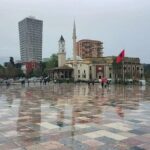
I especially like the way the tour treats Skënderbeg Square as more than a photo spot. You’ll get historical context right where Tirana’s major sights cluster, including the Et’hem Bey Mosque, the Clock Tower, and major civic buildings nearby.
My only caution: this is a walking tour, and it runs only when weather is good—so plan on comfortable shoes and an extra layer if conditions are cool.
In This Review
- Key highlights you’ll feel right away
- Why This Tirana Walk Works for First-Time Sight-Seers
- Price and Value: What $11.91 Buys You (and What It Doesn’t)
- Skënderbeg Square: Et’hem Bey Mosque and the Clock Tower as Tirana’s Symbols
- Rruga Murat Toptani: Bunk Art 2, Toptani Castle, and Zogu’s Residence
- Bulevardi Dëshmorët e Kombit: The Pyramid, Hoxha’s Museum, and Government Power Lines
- Blloku: Ex-Blloku, Hoxha’s House, and the Neighborhood’s Today Meaning
- Timing, Pace, and How to Get the Best Out of the Walk
- Who This Tour Is Best For (and Who Might Want Something Else)
- Book It or Skip It? My Decision Guide
- FAQ
- Where does the Tirana Walking Tour start and end?
- How long is the tour?
- How much does the tour cost?
- What’s included in the price?
- What language is the tour offered in?
- How many people are in the group?
- Are there admission fees for the places you stop at?
- What happens if the weather is bad or plans change?
Key highlights you’ll feel right away
- Skënderbeg Square context: Et’hem Bey Mosque, Clock Tower, and the surrounding civic landmarks explained clearly.
- Communist-era contrasts: Bunk Art 2 and then the power-and-control story you hear at Blloku.
- A tight route, no ticket chaos: multiple stops are listed as admission free, and the group stays small.
- Real Tirana, not just monuments: long stretches on major boulevards plus time in the neighborhood where leaders lived.
- Guides can set the pace: the tour is designed to stay easy to follow and question-friendly.
Why This Tirana Walk Works for First-Time Sight-Seers
If Tirana is your first stop in Albania, this tour is a smart move. In about three hours, you cover the main “where-to-look” areas: the civic core around Skënderbeg Square, the mid-town historic strip, a long boulevard segment, and finally Blloku—the former leaders’ neighborhood that still shapes how the city feels.
What makes it work is the logic of the route. You’re not just hopping between landmarks; you’re walking through different eras in sequence. Ottoman-era symbolism shows up first, then you move through political history and power structures, then you end in Blloku, where the past is still readable in the streetscape.
You also get a licensed guide, and the group size tops out at 15. That matters because smaller groups usually mean you can ask questions without feeling like you’re shouting over a crowd. It’s the kind of tour that helps you get your bearings fast, so later you can explore independently without guessing what you’re looking at.
Other walking tours of Tirana worth a look


Price and Value: What $11.91 Buys You (and What It Doesn’t)
At $11.91 per person for about 3 hours, the value is strong because the main ingredient here isn’t paid entry or fancy transport—it’s the guided interpretation. Your included cost is the licensed guide, and that’s where most of the money goes.
The itinerary also lists admission ticket free for key portions (Stop 1, Stop 2, and Stop 3). That means you can spend your budget on a coffee or snack later instead of scrambling for ticket prices during the walk. The tour is also offered in English, so you’re not trading understanding for a cheaper rate.
One practical limitation: the tour is a walking experience, so you shouldn’t expect it to replace a full museum day. And while several stops are listed as admission free, the tour isn’t advertising that everything you’ll see has zero cost forever—so if you choose to extend your visit on your own, double-check entry rules at that time.
Skënderbeg Square: Et’hem Bey Mosque and the Clock Tower as Tirana’s Symbols
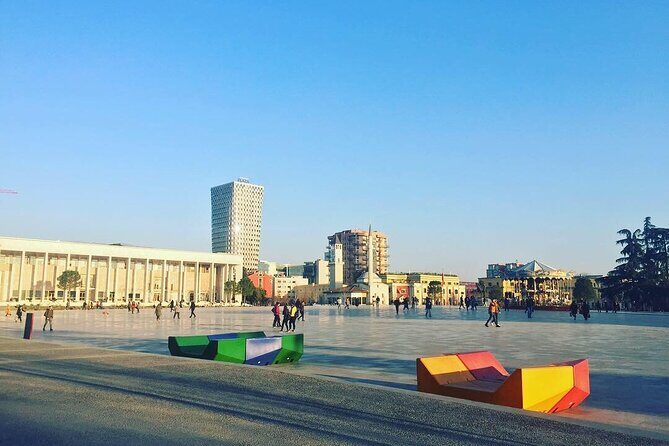
You start at Sheshi Skënderbej 1 and head straight into the city’s central stage. This is where Tirana’s identity gets its clearest “at a glance” visuals, and the guide uses that location advantage well.
The focus here is Et’hem Bey Mosque, described as the oldest building in Tirana and one of the city’s symbols. You’ll look at its decorations and get the historical story behind why this mosque still matters in modern Tirana. Right by it is the Clock Tower, also highlighted as a symbol of old Tirana and once the tallest building.
Then you’ll shift your attention to the surrounding civic and cultural buildings, including the National Bank of Albania, the National Museum, Hotel Tirana, the Palace of Culture, and Tirana Municipality. The practical payoff: once you understand what these buildings represent, the rest of your walking day makes more sense because the guide keeps tying what you see to the roles those spaces played.
A small drawback to consider at this stop: you’ll be outside and looking around the square area. If it’s bright or windy, bring sunglasses and think about how long you’re comfortable standing while photos happen.
Rruga Murat Toptani: Bunk Art 2, Toptani Castle, and Zogu’s Residence
From Skënderbeg Square, the route turns into a more layered walk along Rruga Murat Toptani. This is where Tirana starts to feel like it has multiple storylines running at once: pre-Communist figures, Communist-era memory work, and the architectural hints of what’s still under construction.
A highlight on this segment is Bunk Art 2, described as a museum about Communist Atrocities. Even if you already know Albania’s general 20th-century story, the way the tour frames this stop helps you connect the dots between political power and everyday life under that system.
As you continue, you’ll pass by or see the Castle of Toptani and the prince Zogu Residence. Then you move toward the House of Parliament and the new Mosque, noted as the biggest in the Balkans and still under construction.
What’s valuable here isn’t just naming landmarks—it’s the contrast. You’re watching Tirana’s history collide in one corridor: older authority structures, political shifts, and a visible sign of modern religious architecture still being built. If you like cities where every street has a backstory, this stop is a strong reason to book.
Bulevardi Dëshmorët e Kombit: The Pyramid, Hoxha’s Museum, and Government Power Lines
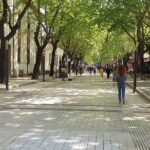
Next comes a long stretch along the main boulevard, Bulevardi Dëshmorët e Kombit. This part of the tour is more “walk and read” than “step inside.” You’ll cover about an hour of this main boulevard segment, and it’s designed to let you see how government, education, culture, and monumental memory sit side by side.
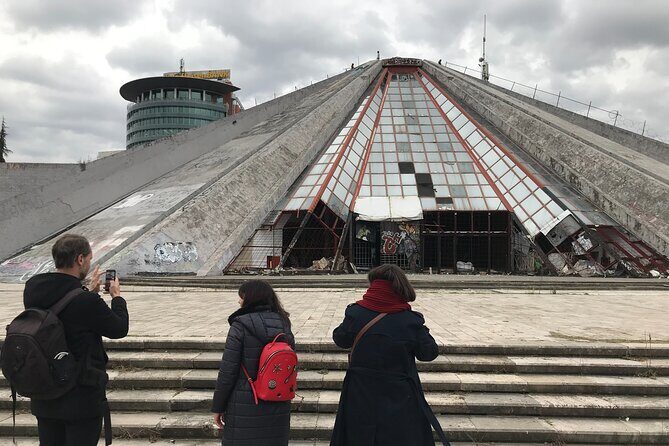
Key landmarks on this walk include the Pyramid and the Dictator Hoxha’s Museum after his death. The tour also points out major seats of state and institutions such as the Prime Ministry, Presidency, and Parliament Offices.
You’ll also pass educational and cultural sites like the University and the Academy of Arts, plus National Stadium. The guide’s job is to help you understand why these aren’t random buildings. They form a political map of the city—one that explains how Tirana organizes authority and identity on the ground level.
Practical consideration: boulevards can feel longer on foot than they look on a map. If you’re someone who gets restless during straight-line walking, pace yourself. This tour is structured, but you still control your comfort.
Other walking tours we've reviewed in Tirana


Blloku: Ex-Blloku, Hoxha’s House, and the Neighborhood’s Today Meaning
The final stop is Blloku (ex-Blloku), and it’s the emotional closer of the day. During the Communist period, this area was the residence zone of the communist leaders and was closed to normal citizens. The tour keeps that detail front and center, because it changes how you interpret everything you see here.
You’ll pass by Hoxha’s house during the time he ruled Communist Albania. That alone is a powerful detail because it turns a neighborhood corner into a living record of political control. And then you see how that same space functions now, described as one of the most impressive places in Tirana today.
This stop is also where you start noticing how Tirana’s past lingers in daily life. Even if you don’t study history formally, the tour helps you read the neighborhood as a story: who was allowed where, what was forbidden, and what that legacy means now.
If you like travel days that feel like a conversation rather than a lecture, this is where the guide’s tone matters. The more clearly the guide connects the dots, the more Blloku clicks.
Timing, Pace, and How to Get the Best Out of the Walk
The itinerary is roughly timed like this: about 30 minutes at Skënderbeg Square, 1 hour along Rruga Murat Toptani, 1 hour on the boulevard, and 30 minutes in Blloku. The guide can also adjust the pace, which is a big deal if your group ranges from history buffs to people who just want orientation.
You’ll want to treat this as your “framework tour.” That means bring questions like:
- Which building represents what kind of authority?
- What’s older versus newer in the city core?
- How does the Communist-era story show up in layout and symbols?
A small practical tip: keep your phone ready for the mobile ticket. It’s not just convenience—it helps you avoid last-minute searching at the meeting point.
Also, plan for the realities of weather. The experience requires good weather, and that’s for a reason: a walking route needs visibility and comfort. If it’s windy or rainy, your day can feel longer than the schedule suggests.
Who This Tour Is Best For (and Who Might Want Something Else)
I think this tour is ideal for:
- First-time visitors who want a clear orientation in a short window.
- People who like history explanations tied directly to what they can see on the street.
- Anyone traveling with English-speaking needs and wanting a licensed guide.
- Travelers who prefer a small group (maximum 15) over a crowded bus or free-for-all walk.
It may be less ideal if:
- You want a full museum schedule with lots of time inside buildings.
- Your mobility is limited and you don’t want to do several hours of walking, even if the itinerary is timed.
Book It or Skip It? My Decision Guide
Book this tour if you want a fast, coherent introduction to Tirana that connects landmarks to meaning. At $11.91, you’re paying for a guide-led route that includes major symbols, political context, and a memorable ending in Blloku—and key listed stops are marked as admission free.
Skip it if your schedule is so tight that you can’t fit a full three-hour walking block, or if you strongly prefer independent exploring without a guide shaping the story.
If you’re unsure, I’d use one clue from the calendar reality: this experience is often booked fairly early (around 56 days in advance on average). If your dates are flexible, you might still get options. If they’re firm, booking sooner usually keeps your choices open.
FAQ
Where does the Tirana Walking Tour start and end?
The tour starts at Sheshi Skënderbej 1, Tiranë 1000, Albania. It ends back at the meeting point.
How long is the tour?
The tour lasts about 3 hours.
How much does the tour cost?
The price is $11.91 per person.
What’s included in the price?
A licensed guide is included. Everything else that is not mentioned in the inclusion section is not included.
What language is the tour offered in?
The tour is offered in English.
How many people are in the group?
The tour has a maximum of 15 travelers.
Are there admission fees for the places you stop at?
For the listed stops (Stop 1, Stop 2, and Stop 3), the itinerary notes admission ticket free.
What happens if the weather is bad or plans change?
The experience requires good weather. If it’s canceled due to poor weather, you’ll be offered a different date or a full refund. You can also cancel for free up to 24 hours in advance for a full refund.