REVIEW · TIRANA
Tirana Walking Tour: History, Culture &Gems by a Passionate Guide
Book on Viator →Operated by Experience Tirana with a Smile · Bookable on Viator
Tirana is a fast education in street form. This 3–4 hour walk through the center of the city links Ottoman-era landmarks, socialist-era monuments, and today’s neighborhoods into one easy route, starting at Skanderbeg Square. It is one of those days where you leave with a map in your head, not just photos.
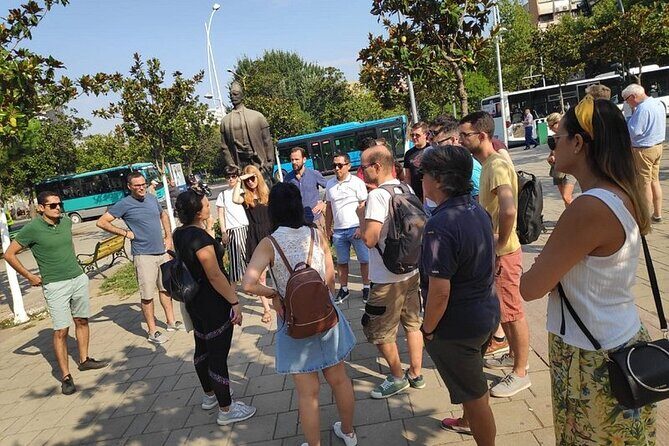
I love that the group is small (max 11), so you can actually ask questions and keep moving at a comfortable pace. I also love the local touch: a included shot of rakia that makes the tour feel grounded in Albanian culture, not museum-only.
The main drawback to plan around is weather. This experience requires good weather, and the walking is continuous enough that a rainy day can be annoying.
In This Review
- Key highlights you’ll feel right away
- Getting oriented in Tirana, one stop at a time
- Price and timing: 3 to 4 hours for $36.20
- Ottoman and Venetian cues at Et’hem Bej and the Clock Tower
- A quick stop at Sulejman Bargjini and the city’s everyday rhythm
- Bektashi heritage at Teqja Pazari and the meaning of Kapllan Pasha’s Tomb
- Traditional life at the Ethnographic Museum and typical houses
- Bunk’Art 2, Komiteti Kafe Museum, and the socialist city you can walk through
- Postbllok, the Enver Hoxha villa, and Blloku’s shift from restricted zone to nightlife
- Shallvaret, the Resurrection Cathedral, and comparing religious eras
- The House of Leaves is optional, so decide how much you want
- The route finale: Tirana Castle, Saint Paul’s Cathedral, the Pyramid, and Bank Albania
- Should you book this Tirana walking tour?
- FAQ
- What is the duration of the Tirana walking tour?
- How much does the Tirana Walking Tour cost?
- Is the tour offered in English?
- Where do I meet for the tour?
- What is included and what is not included?
- How large is the group?
- Is the tour mainly outdoors?
- What is the cancellation policy?
Key highlights you’ll feel right away

- Small group size (up to 11) for more personal conversation instead of a fast stamp-and-go march
- Rakia tasting included, a quick cultural moment that fits naturally into the route
- Ottoman + Venetian architecture clues at stops like Et’hem Bej Mosque and the Clock Tower
- Communist-era Tirana in context, especially around Blloku, Postbllok, and Enver Hoxha’s former villa
- Religious history you can compare, from the Et’hem Bej Mosque to the Resurrection of Christ Orthodox Cathedral
- A guide who connects past to present, including what daily Tirana life looks like now
Getting oriented in Tirana, one stop at a time

If you want to understand Tirana without getting lost in a maze of streets, this is the kind of tour I look for. You start at Sheshi Skender Beu (Skanderbeg Square), which works because it anchors the city’s story right away. From there, the walk steadily moves you from major landmarks to the smaller corners that make the center feel lived-in.
A big part of the value here is pacing. Most stops are short, so you see more without turning the day into a marathon. The time boxes also help you manage attention: you get brief, focused looks at key sights, then your guide ties the details together so they make sense.
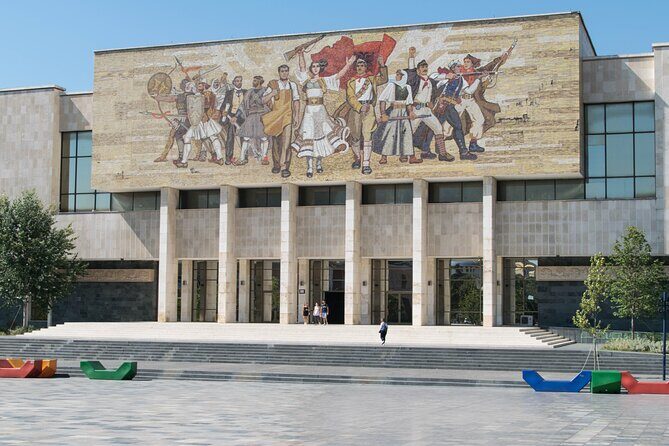
Another reason this route works well is variety. In a single outing, you can spot Ottoman cues (like the mosque and the Clock Tower’s style mix), then switch to socialist-era reminders (bunkers, memorials, and the geometry of the Pyramid). You also get everyday culture through places like the New Bazaar, where food, spices, and craft stalls tell their own story.
Other walking tours of Tirana worth a look


Price and timing: 3 to 4 hours for $36.20
At $36.20 per person for about 3 to 4 hours, the math only works if you’ll actually use what a good guide provides. This tour does, because it is built around interpretation: architecture, political history, and neighborhood identity are all explained as you walk.
The included shot of rakia matters more than it sounds. It turns a history walk into a cultural exchange, and it sets the tone for how you should read the city. This is especially helpful in Tirana, where a lot of the most memorable sights are not the kind that scream for attention from the street.
In terms of logistics, you get a mobile ticket, the tour is offered in English, and it runs with a maximum of 11 travelers. You’ll also be walking near public transportation and the route returns to the meeting point, which makes it easier to tack on dinner plans afterward.
Ottoman and Venetian cues at Et’hem Bej and the Clock Tower
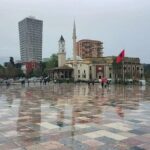
Your first real architecture moment is Skanderbeg Square. It is Tirana’s central public space, named for Albania’s national hero, and it sets the theme: this city’s history is not hidden, it’s staged in public.
Next comes Et’hem Bej Mosque, one of Tirana’s most historic landmarks. From the outside, it is understated. Inside is where you get the surprise: frescoes with intricate floral and natural motifs, including depictions of trees, waterfalls, and bridges. That kind of imagery is unusual in Islamic art, so it’s worth slowing down for. The payoff is a mosque you can look at like a storybook, not just a building.
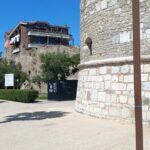
Then you move to the Clock Tower, about 35 meters tall, built in the 19th century. The tower’s architecture blends Ottoman and Venetian influences, which is a useful lens for the whole day. Even if you are not an architecture nerd, this is the type of detail that helps you “read” the city as you walk.
A quick stop at Sulejman Bargjini and the city’s everyday rhythm
From the big square energy, you head to Sheshi Sulejman Pasha (Sulejman Bargjini Square). It’s smaller than Skanderbeg Square, but it still plays a key role in the city’s historical geography. Think of it as a reminder that Tirana’s center is made of multiple anchors, not one big monument zone.
Then comes the part that feels most like real Tirana life: Pazari i Ri (the New Bazaar). You’ll spend around 20 minutes here, and that time is well-used. This is where you can connect the historical center to present-day food and shopping. Expect colorful stalls and shops with fresh produce, local crafts, spices, and traditional Albanian foods.
Practical tip: if you want to shop, keep it simple during the tour. You’ll get enough context from your guide, and you can decide later what you actually want to carry or taste.
Bektashi heritage at Teqja Pazari and the meaning of Kapllan Pasha’s Tomb
After the bazaar, the tone changes with Teqja Pazari, a Bektashi religious site. This teqe is linked to the Bektashi Order, a Sufi Muslim sect known for mysticism and progressive values. Even though your stop is brief, it’s the kind of place that gives you cultural context you won’t find just by reading a postcard.
Next is Kapllan Pasha’s Tomb, an Albanian Cultural Monument recognized by the government in 1948. The early 19th-century octagonal structure is built with carved stones and plant-style surface decoration. It is also historically tied to the former ruler of Tirana, who was interned there in the 19th century before being repatriated back to Istanbul.
If you like history that is visible in the physical details, this stop delivers. The architecture is specific enough that you can actually picture it after you move on.
Other walking tours we've reviewed in Tirana
Traditional life at the Ethnographic Museum and typical houses
Ethnographic Museum of Tirana, also known as Toptani Saraje Old Typical House, is a short stop, but it’s a good reset. Here, the focus is traditional Albanian life and a preserved example of how homes and domestic culture once worked.
This is also a good match for travelers who find big monuments tiring. Instead of asking you to process politics or grand architecture, it asks you to pay attention to everyday space and the way people lived.
Even with limited time, you get the feeling that the city has layers. Modern Tirana sits on older patterns, and that continuity is one reason people fall for the place after a first visit.
Bunk’Art 2, Komiteti Kafe Museum, and the socialist city you can walk through
Once the route moves toward communist-era sites, it does so without turning it into a gloomy maze. You’ll visit Bunk’Art 2, located in a former communist-era bunker. The value of the stop is the contrast: you are underground (in spirit) with a site built for a different kind of fear and control, but you’re still in central Tirana, surrounded by day-to-day movement.
Then you head to Komiteti Bar at the Komiteti Kafe Museum. This is one of the more interesting blends on the route because it mixes socialist-era culture and history with the hospitality feel of a café setting. In other words, you can learn and then sit down, which helps you absorb the heavier parts of the day.
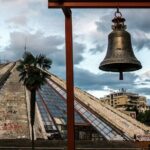
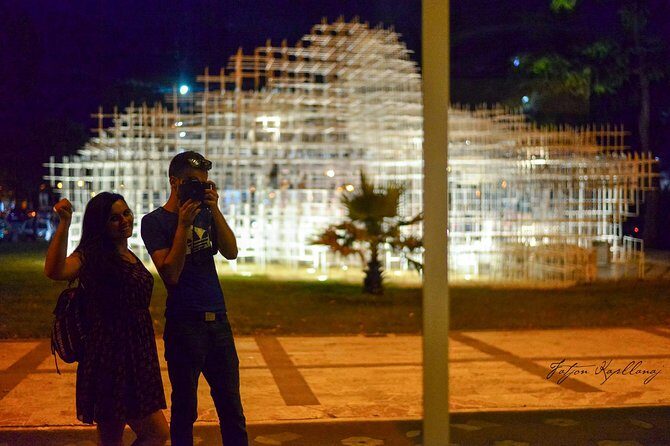
After that, the tour includes the Pyramid of Tirana. It’s a unique structure with a story shaped by contemporary transformation. Even if you do not go deep on the building itself, it helps anchor the timeline of the city’s modern identity.
Postbllok, the Enver Hoxha villa, and Blloku’s shift from restricted zone to nightlife
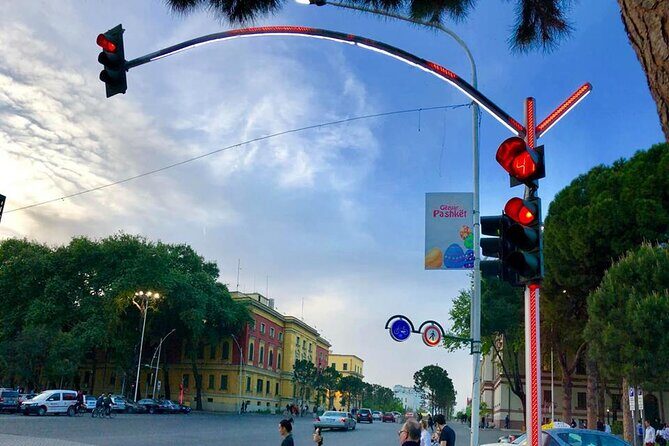
The tour then moves into the area where Tirana’s communist past becomes hard to ignore: Postbllok, the Checkpoint Memorial near the entrance to Blloku. This is an open-air installation that acts like a marker for how the regime controlled movement. You see it in space, not just in documents.
Next is Shtepia Partise Enver Hoxha, the former villa of Enver Hoxha. You’ll get a focused look at the private residence of Albania’s long-time dictator, located in Blloku. Your time is short, but the context matters: this was off-limits to ordinary citizens.
Then comes Blloku itself. This neighborhood is now one of Tirana’s most social hubs, but your stop frames how it used to be an exclusive zone for the communist elite. That “then and now” contrast is the point. You’re not just sightseeing; you’re learning why the city’s nightlife and architecture sit on top of a political past.
Shallvaret, the Resurrection Cathedral, and comparing religious eras
From Blloku, you move toward Shallvaret for a quick look at another historical neighborhood. The tour keeps this stop short, but it adds texture to the walk so you do not only associate Tirana’s center with monuments.
Then you arrive at the Orthodox Cathedral of Resurrection (Resurrection of Christ Orthodox Cathedral). This one carries major context about Albania’s return to religious freedom after decades of suppression under communist rule. The construction took place between 2001 and 2012, and it was officially consecrated on June 24, 2012.
The guide’s framing is important here: Albania declared itself the world’s first atheist state in 1967, and many religious sites were destroyed or repurposed during Enver Hoxha’s era. After communism fell in the early 1990s, Albania rebuilt and restored religious institutions, and this cathedral is part of that rebuilding story.
Even if you only spend about 10 minutes, this is a place where your attention naturally slows down, because it represents both faith and policy history in one view.
The House of Leaves is optional, so decide how much you want
There’s one museum stop that’s treated differently on this tour: the Museum of Secret Surveillance at the House of Leaves (Shtëpia me Gjethe). It is listed on the route and you’ll spend time there, but the admission ticket is not included.
If you care about how authoritarian systems used surveillance and secrecy, it can be worth paying for the entry and using your time well. If you prefer to keep the day lighter after the communist memorials, you might treat it as a stop you can skip or shorten.
Either way, this museum choice is a useful fork in the road. It lets you match your interest level to the time you have.
The route finale: Tirana Castle, Saint Paul’s Cathedral, the Pyramid, and Bank Albania
The later portions of the walk include a mix of landmark types so the day does not feel single-theme. You’ll pass by Tirana Castle, where you can see a blend of older ruins and modern attractions. Your stop is short, but it gives a sense of Tirana’s long timeline and fortification-era roots.
You also visit Saint Paul’s Cathedral, with a focus on architectural beauty and spiritual calm. It’s a brief stop, yet it helps balance the day’s heavier political history with something calmer and more reflective.
The tour also includes Bank of Albania for a quick stop. The central bank was established in 1925, making it one of the oldest financial institutions in the country. Even a 5-minute look can help you connect Tirana’s political story to its economic story.
Finally, the walk returns back to the starting area at Skanderbeg Square, so you’re not stuck figuring out how to end your day.
Should you book this Tirana walking tour?
Book it if you want a first-day orientation that goes beyond surface-level sights. The combination of small group size, English guidance, and the mix of Ottoman, religious, market, and communist-era stops is exactly the kind of structure that helps Tirana click.
Also book it if you enjoy history explained in a human way. The route pays attention to how events shaped everyday spaces, from the memorials around Blloku to the religious rebuilding symbolized by the Resurrection Cathedral.
Skip it or shorten expectations if you only want one type of attraction (like purely medieval sites or purely churches). This walk covers a lot of themes, and it works best when you’re open to Tirana’s full timeline.
FAQ
What is the duration of the Tirana walking tour?
The tour runs about 3 to 4 hours.
How much does the Tirana Walking Tour cost?
It costs $36.20 per person.
Is the tour offered in English?
Yes, it is offered in English.
Where do I meet for the tour?
The meeting point is Skanderbeg Square (Plaza Tirana, Sheshi Skender Beu, Tiranë 1001, Albania).
What is included and what is not included?
The tour includes a complimentary shot of rakia. Personal expenses are not included, and the admission ticket for the Museum of Secret Surveillance is not included.
How large is the group?
The tour has a maximum of 11 travelers.
Is the tour mainly outdoors?
Yes, it is a walking tour and it requires good weather.
What is the cancellation policy?
You can cancel up to 24 hours in advance for a full refund. If you cancel less than 24 hours before the start time, the amount paid is not refunded.