REVIEW · TIRANA
Private Walking Tour Visit to Durrës with Licensed Guide
Book on Viator →Operated by Artan · Bookable on Viator
Durrës history is right on the street. This private walking tour strings together major monuments and lesser-known corners, from the Venetian Tower to the Durres Amphitheatre, with a licensed English-speaking guide and lots of practical, on-the-ground explanation. I like the pace because it’s active without feeling rushed, and I like how the tour links each site to the next instead of treating them like separate stops.
Two things you’ll likely appreciate fast: the guide’s clear storytelling (including names and dates you can actually remember) and the simple value of most admissions being free as you go. One thing to consider is that the multimedia projection and the elevated balcony at the tower cost extra, even though you can still access the included parts of the experience.
In This Review
- Key highlights you should not skip
- Getting Oriented at Durrës Through the Venetian Tower
- Venetian Tower Details: Construction, Watchtowers, and World War II Changes
- Walking From the Church of Saint Paul and Saint Astius to Lost Traces
- Ottoman Hammam and the Steam-Tech Clues Hidden in Stone
- Bulevardi Epidamn: Urban Planning You Can Actually Walk
- Aleksandër Moisiu Museum: English Consulate Roots and Earthquake Damage
- Fatih Mosque: A 1501 Mosque Built Into the Byzantine Walls
- Durres Amphitheatre: Excavation in 1966 and a City Above It
- Catholic Church of Saint Lucy (Shën Dominiku) and the Communist-Era Ban
- Freedom Square (Sheshi Liria) and Durres City Hall: The 1928 Plan in Real Life
- The Great Mosque (Xhamia E Madhe E Durresit): Merchants, Italy’s Influence, and Restoration
- Aleksandër Moisiu Theatre and the 1960s Palace of Culture Style
- Rotonda and Forumi Bizantin: Vangjel Toci’s Byzantine Forum in the Open
- Price, Time, and What You Should Expect From a 2–3 Hour Private Walk
- Who This Tour Fits Best (and Who Might Want Something Different)
- Should You Book This Durrës Walking Tour?
Key highlights you should not skip
- Venetian Tower orientation: built-story context plus a look at the modern multimedia renovation
- Multi-era city walk: Byzantine, Norman/European, Ottoman, communist-era changes, and today in one route
- Big archaeology without the museum maze: amphitheatre excavation details tied to the city above it
- Religion in changing times: mosques and churches placed in the same political timeline
- Street planning details: the 1928 urban regulatory plan shows up in real streets and squares
Getting Oriented at Durrës Through the Venetian Tower
Most walking tours start with a landmark. This one starts with a landmark that basically teaches you how to read the city. From the Venetian Tower of Durrës, you get a fast mental map: where the urban neighborhood sits, why different powers cared about this part of the Adriatic, and how fortifications shifted over centuries.
What I like here is the way the guide connects old evidence to physical places you can see. You’ll hear how the area relates to an amphitheatre dating to the 2nd century, then you’ll move through layered fortification history—Byzantine and later Norman, Venetian, and Ottoman periods. It’s the kind of explanation that makes you look up at walls and towers instead of just walking past them.
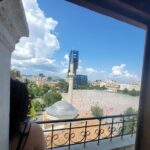
The tower also has a modern angle. Renovation works financed by the European Commission turned it into a multimedia center projecting the city’s history. Important practical note: you can include the interior access that’s part of the tour, but if you want the projection and the elevated balcony, you should expect an additional fee not included in your tour price.
Other Durres tours we've reviewed near Tirana
Venetian Tower Details: Construction, Watchtowers, and World War II Changes
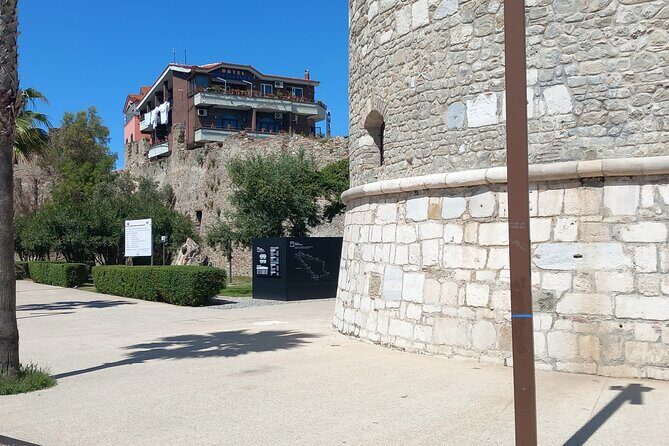
You’ll spend additional time at the tower for the “how” and “why,” not just the “what.” The guide explains the construction of the tower, including building techniques and how it resembles other towers along the Adriatic and beyond. That comparison matters because it turns one monument into a pattern—watchtowers weren’t random.
Then the story shifts toward power and conflict. You’ll cover the tower’s significance during Ottoman rule and later demilitarization in the early stages of World War II. After that, the tour brings you through the communist regime’s use of the site, then brings you into the last 30 years and the recent renovation.
If you’re the kind of traveler who likes knowing why something looks the way it does, this is one of the strongest parts of the walk. The tower becomes a timeline you can point to: construction style → defensive role → political transitions → modern preservation.
Walking From the Church of Saint Paul and Saint Astius to Lost Traces
After the tower, the walk moves into the everyday street maze of Durres. Stop-style visits keep you moving, but you still get context. At the Church of Saint Paul and Saint Astius, the focus is on the saints tied to Durrës and how religious life is reflected in ordinary city streets.
What’s especially interesting is that you’ll also hear about traces of an earlier church—Saint Spiridon—demolished during the communist regime. That detail changes how you view a town’s religious buildings: you’re not just seeing what survived, you’re also hearing what was erased and how that affects today’s map.
This part can feel quieter than the tower area, which is a good rhythm. You get a break from big walls and sweeping views, and you start reading the city at human scale.
Ottoman Hammam and the Steam-Tech Clues Hidden in Stone
Next comes the Ottoman Medieval Bath (Hammam), built in the 17th century. This isn’t a “look at pretty tiles” stop. It’s more about how the building worked and what it suggests about the city’s seaside zone.
The guide explains that the hamam was likely privately owned or part of government buildings tied to the promenade. You’ll also learn possible connections to the White Mosque (mentioned as about 5 meters west), where today’s Bulevardi Epidamn runs. The hamam’s traces help you understand the old road alignment leading toward the Durres Castle area.
Steam and heating techniques are part of the explanation. Even if you don’t go inside (the tour is largely focused on exterior traces and interpretation), you’ll leave understanding that Ottoman bath architecture wasn’t just for comfort—it was built with systems and logic.
Practical consideration: because this is a walking tour with short stop times, you’ll get the key ideas rather than hours of soaking in the details. If you want a long sit-down soak, you’d likely need a separate hammam visit beyond this tour.
Bulevardi Epidamn: Urban Planning You Can Actually Walk
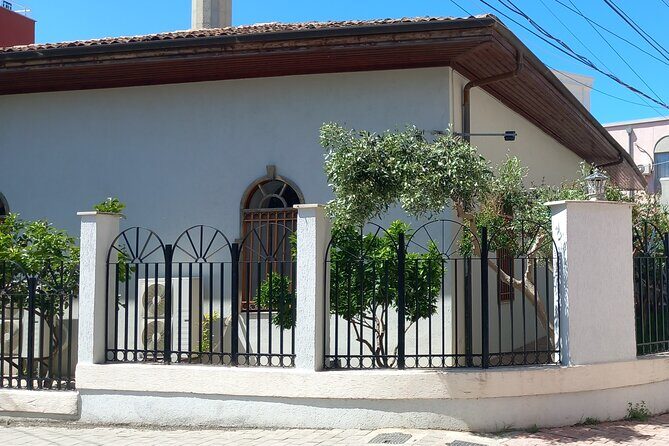
Bulevardi Epidamn is where the tour gives you something useful for future wandering: how the city got planned. You’ll stroll for about 10 minutes along the boulevard, and the guide explains the history and architecture behind early residential buildings there. A central reference point is the first Urban regulatory plan of 1928.
That matters because you stop seeing it as “just a street.” You start thinking in layers: planning ideas → building investments → neighborhoods spreading outward. It also creates a smooth transition between big landmarks and smaller corners.
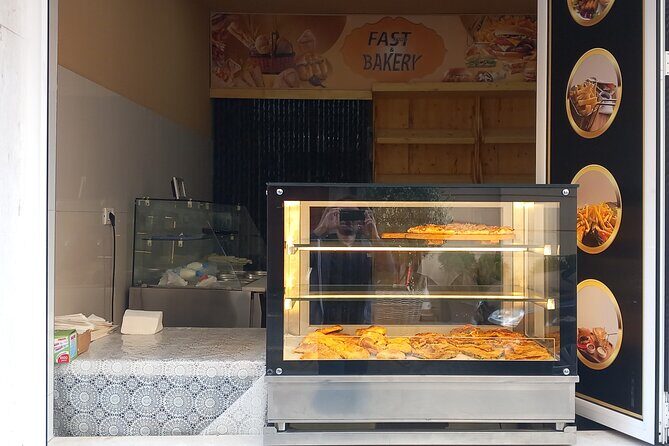
The guide also pauses at local spots for refreshments—choices may include coffee, water, burek, ice cream, or orange juice. You’re not stuck buying anything specific, but it’s a nice built-in break. It helps if you’re traveling in warmer months or you just want a simple snack without having to hunt for it yourself.
Other walking tours we've reviewed in Tirana




Aleksandër Moisiu Museum: English Consulate Roots and Earthquake Damage
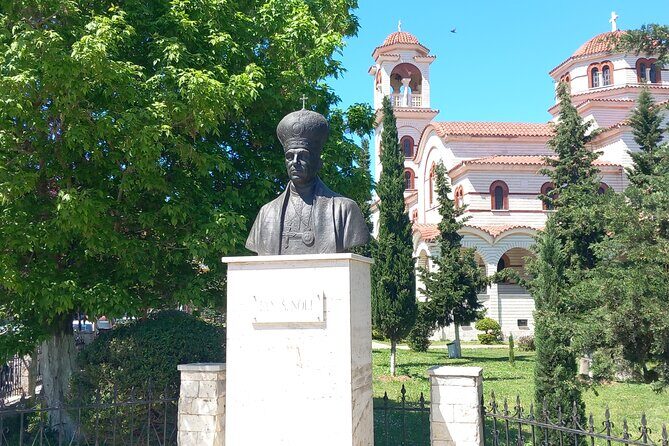
At the Aleksandër Moisiu Museum area, the story shifts from defensive walls to cultural and diplomatic history. This house once served as the consulate of England in Durres, after national independence when Durres was described as the capital.
Today, the building’s condition includes a modern complication: it has waited for necessary investments after the 2019 earthquake damaged the Byzantine tower next to the house. That’s a very real way for this tour to connect past to present. You’re seeing how natural events affect cultural heritage, and you’re learning the current situation instead of pretending everything is intact.
There’s also the Aleksander Moisiu angle: the residence is tied to one of Durres’s distinguished international theater artists. It’s a reminder that history isn’t only fortresses and churches; it’s also people who carried the city’s name out into the world.
Fatih Mosque: A 1501 Mosque Built Into the Byzantine Walls
Then you get a strong architectural crossover. Fatih Mosque is built in 1501 and sits at the base of Byzantine wall structures between two outer towers. The minaret is positioned so it’s sheltered from seaside views and potential sea attacks—another place where the guide links beauty with survival.
You’ll also learn that it uses the same building materials as the Byzantine walls, including supportive sections of the wall to open up a broad ground-floor base. That’s the kind of detail that makes a “single building” stop feel bigger than it is. It’s essentially a case study of how earlier infrastructure can be repurposed for later faith and life.
If you’re watching for construction styles, this is one of the best places to slow down (even though the stop time is short). Take a moment to look where the mosque meets the older stonework.
Durres Amphitheatre: Excavation in 1966 and a City Above It
The tour hits archaeology in a way that stays readable. At the Durres Amphitheatre, you’ll learn how excavation took place in 1966 by archaeologist Vangjel Toci. The guide also explains how the amphitheatre connects with the city above it—an “urban stack” idea that’s easy to grasp once someone points out what’s where.
This stop is valuable because the amphitheatre isn’t just a relic you pass by. It’s described as revealing secrets through excavation and tied into a broader government project aimed at restoring the entire amphitheatre and preserving its historical layers.
One consideration: amphitheatre areas can have uneven surfaces depending on where you stand and how the site is maintained. Wear shoes you trust on outdoor stone or paths, and keep your attention on the guide’s directions for the best viewing angles.
Catholic Church of Saint Lucy (Shën Dominiku) and the Communist-Era Ban
As you move through quieter streets again, you’ll visit Kisha Katolike Shën Dominiku, also referred to as the Church of Saint Lucy. The tone here is reflective: you’ll learn about the construction history and key figures connected to city governance.
The tour makes an important point about how religion was treated legally during the communist era when religious activities were legally banned. Seeing a church’s current condition next to that past gives the place emotional weight, not just architectural curiosity.
It’s a good stop if you like understanding how politics shaped everyday life. If you prefer purely architectural tours, this part may feel more “story-driven” than “design-driven,” but that balance is part of what makes the entire walk work.
Freedom Square (Sheshi Liria) and Durres City Hall: The 1928 Plan in Real Life
Next you reach a major urban anchor: Town Square, Sheshi Liria (Freedom Square). You’ll learn it was one of the city’s earliest squares and was originally designed as a floral garden in the 1928 First Urban Regulatory Plan. You’ll also hear about what it hosts today—Municipality and the Grand Mosque.
This is where the tour’s planning theme becomes easy to notice. You get development history from the Ottoman era through pre-World War II and into present times, plus how the city’s broad urban shape extended toward former Varosh neighborhoods.
From there, you continue to the Municipality of Durrës, built in 1931. The guide explains its Italian aesthetic preferences of the time and points out the large central balcony used for public speeches in the square. There’s also a detail about the 1926 earthquake destroying the clock tower, followed by installing a new public clock atop the new city hall.
If you’re the kind of traveler who likes to understand “why this square looks like it does,” these two stops deliver. They also give you an easy place to pause and take in the area before moving on.
The Great Mosque (Xhamia E Madhe E Durresit): Merchants, Italy’s Influence, and Restoration
At Xhamia E Madhe E Durresit, the guide frames the mosque as a product of economic power. It’s described as built through investments by local merchants during Italy’s pre-World War II economic dominance. Then, in 1939, the mosque’s closure and alteration under the communist regime is part of the story, followed by restoration after the 1990s.
The tour emphasizes that the mosque remains a sign of resistance and integration in Islam for residents, and it continues to be widely used today. Even without going deep into theology, this stop helps you understand how buildings can act like social anchors through political shifts.
Aleksandër Moisiu Theatre and the 1960s Palace of Culture Style
The walk continues at the “Aleksandër Moisiu” Theatre area, described as the Palace of Culture and as the starting point of a Downtown thematic tour named after Aleksander Moisiu.
You’ll learn the structure was erected in 1960 and noted as the Republic of Albania’s inaugural structure of its kind. The guide then connects it to Albanian architecture of the 1960s and how that influence appears across Albania’s landscape.
This stop is a nice change of pace because it’s not about ancient layers only. It brings you into twentieth-century architecture and ties it to a local artistic identity.
Rotonda and Forumi Bizantin: Vangjel Toci’s Byzantine Forum in the Open
Near the end, you reach Rotonda and Forumi Bizantin, described as a Byzantine forum discovered by archaeologist Vangjel Toci. This part works well because it turns archaeology into something you can walk around and interpret.
You’ll get the forum described as a priceless link for tracing the city’s transition from Late Antiquity to the Middle Ages. The open-forum setup also means you’ll be shown how artifacts on display contribute to a story about Byzantine urban life rather than only showing objects.
If you like archaeology explanations that give you “why these layers matter,” this stop is worth paying attention to. It’s also one of the places where the guide’s timing matters—short stop, clear points, and a sense of what to look for.
Price, Time, and What You Should Expect From a 2–3 Hour Private Walk
At $24.10 per person for a private walking tour in English, you’re paying for a guided experience that’s more than basic sightseeing. The value comes from the combination: multiple major monuments, guided connections between eras, and admissions listed as free for the stops.
The duration runs about 2 to 3 hours, and the stops are timed at roughly 10 minutes each, with one longer stretch at the tower. That’s the right format for travelers who want a strong overview without spending the day ticket-hopping. It also means you won’t get a museum-like pace or long interior time at every site.
One extra cost to remember: the tower’s multimedia projection and elevated balcony are not included. If you strongly care about that “projection plus view” moment, budget for it. If you don’t, you can still enjoy the included interior access.
Who This Tour Fits Best (and Who Might Want Something Different)
This private walk is a strong fit if you want a structured way to understand Durrës fast—especially if you’re interested in how one city can carry Byzantine, Ottoman, and later European and communist-era changes in visible ways.
It also works well for families and most visitors, and service animals are allowed. Since the route is walk-based and includes religious sites and outdoor archaeology, I’d choose it if you’re comfortable with some uneven outdoor walking and short stops.
If you’re the kind of traveler who wants hours at one museum or a deep excavation lecture, you might prefer a slower, site-focused day. This tour is built for a smart overview and good orientation, not for long stays.
Should You Book This Durrës Walking Tour?
I’d book it if you want your Durrës time to feel connected—tower to amphitheatre to squares to mosques—rather than a checklist. The best reason is the way the guide explains what you’re looking at and why it matters, including the repeated attention to named places and specific historical turning points.
Book it if you like walking tours that teach you how to read a city as you go. Skip it only if you want long time inside sites or you’re hoping everything is included at the tower without any add-on fees.
If you’re in Durrës with limited time and you want to leave with a map in your head, this one is a solid choice.