REVIEW · TIRANA
Walking Tour of Tirana
Book on Viator →Operated by Tirana Free Tour · Bookable on Viator
Tirana hits fast on foot. In this Walking Tour of Tirana, you move from Skanderbeg Square to Bunk’Art 2 and the Enver Hoxha Pyramid, while an English-speaking licensed guide keeps the story straight. I love the max 15-person group size, and I love how guides like Arber and Eri tell the city’s Communist-era chapters with real personality, not just dates.
What makes the experience feel like good value is the way it’s built around short, meaningful stops with free-entry permissions at each one. You’ll also get a manageable pace, roughly 2 hours 15 minutes total, so it works well as your first real loop through town.
One thing to consider: the meeting point can be a little tricky to spot, so show up early and don’t count on last-minute luck—especially if you’re navigating by taxi in busy traffic. Also, even with frequent pauses, some stops are brief, so bring a small list of questions if you want deeper answers.
In This Review
- Key things I’d highlight before you go
- Why this Tirana walking tour is a fast history lesson
- Getting your bearings: starting near Sheshi Skënderbej
- Skanderbeg Square: the city’s main stage
- Xhamia Et’hem Bej and the Clock Tower: quick, classic Tirana details
- Bunk’Art 2 and the National Gallery: art and war under one umbrella
- Enver Hoxha Pyramid: a landmark that still sparks questions
- Blloku and Postbllok: where power lived and where the line was drawn
- Resurrection of Christ Orthodox Cathedral: a clean finish near the center
- Price and value: $18.14 for a guided loop with free-entry stops
- What it feels like on the ground: pace, questions, and photo time
- Practical advice so you get more from every stop
- Should you book the Walking Tour of Tirana?
- FAQ
- How long is the Walking Tour of Tirana?
- What language is the tour offered in?
- How much does it cost?
- Are admissions or tickets included for the stops?
- Where does the tour start and end?
- What’s the maximum group size?
- Is the tour canceled for weather?
Key things I’d highlight before you go
- A tight timeline of Tirana’s eras in one walking loop, from Ottoman-era details to Communist landmarks.
- Free admission included at the listed sights, so you don’t have to plan ticket logistics on the fly.
- Guides who tell the story like a person wrote it, with stand-out narration styles from people such as Arber, Eri, Clint, and the guide nicknamed K.
- A small group that feels almost private, with time for questions and photos.
- Heat-friendly pacing when needed, with guides aiming for shade during stops on hot days.
- A smart finish near the center, at the Resurrection of Christ Orthodox Cathedral, so it’s easy to keep walking afterward.
Why this Tirana walking tour is a fast history lesson
If you’re trying to understand Tirana quickly, this works because it doesn’t treat history like a museum label. You see major places in roughly the order you’d want to connect them: symbols of state power, then propaganda-era architecture, then the religious and modern faces of the city.
The best part is how your guide links the dots. I’ve seen guides in many cities rattle facts, then move on. Here, the conversation style is different. People guided by Arber, Eri, Clint, and others frequently turn big political shifts into something you can picture—sometimes even with personal family memories from the Communist period shared in plain terms. That human angle is what makes the sites feel worth stopping for, even if each one is only a short visit.
You also get an immediate payoff for your free time. By the end, you’ll usually know which places deserve an hour or two on your own later, and which ones were important but won’t need a re-visit.
Other walking tours of Tirana worth a look


Getting your bearings: starting near Sheshi Skënderbej
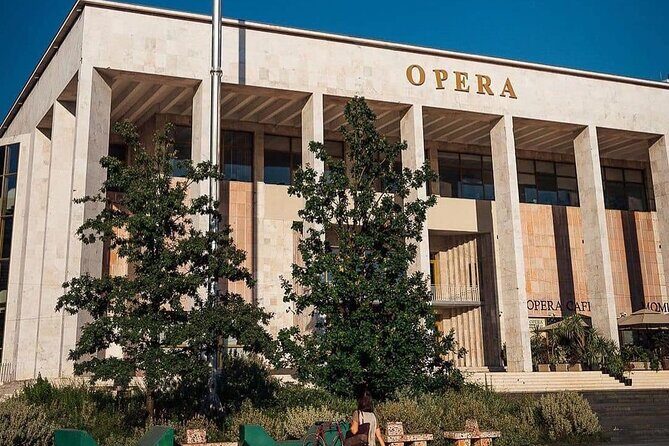
The tour starts near the National Theatre of Opera, Ballet and Folk Ensemble (Pallati i Kulturës) on Sheshi Skënderbej. That matters because Sheshi Skënderbej is Tirana’s central reference point. If you nail this starting area, the rest of your trip becomes easier.
A practical tip: treat arrival like you’re meeting a friend. Don’t plan to slide in at the last second. The tour runs on schedule, and when someone is late (or can’t find the group), it throws off the flow for everyone else. One reason the experience can feel stressful is that the meeting instructions can be hard to interpret if you’re standing in the wrong spot—so arrive early enough to ask someone nearby or check your map again.
Also, the tour is designed to be outdoors and runs in all weather conditions. That means pack for the day you actually get, not the weather forecast you wish you had.
Skanderbeg Square: the city’s main stage
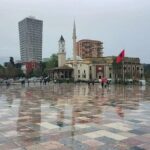
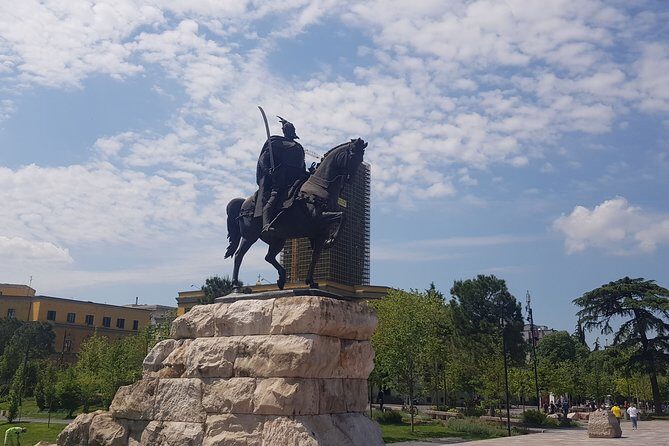
Skanderbeg Square is where Tirana shows you its public face. During the walk, you’ll stop briefly at its center to orient your eyes: where the energy of the city sits, what buildings frame the space, and why this square remains a key meeting point for local life.
Even if you’ve already seen the square from photos, standing there with context helps. Your guide typically explains what the square represents over time, and that gives you a sharper lens for the rest of the walk. It’s one of those places where you’ll understand more by watching for details—street flow, sight lines, and the way monuments anchor the space—than by trying to read signs.
This stop is also useful for photos. You’ll have a quick window to capture the broad view, then move on without turning the morning into a photography session that eats your schedule.
Xhamia Et’hem Bej and the Clock Tower: quick, classic Tirana details
Next come two older landmarks: the Xhamia Et’hem Bej (an old mosque in the city center) and the Clock Tower.
These aren’t long museum-style visits. Instead, they’re short looks that help you feel the layers in Tirana. The mosque stop gives you a sense of the city’s older urban fabric—how the religious architecture sits in the everyday street scene. The Clock Tower adds another kind of anchor: a historical marker that helps you orient the mental map of where you are.
The key here is pacing. You’re not asked to memorize architecture. You’re asked to notice how the city mixes eras in the same small area. That’s the real value of stopping for five minutes. You’ll leave with a better sense of what’s around you the moment you walk away.
Bunk’Art 2 and the National Gallery: art and war under one umbrella
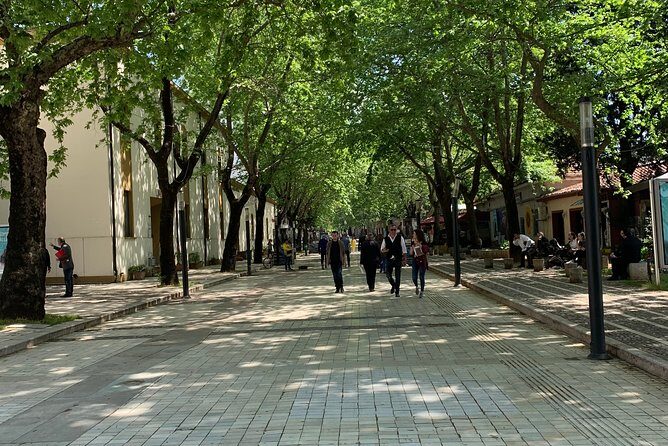
One of the strongest parts of the walk is the way it frames the Communist-era mindset using two different angles.
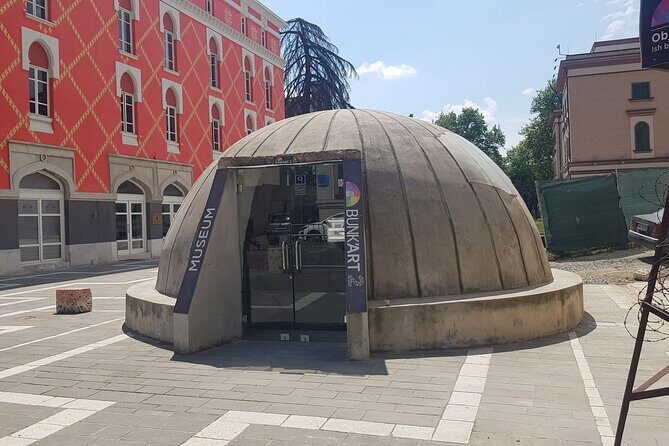
At Bunk’Art 2, you visit the BunkArt museum area near the city center. Your guide’s job here is to connect what you’re seeing to what life felt like—why people built and feared the spaces they did, and how those choices shaped daily reality.
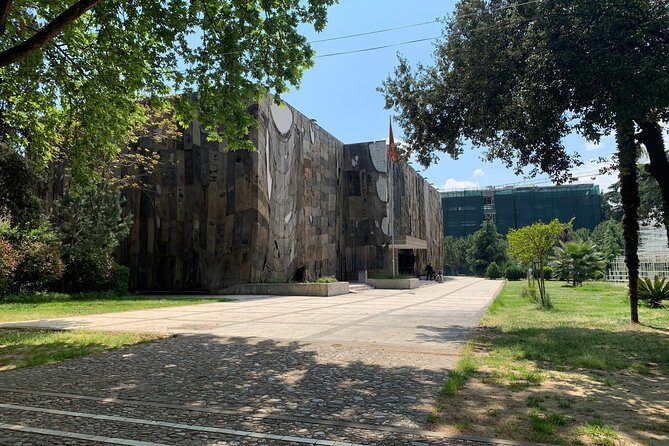
Then you move to the National Gallery of Art, where you’ll learn about arts during the Communist era. This second stop is important because it prevents the narrative from becoming one-note. Instead of only focusing on buildings designed for control, you get the story of how culture and art were shaped in that same period.
What I like about this pairing is that it gives you an immediate contrast:
- one place speaks through the idea of secrecy and survival
- the other speaks through creativity under rules
Even if you don’t consider yourself a history buff, you’ll likely come away with a clearer understanding of why the era left such visible marks on Tirana’s landscape and institutions.
Other walking tours we've reviewed in Tirana


Enver Hoxha Pyramid: a landmark that still sparks questions
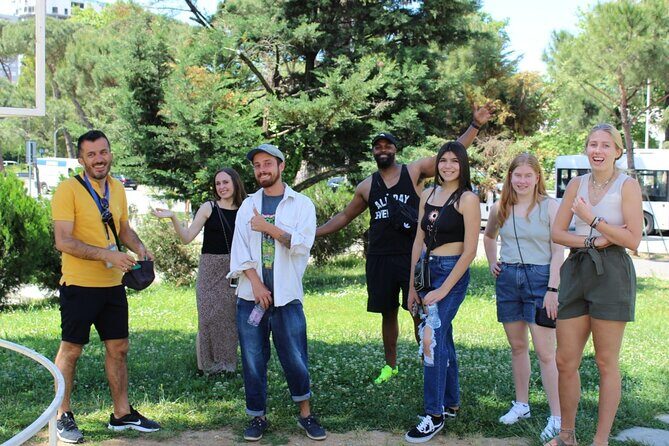
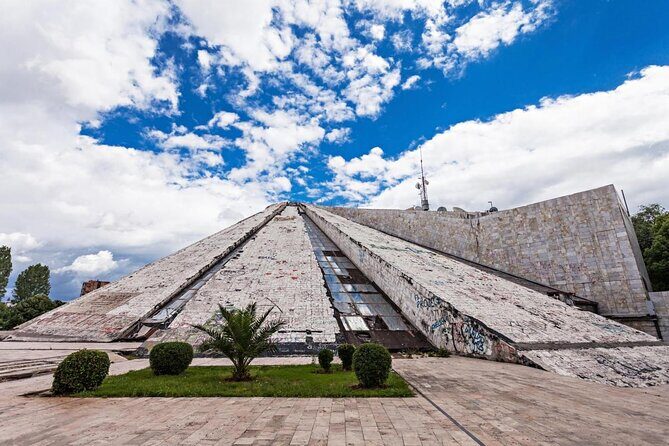
The Enver Hoxha Pyramid is one of Tirana’s most talked-about symbols. In this part of the walk, you stop to see the landmark and hear how your guide explains its meaning.
This is the sort of site where people tend to have questions—because it looks like a dramatic design choice, but it also feels politically loaded. A good guide helps you interpret that mix. In this experience, the storytelling approach often makes you think in terms of intentions and outcomes: what the regime wanted people to see, and what that left behind after the era ended.
If you’re the type who likes to connect architecture to power, you’ll appreciate this stop. If you’re less into politics, you can still enjoy it visually, but the context helps you understand why locals treat it as more than just a shape on a skyline.
Blloku and Postbllok: where power lived and where the line was drawn
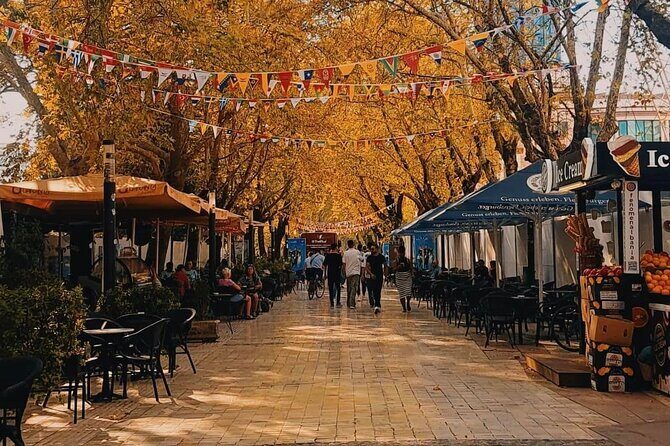
After the Pyramid, you head into Blloku, then finish with Postbllok–Checkpoint Monument nearby.
Blloku is described as an area where you can see the villa of an Albanian dictator. That’s not a small detail. It instantly changes how you think about the neighborhood: it’s not just a place to walk through, it’s a geography of privilege and restrictions.
Then you get Postbllok–Checkpoint Monument, close to Blloku. This stop adds the other side of the story: not only where leaders lived, but how control was enforced in public space. The checkpoint idea helps you understand why everyday movement mattered so much in that era.
These two stops together are powerful because they turn the city into a kind of map of behavior—who could move freely, who couldn’t, and how visible boundaries shaped people’s lives.
Resurrection of Christ Orthodox Cathedral: a clean finish near the center
The last stop is the Resurrection of Christ Orthodox Cathedral. Finishing here is smart for a couple reasons.
First, it gives the walk a modern spiritual and civic note—so you don’t end on only the heavy Communist themes. Second, the tour ends very near the city center, which makes it easy to keep going right away, whether you want to grab a meal, do a self-guided walk, or return to a place that caught your eye earlier.
If you’re traveling for the first time and want a strong “before dinner” anchor, this end point helps. You’re not stuck far out or forced into a complicated transit plan right after the tour.
Price and value: $18.14 for a guided loop with free-entry stops
At $18.14 per person, this isn’t a budget dinner—yet it also isn’t a big-ticket guided tour. The value comes from how the tour is structured.
You’re paying for:
- English-speaking licensed guides
- a guided route that covers key landmarks efficiently
- a set of listed stops with admission tickets included
- a small group size capped at 15
There’s also a subtle value factor you might appreciate: this isn’t a typical pay-only-then-you-tip setup. Your payment covers both the reservation fee and the guide’s compensation directly. That means you can tip if you genuinely want to, but you’re not expected to carry the whole cost on top.
One more practical point: this walk is commonly booked about 10 days in advance on average. That’s often a sign of dependable scheduling and demand. If your trip dates are fixed, book ahead so you’re not scrambling.
What it feels like on the ground: pace, questions, and photo time
This is an easy walking format. The stops are short—around five to ten minutes at each location—so you don’t feel like you’re stuck in any one spot too long.
In good runs, you’ll also get time to ask questions and take photos. Several guides are praised for storytelling that keeps people engaged, plus a style that encourages interaction. People mention guides like Clint and Eri being funny while still delivering solid context, and they mention that the walk helps you decide where to spend extra time later.
Group size plays a huge role here. With a maximum of 15 people, it’s easier for the guide to keep track of the room. That’s part of why this tour can feel personal even when it’s technically group-based.
If you’re traveling with kids, know that children must be accompanied by an adult, but the overall format is designed for most travelers to participate.
Practical advice so you get more from every stop
A few small moves can make this tour land harder:
- Arrive early at the meeting spot so you don’t lose time scanning streets for your guide.
- Bring water and plan for strong sun if you’re doing this in summer. One recurring theme is that guides aim for shade when they can.
- Come with two or three questions you actually care about. For example: how Tirana changed after Communism, or how certain landmarks were used to shape public life. A good guide will turn those into answers that connect multiple stops.
- After the walk, pick one or two places to return to on your own. The structure is meant to help you choose.
If you do those things, the short stops won’t feel rushed—they’ll feel like an organized sampler.
Should you book the Walking Tour of Tirana?
Yes, if you want a smart first pass through Tirana that covers the big landmarks and the meaning behind them. This is especially worth it if:
- you have limited time in the city
- you want the Communist-era story explained in plain English
- you like guided walking that leaves you with a clear list of what to revisit
Skip it (or add a second activity) if you’re the kind of traveler who needs long museum time at each site. The stops are designed to be quick. You’ll get the overview, not a full-day replacement for deeper visits.
FAQ
How long is the Walking Tour of Tirana?
It lasts about 2 hours 15 minutes.
What language is the tour offered in?
The tour is offered in English.
How much does it cost?
The price is $18.14 per person.
Are admissions or tickets included for the stops?
For the listed sights on this tour, admission tickets are included (shown as Free for each stop).
Where does the tour start and end?
It starts at the National Theatre of Opera, Ballet and Folk Ensemble (Pallati i Kulturës, Sheshi Skënderbej) and ends at the Resurrection of Christ Orthodox Cathedral.
What’s the maximum group size?
The tour has a maximum of 15 travelers.
Is the tour canceled for weather?
The experience is described as operating in all weather conditions with appropriate dress. If it is canceled due to poor weather, you’ll be offered a different date or a full refund.