REVIEW · TIRANA
Inside Tirana Walking Tour
Book on Viator →Operated by Zemra Travel · Bookable on Viator
Tirana has a story you can walk. This Inside Tirana Walking Tour strings together landmark architecture, hard memory, and everyday city life for a low-cost $6.02 guided stroll with a mobile ticket in English.
I love how the guide ties each stop to a bigger theme, from Albania’s arts scene to the realities of the 20th century. I also love the 2-hour format: you get a fast, practical sweep of Tirana’s key sights without feeling rushed.
The only real catch is weather. You’ll spend time outdoors, so plan for good walking conditions and have a backup date in mind.
In This Review
- Key highlights you should notice
- Getting oriented at Et’hem Bej Mosque in Sheshi Skënderbej
- National Theatre of Opera and Ballet: culture history in plain sight
- Skanderbeg Square: Tirana’s power center, mapped in layers
- National History Museum: a fast timeline you can see
- Postbllok Checkpoint Monument: communist surveillance made physical
- Blloku: how a restricted elite area became Tirana’s social center
- Price and time: what $6.02 buys you in real value
- The guide factor: Era’s kind of explanation makes it click
- Practical tips for an easy, comfortable walk
- Who should book this Tirana walking tour
- Should you book Inside Tirana Walking Tour?
- FAQ
- What is the meeting point for this tour?
- How long is the Inside Tirana Walking Tour?
- Is the tour offered in English?
- Are there admission tickets to pay at the stops?
- What group size should I expect?
- What if the weather is bad or I need to cancel?
Key highlights you should notice
- A tight 2-hour route through Tirana’s biggest landmarks: five stops, each with context you can actually use.
- National Theatre of Opera and Ballet as a cultural anchor: music history right in the building’s story.
- Skanderbeg Square and the city’s planning layers: the square’s design reflects multiple eras of power.
- National History Museum for a quick timeline: one venue covering antiquity through independence and more.
- Postbllok Checkpoint Monument for communist-era truth: original concrete pillars, bunker, and a piece of the Berlin Wall.
- Blloku’s shift from restricted district to nightlife: how a once-closed elite area became a social core.
Getting oriented at Et’hem Bej Mosque in Sheshi Skënderbej
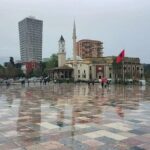
Most great city walks start with a view you can orient around, and this one begins at Et’hem Bej Mosque on Sheshi Skënderbej 1. From there, you’re placed right in Tirana’s center of gravity, both geographically and historically.
This also makes timing easier for you. You’re not hunting for your meeting place across town, and the tour ends back at the same spot, so you can roll into lunch or the next sight without negotiating transport right away. It’s also close to public transportation, which helps if your day is already moving fast.
Other walking tours of Tirana worth a look


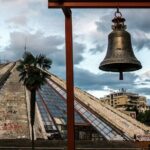
National Theatre of Opera and Ballet: culture history in plain sight
The first stop is the National Theatre of Opera and Ballet of Albania, located on the building known as the Palace of Culture since 1966. Even if you just glance at it from the outside, the tour gives you the key backstory: the Albanian Philharmonic dates to 1950, bringing together the choir, symphony orchestra, opera singers, ballet troupe, and the conductor.
What I like here is the way the guide explains why the arts mattered to Albania’s national identity. You hear about how cultural development led to creating the State Conservatory, described as the country’s first vocational school for large-scale musical training. So this isn’t just a landmark photo stop. It’s a quick lesson in how institutions get built, then become tradition.
You also have an advantage with this stop: it’s marked with free admission. That means you can focus on taking in the space and the story rather than doing mental math about what’s worth paying for.
Skanderbeg Square: Tirana’s power center, mapped in layers
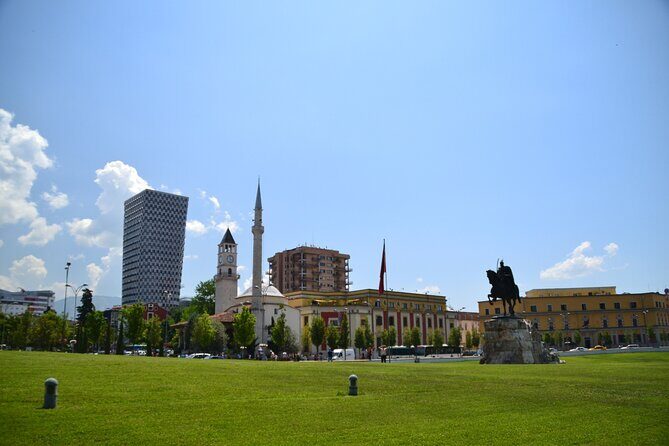
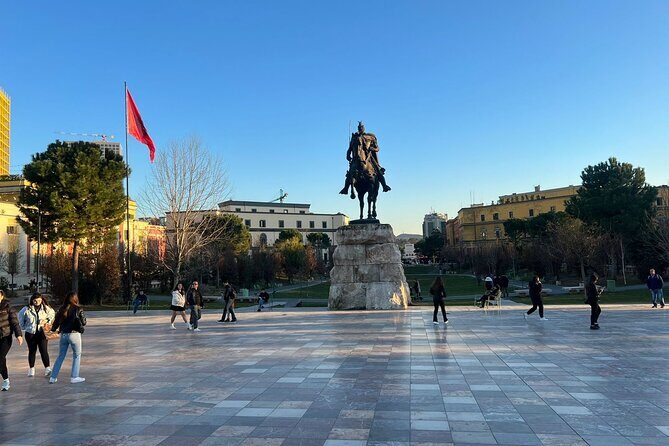
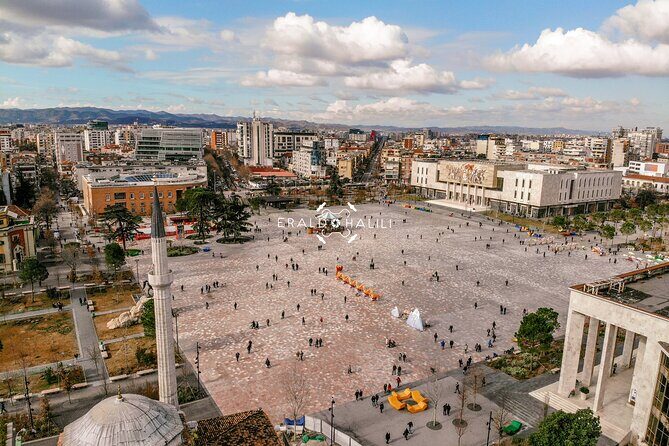
Next you move to Skanderbeg Square, Tirana’s central plaza, named for national hero Gjergj Kastrioti Skënderbeu. The square covers about 40,000 square meters, and the Skanderbeg Monument anchors the view—big enough that you feel like you’re standing at the city’s main stage.
This is the stop where city planning starts to feel real. The tour discusses how Tirana’s plan began with Armando Brasini in 1925, then continued by Florestano Di Fausto in a Neo-Renaissance style, with angular solutions and large architectural order. After the Italian invasion, the master plan was updated again in 1939 by Gherardo Bosio.
What makes this useful for you is the list of surrounding institutions. Around the square you’ll find places such as the Tirana International Hotel, the Palace of Culture, the National Opera, the National Library, the National Bank, the Ethem Bey Mosque, the Clock Tower, and multiple ministry buildings. When you understand the square as a hub for governance, culture, and finance, your walk through Tirana becomes less random.
This stop is also marked as free admission, so it’s an easy win: you can look longer at the details without checking your wallet.
National History Museum: a fast timeline you can see
After the square’s open space, the pace turns more reflective at the National History Museum (Muzeu Historik Kombëtar). It opened on 28 October 1981, and the tour frames the building as a large complex—about 27,000 square meters total, with around 18,000 square meters set aside for exhibits.
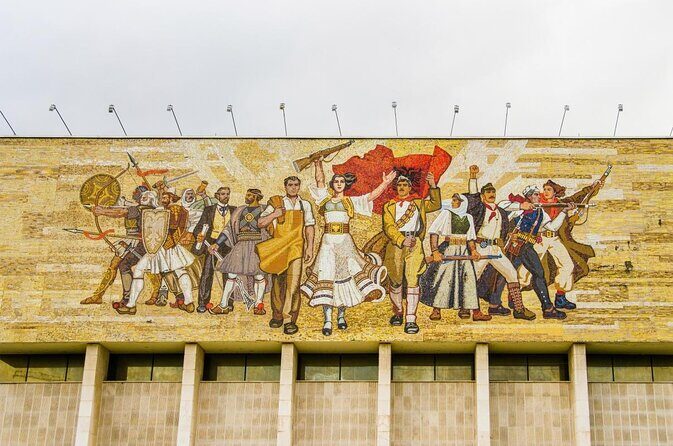
One detail worth remembering before you go in: above the entrance is a large mosaic titled The Albanians. The tour points to it as a visual thread linking ancient-to-modern figures connected to Albanian history.
Inside, you’re guided through multiple thematic pavilions, including Antiquity, Middle Ages, Renaissance, Independence, Iconography, National Liberation Antifascist War, Communist Terror, and Mother Teresa. Even without spending all day, those categories help you build a mental map. You stop thinking in terms of disconnected facts and start seeing how eras connect.
This is also a stop where the tour’s short time window works in your favor. Because the entry is marked as free admission, you can treat it like a high-impact introduction. If later you want to come back, you’ll already know which rooms and themes you care about most.
Postbllok Checkpoint Monument: communist surveillance made physical
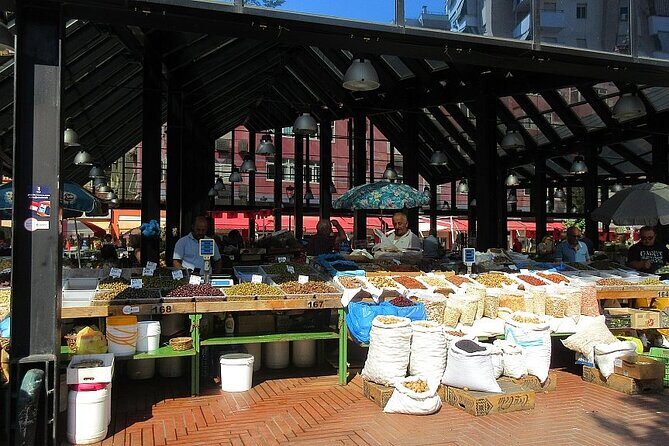
Then the walk turns more serious at Postbllok, the Checkpoint Monument. The tour explains it as a reminder of Albania’s communist past, especially the surveillance and persecution tied to the regime associated with Enver Hoxha.
What you’ll actually see here matters. The site includes original concrete pillars from a notorious labor camp, an old bunker, and part of a Berlin Wall. That mix of elements doesn’t just describe oppression; it gives it weight. You understand that this wasn’t abstract history—it was a system built from structures, confinement, and fear.
If you like history that feels grounded rather than academic, this stop gives you that. The tour frames Postbllok as a dedication to those who suffered and as a reminder of Albanian resilience through the push toward freedom and democracy.
The practical side: this stop is marked with free admission, so you can take it in without turning it into a billable decision. It’s also a shorter stop, about 10 minutes, which makes it easier to process emotionally without exhausting yourself.
Other walking tours we've reviewed in Tirana


Blloku: how a restricted elite area became Tirana’s social center
To end on a more everyday note, you head to Blloku (often called Ish-Blloku). The tour describes it as an upmarket area with boutiques, shops, restaurants, trendy bars, pubs, and cafes. It’s tied to Tirana e Re in southwestern Tirana.
This is one of those places where the story changes as fast as the street life. During the communist era, Blloku was restricted—reserved for members of the Albanian politburo, and not open to ordinary people. The tour adds a detail that makes it feel even more deliberate: it was often unmarked on maps, which underlines how hidden power was.
After the fall of communism, Blloku’s profile exploded. The tour calls it a playground for the young Albanian elite, and notes that the area continues to connect to that past because you can still find the residence of Enver Hoxha there.
For you, this stop is about contrast. You’ve just visited spaces tied to institutions and oppression; then you walk into a neighborhood shaped by freedom, choice, and nightlife. It’s a clear way to understand modern Tirana without needing a separate city-tour day.
Price and time: what $6.02 buys you in real value
At $6.02 per person for about 2 hours, the headline price is low. But what makes it real value is what you get alongside it: a tour guide, a route that covers major sights, and free admission listed for each stop.
In other words, you’re paying mainly for someone to connect the dots: why these buildings exist, how the square got redesigned over time, what the museum categories mean, and why Postbllok hits so hard. That kind of interpretation is hard to DIY, especially in a city where multiple layers of rule show up in architecture.
Also, the tour uses a mobile ticket, and it runs with a maximum group size of 30. That’s a workable scale for a walking route: big enough to run efficiently, small enough that you’re not totally lost in a crowd.
The guide factor: Era’s kind of explanation makes it click
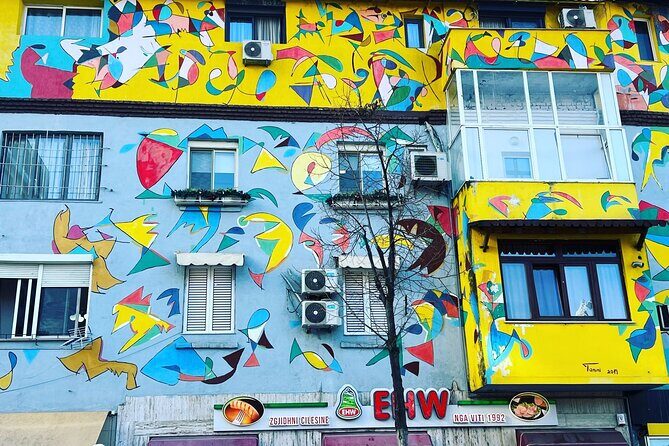
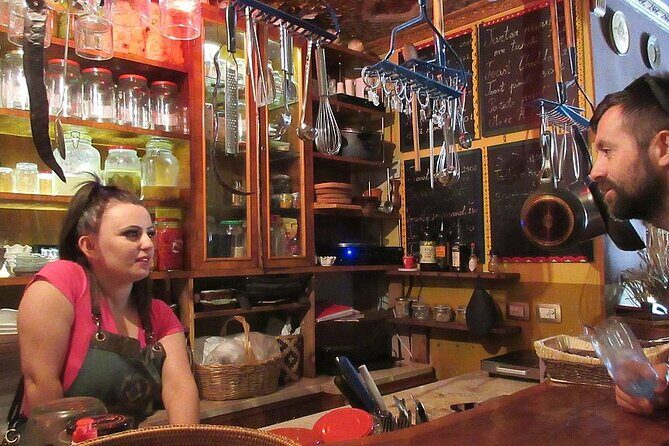
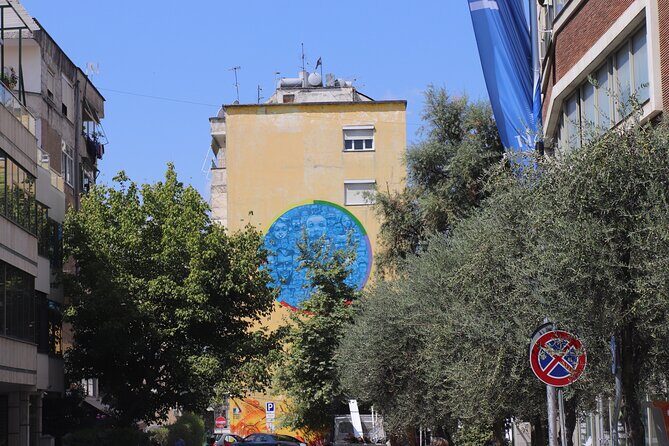
One of the strongest signals from the experience is the guide. I’m especially drawn to guides who can explain both politics and street life in the same breath. If Era is the guide on your date, you’ll likely get that balance: friendly delivery, clear knowledge about Albanian and Tirana history, and a way of pointing out the city’s street culture and murals.
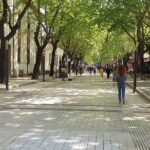
That matters because Tirana isn’t only monuments. It’s also walls, corners, and casual visual storytelling. When a guide can connect those details back to the big picture, you end your walk with a better sense of how the city thinks.
You may even get a more personal feel if the group is smaller on your day. The format allows the pacing to feel less like a stamp-collection checklist and more like a guided walk that responds to attention.
Practical tips for an easy, comfortable walk
This is a walking tour, and it’s timed tightly across five stops. That means your main job is to show up ready to move and look.
A few practical points help:
- Wear comfortable shoes with decent grip, since sidewalks can be uneven.
- Bring a water bottle, especially in warmer months.
- Plan for good weather—this tour notes it depends on it, so don’t schedule it as your only outdoor activity on a sketchy forecast day.
If you’re traveling with a need for service animals, this tour allows service animals. It also runs in English, so you can expect the explanations to be tailored for English speakers.
Who should book this Tirana walking tour
This tour fits you well if:
- You want a quick orientation to Tirana’s center and its main historical themes.
- You like guided context at stops that otherwise might look like just photos.
- You’re curious about both Albania’s cultural institutions and its 20th-century political story.
It’s also a good choice for visitors who don’t want to split their day into multiple museum trips. The walk packs in a museum plus major monuments without turning into a full-day plan.
If you’re the type who loves long, slow museum time, you might later want to return to the National History Museum for a deeper read. But as a first look, this route does its job fast.
Should you book Inside Tirana Walking Tour?
I’d book it if you want the best odds of understanding Tirana in a short time, with free admission stops and a guide who connects details into a story you can remember. At $6.02 with interpretation included, it’s hard to justify skipping if you’re already in the city center.
The only hesitation I’d consider is timing with the weather. If forecast conditions look poor, plan to stay flexible and treat the tour as a day you can reshuffle.
Also, go into it expecting a focused introduction, not a deep multi-hour museum marathon. You’ll leave with a stronger sense of Tirana’s music-and-memory, and that’s exactly the kind of start that makes the rest of your trip easier.
FAQ
What is the meeting point for this tour?
The tour meets at Et’hem Bej Mosque, Sheshi Skënderbej 1, Tiranë 1001, Albania.
How long is the Inside Tirana Walking Tour?
It runs for about 2 hours.
Is the tour offered in English?
Yes. The tour is offered in English.
Are there admission tickets to pay at the stops?
The stops in the itinerary are listed with Admission Ticket Free, so you should not need to buy entry tickets for those specific locations.
What group size should I expect?
The tour has a maximum of 30 travelers.
What if the weather is bad or I need to cancel?
The experience requires good weather. If it’s canceled due to poor weather, you’ll be offered a different date or a full refund. You can cancel for a full refund up to 24 hours before the start time.