REVIEW · TIRANA
Small Group Tour; The Balkans & Central Europe – Tirana to Vienna
Book on Viator →Operated by Choose Balkans · Bookable on Viator
A route like this is rare: it links two worlds in one trip. You’ll start in Kruja’s medieval streets, then work your way through Kosovo, Montenegro, Bosnia, Serbia, Hungary, Slovakia, and Austria with a steady rhythm of markets, fort views, and big architectural contrasts. Two things I especially like are the small group size (up to 10) and the way the tour blends standout sights with practical time to wander on your own.
The main plus for your day-to-day comfort is that you get private transportation plus a professional tour leader, so you’re not stuck figuring out logistics across multiple borders. You’ll also have breakfast included every morning and selected entry tickets handled for the stops that require them. One consideration: lunches and dinners are not included, so you’ll want a simple plan for meals (and budget) as you go.
In This Review
- Key highlights you’ll feel from day one
- Why this Tirana to Vienna route makes sense
- Price and logistics: what $4,876 buys you (and what it doesn’t)
- Kruja to Prizren: resistance, bazaars, and mosque patterns
- Sinan Pasha Mosque and Prizren’s fortress views
- Deçan Monastery and Rahovec wine country: a slower pace inside the schedule
- Shkodër and Rozafa Castle: lake views and Venetian fingerprints
- Montenegro’s coast: Sveti Stefan’s postcard reality and Kotor’s maze streets
- Mostar and Blagaj: Stari Most and the Buna spring waters
- Sarajevo: Ottoman and Austria-Hungarian Sarajevo in one walking day
- Serbia’s Danube rhythm: Zvornik calm, Belgrade views, Karlovci wine lore, Novi Sad bars-and-baroque
- Subotica and Budapest: Austro-Hungarian architecture beyond the obvious
- Győr and Bratislava: Danube smaller stops with real structure
- Vienna finale: drop-off day with just enough time to reset
- Who this tour suits best
- Should you book this Tirana to Vienna small-group tour?
- FAQ
- How long is the Tirana to Vienna tour?
- What countries does this tour cover?
- What is the group size limit?
- Is pickup in Tirana and drop-off in Vienna included?
- What time does the tour start each day?
- Are breakfasts included?
- Are entry tickets included?
- Are lunch and dinner included?
- Do I need travel health insurance?
- Is the tour refundable if I cancel?
Key highlights you’ll feel from day one
- Kruja’s Old Bazaar and Castle: the kind of place where narrow streets make time slow down
- Prizren’s mix of faiths: Sinan Pasha Mosque and fortress views over the old town
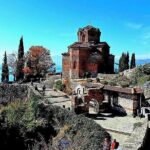
- UNESCO-class stops: Deçan Monastery and Kotor, plus other major historic layers along the route
- Danube “big city” moments: Belgrade Fortress, Novi Sad’s Petrovaradin, and Budapest’s main sights
- Austro-Hungarian architecture beyond the obvious: Subotica’s City Hall-centered main square and Budapest’s castle area
- A calm finale in Vienna: guided handoff so you can step into the city without last-day stress
Why this Tirana to Vienna route makes sense
This tour is built around a simple idea: follow the cultural shift from Albania and the Balkans northward into Central Europe, with the Danube acting like a moving “spine” of the journey. You get big-name places like Budapest and Vienna, but you also spend real time in cities that most people skip. That mix is what keeps the trip from feeling like checklists.
The route also gives you a good variety of travel styles. Some days are walk-and-stare (old towns and fortress panoramas). Other days are better for food and craft stops (bazaars, monasteries with food production, a slow-food farm visit). If you like travel that feels like conversations with the place—rather than just sightseeing—this fits.
If you're still narrowing it down, here are other tours in Tirana we've reviewed.

Price and logistics: what $4,876 buys you (and what it doesn’t)
At $4,876.33 per person for about 14 days, the cost looks high until you break down what’s included. You’re paying for 3-star hotels with breakfast, private transportation, a professional tour leader, and entry tickets for the sites that require them. You also get hotel pickup in Tirana and hotel drop-off in Vienna, plus tourist/road/petrol taxes handled.
In other words, the price covers the “moving pieces” that often waste your time on multi-country trips. It’s easier on you when border crossings, long drives, and timing are managed as one system—especially with a maximum group size of 10. You’re likely to spend less mental energy on logistics and more time actually looking at what you came for.
What’s not included is equally important: lunches, dinners, drinks, snacks, and souvenirs. So you should budget meals on your own and be ready for variety. Some cities are very meat-and-dessert friendly (Sarajevo is a clear example), while others lean toward market browsing and cafe culture.
Kruja to Prizren: resistance, bazaars, and mosque patterns
Your first day is all about getting the “Balkans feel” fast—mountain air, stone streets, and the sense that history is right in front of you. Kruja was known for Albanian resistance against Ottoman expansion in the 15th century, and it shows in the way the town is set on steep ground. You walk the Old Bazaar through narrow lanes and wooden houses, one of the biggest and oldest bazaar areas in the region, and it’s exactly the sort of place where you can find typical souvenirs and more handmade crafts like carpets and jewelry.
Then you climb into Kruja Castle, where the layout is about defense. The tour also highlights hidden paths locals used so people could leave the castle unnoticed when the enemy surrounded it. That little detail changes how you see a fortress: you stop thinking only in walls and start thinking in choices people had to make.
Practical tip: on days like this, wear shoes with grip. Cobblestones and uneven steps are common, and you’ll want to keep moving without worrying about your footing.
Sinan Pasha Mosque and Prizren’s fortress views
From Kruja you cross into Prizren, described as Kosovo’s cultural capital. What I like here is how the city’s character is shaped by its geography—there’s a river running through the old town with bridges and crossings stitched across it.
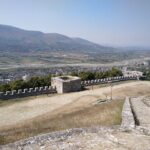
You’ll visit Sinan Pasha Mosque, famous for its arabesque color and patterning. Then you head up to the Prizren Fortress for a panorama over the city. That combination—ornament on the inside, landscape on the outside—gives you a satisfying “two-part picture” of the place.
If you happen to travel in August, Prizren’s medieval streets become home to Dokufest, a well-known short film festival. Even if you don’t time it to that month, it helps you understand why the town feels lively beyond tourism.
Deçan Monastery and Rahovec wine country: a slower pace inside the schedule
The tour doesn’t only chase dramatic ruins. It also gives you a day that’s more reflective and food-focused.
In Kosovo, you’ll pass Gjakova, known for the oldest and largest bazaar in the region. Even after damage from conflicts, the bazaar was rebuilt and remains a solid place for handmade crafts and a proper meal. This is where you get a feel for daily life and buying power in the region, not just postcard corners.
Then you go to Deçan Monastery, UNESCO-listed since 2004 for its frescoes. What makes this stop stand out is that Orthodox monks still inhabit the monastery, and they produce fresh organic foods like cheeses. The frescoes include depictions of life in the 14th century, plus the Palaeologan renaissance that shifted Byzantine painting styles.
After that, the tour shifts to the Rahovec Valley, tied to viticulture with grape cultivation traced back to Illyrian times (about 2,000 years ago). Vineyards here sit at altitudes roughly 350–520 meters, which matters for growing conditions. If you like wine culture, it’s an easy day to connect a landscape with a product you can later recognize at home. A wine festival happens annually in September, so timing changes what you’ll see.
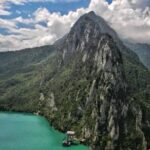
Shkodër and Rozafa Castle: lake views and Venetian fingerprints
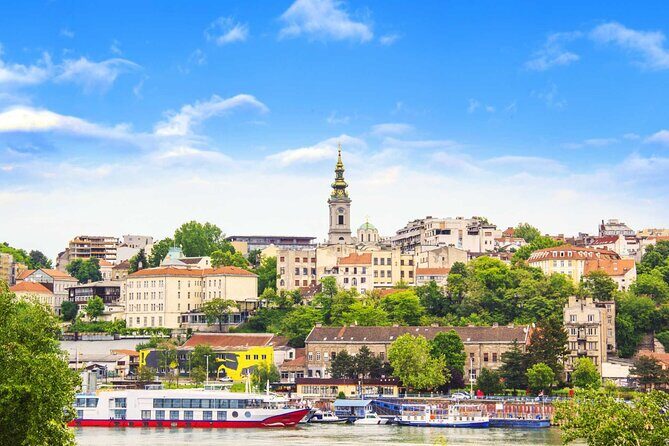
After the Kosovo section, you head back into Albania toward Shkodër (Shkodra), a city with a long habitation story and a strong connection to the lake that dominates the region. One reason this area works on a multi-country tour is the pace: you get scenery plus history without needing a huge museum day.
You’ll visit Rozafa Castle, with tremendous views over the lake and over the meeting of three rivers as they flow toward the Adriatic Sea. Architecture influences are also part of the experience. The city’s style shows Venetian influence, and there’s even a note that in February you might catch a carnival festival, including masks that are made locally.
If you’re sensitive to long driving days, pay attention here. This leg mixes scenic stops with a steady transit rhythm. The upside is that you end up with meaningful breaks at viewpoints rather than just arriving and rushing.
Montenegro’s coast: Sveti Stefan’s postcard reality and Kotor’s maze streets
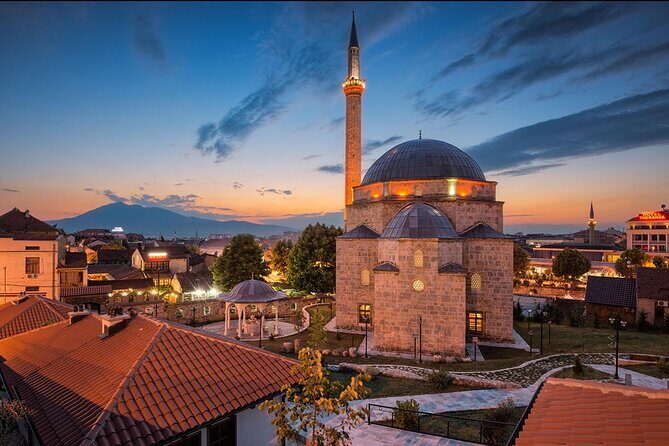
Montenegro hits you with coastline drama. Near Sveti Stefan, you stop at a viewpoint where you can see the island setting. A key detail: the island itself is now an exclusive residential resort, so you can’t visit it like you once could. Still, the coastal sightline makes it worth a stop for photos and a sense of scale.
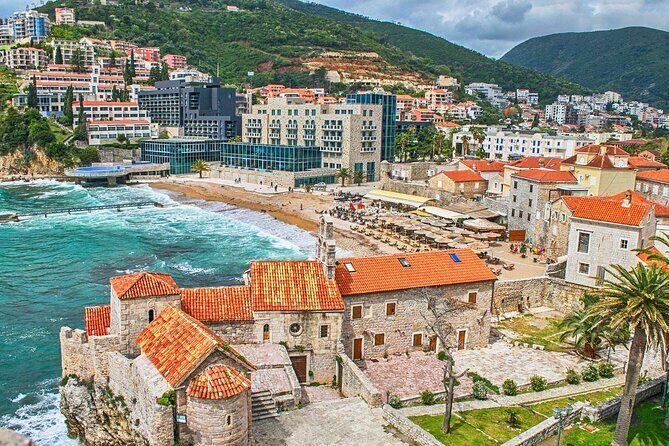
Then you continue to Budva, which splits into old and new areas. In the Old Budva, you can see the historical center and churches, including St. Ivan Church and St. Mary’s small church, plus medieval streets worth slow walking. This is a good place for you to control your own pace, grab a coffee, and let your eyes adjust after the drive.
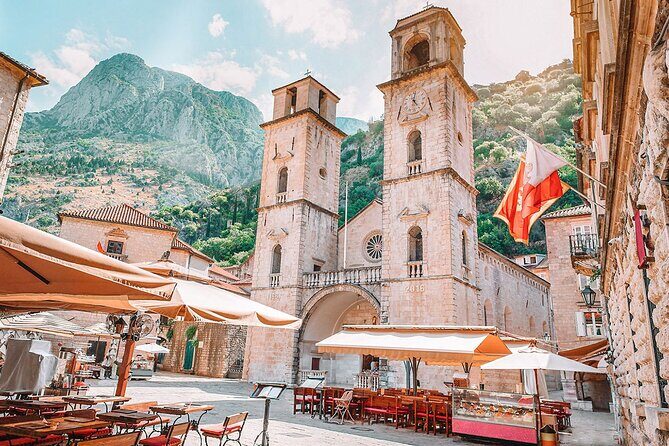
Finally, Kotor delivers the big UNESCO payoff. The old town is a maze of narrow cobblestone streets, shaped by defensive thinking so intruders wouldn’t move easily through the city. You’ll visit Saint Luke’s Church, a local focal point tied to a sense of unity for residents.
Practical note: cobblestones plus uphill-old-town streets can stack fatigue quickly. If you’re the kind of traveler who likes photos, plan for short rests and don’t treat every street like a race.
Mostar and Blagaj: Stari Most and the Buna spring waters
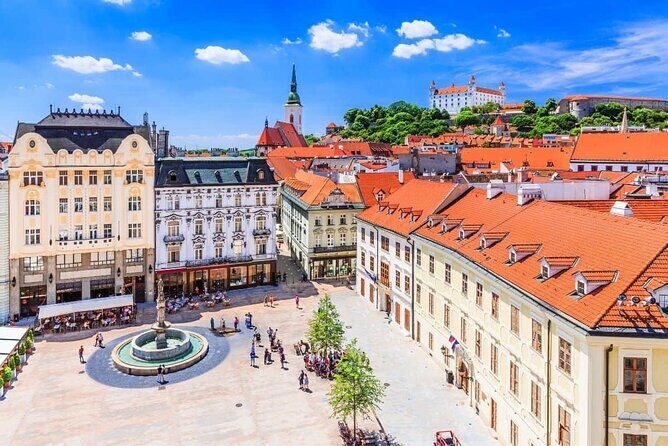
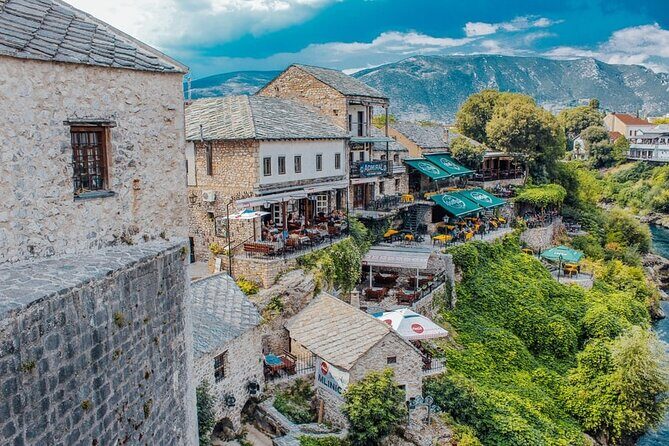
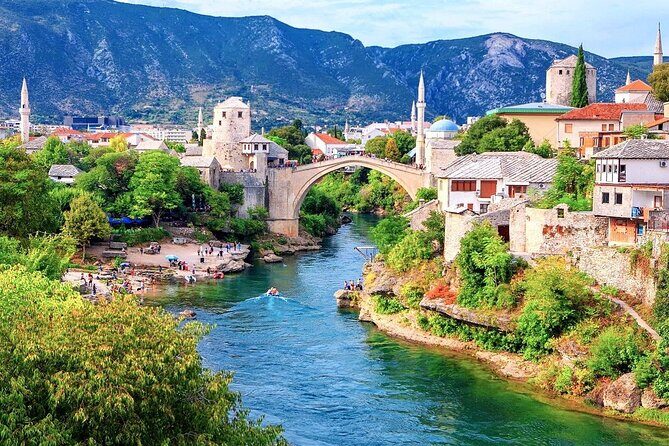
Crossing into Bosnia & Herzegovina, you reach Mostar, where the star is the Old Bridge (Stari Most). It’s UNESCO-listed and built in typical Islamic architectural style in the 16th century. Even without deep technical knowledge, you can feel the importance of the bridge in daily city life.
You also spend time in the Old Bazaar area, where the streets are colorful and the atmosphere feels lived-in. The tour highlights commemorative stones with “Don’t Forget” around town, reminding you that Mostar’s beauty also carries the weight of recent history. You’ll see mosques and Turkish bazaars side by side with modern life—exactly the kind of layered city structure this route is good at.
Then you go to Blagaj tekija, an Ottoman medieval site outside Mostar at the foot of a cliff, with blue waters of the river Buna in front. This stop is calmer than the bridge crowds. It’s one of those places where you can walk slowly, take pictures, and actually listen to the water.
If you like nature stops that still tie back to history, this is one of the best combinations on the trip.
Sarajevo: Ottoman and Austria-Hungarian Sarajevo in one walking day
Sarajevo is where this trip becomes more than scenic. You’ll walk on uneven terrain and see reminders of the Yugoslav War, including bullet holes and cannon marks in the city. That’s not a light add-on. It’s part of how Sarajevo tells its story.
You’ll visit both Ottoman and Austria-Hungarian parts of Sarajevo, including areas with markets, bazaars, mosques, churches, and synagogues. The tour frames the city as a kind of European Jerusalem because multiple faith communities and architectural styles exist close together.
You’ll also visit the Latin Bridge, tied to the story of how World War I was triggered in Sarajevo. The bridge’s name comes from how it connected the Catholic quarter, called Latinluk in Ottoman times.
Then you get practical freedom: Sarajevo has famous meat dishes and desserts, and you’ll have time to eat in the old town. This is a day where you should let yourself choose one local specialty instead of sampling everything. Pick one thing you really want and do it well.
Serbia’s Danube rhythm: Zvornik calm, Belgrade views, Karlovci wine lore, Novi Sad bars-and-baroque
On the way to Belgrade, there’s a stop in Zvornik along the Drina River. It’s framed as a quieter break where you can walk and grab lunch or try local dishes. That pause matters, because Belgrade days can feel full once you hit the city center.
In Belgrade, you’ll visit Belgrade Fortress and Kalemegdan Park, built where the Sava and Danube meet. Fortress views are one of Belgrade’s best features because you can see the water lines and the city shape at the same time. In the Upper Town, you’ll see Pobednik, a monument dating back to 1913. Then you walk along Knez Mihailova toward Republic Square, where you get the city’s “living room” energy.
Next comes Novi Sad and the wider wine-cultural arc. You visit Sremski Karlovci, known for Baroque center streets and respected wine cellars. The tour mentions a legend linked to the Four Lions fountain in the city center—if you drink from it, you’ll return and get married there. Legends are often silly, but on a walking day they add color, and Karlovci is the sort of place where you can afford small stories.
In Novi Sad, you’ll see Austro-Hungarian and Ottoman influence side by side, shaped by the city’s border history. You’ll explore pedestrian streets like Zmaj Jovina and Dunavska. You also get time to explore on your own, plus an overnight in Novi Sad.
Subotica and Budapest: Austro-Hungarian architecture beyond the obvious
A lot of people come to Hungary for Budapest only. This tour wisely keeps going.
In Subotica, you focus on architecture and city planning, not just one cathedral view. The center isn’t dominated by a church. It’s anchored by City Hall, surrounded by park, fountains, and a big square. The city’s wealth during Austro-Hungarian times still shows in the colorful details and the overall layout. After your walk, you’ll have time to explore and taste local cuisine and wines.
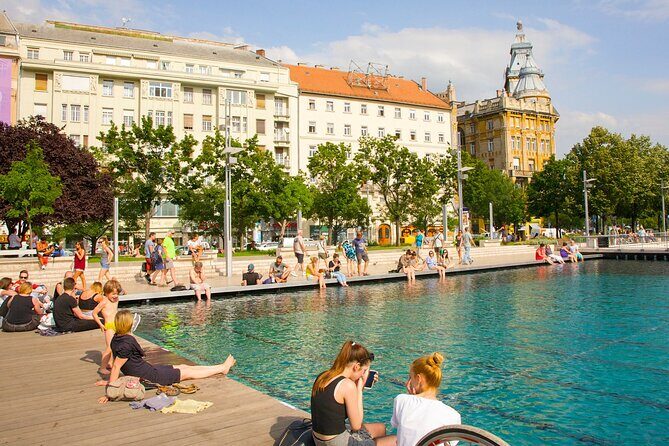
Then you head into Budapest, split by the Danube into Buda and Pest. You’ll pass major sights like Saint Stephen’s Basilica, the Opera, the Parliament building, Heroes’ Square, and Fisherman’s Bastion, with views over the city. The architecture mix here matters because you’re not only seeing one style. You’re seeing how empires left different artistic fingerprints.
You’ll visit Buda Castle (UNESCO World Heritage), crossing bridges and walking the Baroque-style Street. Then you get a free evening to explore at night. In practice, this is smart. Budapest at night is where your photos and your people-watching can happen without the pressure of a timed museum stop.
Győr and Bratislava: Danube smaller stops with real structure
After Budapest, you go to Győr, described as the City of Rivers. You’ll wander historic streets, visit the Town Hall with its 59-meter tower and green top, and also stop at the Cathedral of the Virgin Mary, built in Roman style in the 11th century. The tour then includes Győr Synagogue, known for a colossal grey dome and architectural inspiration for other synagogues across central Europe.
From there you walk along Baross Gábor Way, a pedestrian street lined with cafes, shops, and bars. You’ll have time to try Hungarian food and the famous blueberry beer—a specific local product that helps make the stop feel distinct.
Then you drive to Bratislava, also on the Danube corridor. You visit the Old Town Hall, see the medieval Michael’s Gate (the only preserved gate from the medieval fortifications), and go up to Bratislava Castle, built in the 9th century. The castle viewpoint is worth it for the perspective over the city. In the afternoon, you return and get a chance to enjoy Bratislava’s café culture and try coffee in a traditional coffee shop.
If you want a tour that ends with “real-life city wandering” rather than exhausting last-day sightseeing, Bratislava sets you up well.
Vienna finale: drop-off day with just enough time to reset
Your last day is Vienna, with a leader drop-off at your hotel. This is a good design choice after two weeks of moving around: you land where you need to be and can choose your own pace for the first day in Austria.
Vienna is a city where walking rewards you. But you’ll be tired from the route, so starting with hotel drop-off reduces the usual end-of-tour scramble. Use the day to find your nearest café, pick one key sight for later, and let your feet recover.
Who this tour suits best
This tour is a strong match if you:
- Want a structured route across multiple countries with borders and drives handled for you
- Like old towns, fort views, and architectural variety more than long museum days
- Prefer a max 10 group so you can ask questions and get pacing that fits the group
It may feel like too much if you:
- Hate uneven walking terrain
- Need every meal included (because lunch and dinner are on you)
Also, because it’s a multi-country loop, this is best for travelers who can handle a “one base per night” style and enjoy changing scenery frequently.
Should you book this Tirana to Vienna small-group tour?
I’d book it if you want a trip that’s both high-touch and high-contrast: bazaars and fortresses in the Balkans, UNESCO moments like Kotor and Deçan, then the Austro-Hungarian sweep through Budapest, Subotica, Győr, Bratislava, and Vienna.
The best reason to choose it is value in execution: private transport, a professional leader, breakfasts, and key entry tickets reduce the friction you’d face doing this on your own. Just go in knowing meals are not included, and plan comfortable shoes for cobblestones and hills.
If you like travel where the culture shows up in streets, churches, mosques, markets, and food stops—not just “big attraction photos”—this one will feel like money well spent.
FAQ
How long is the Tirana to Vienna tour?
It runs for approximately 14 days.
What countries does this tour cover?
It includes Albania, Kosovo, Montenegro, Bosnia & Herzegovina, Serbia, Hungary, Slovakia, and Austria.
What is the group size limit?
The maximum group size is 10 travelers.
Is pickup in Tirana and drop-off in Vienna included?
Yes. You get hotel pickup in Tirana and hotel drop-off in Vienna.
What time does the tour start each day?
The meeting time is listed as 9:00 am.
Are breakfasts included?
Yes. Breakfast is included for all overnights (14 breakfasts).
Are entry tickets included?
Entry tickets are included for the sites that are listed as will be visited.
Are lunch and dinner included?
No. Lunches, dinners, drinks, and snacks are not included.
Do I need travel health insurance?
Yes. You are responsible for having your own health or travel insurance.
Is the tour refundable if I cancel?
No. It is non-refundable and cannot be changed for any reason.