REVIEW · TIRANA
TIRANA Walking Tour: Discover the ever-changing capital city
Book on Viator →Operated by Travel Albania · Bookable on Viator
Tirana gets under your skin on foot. This 3–4 hour guided walk stitches together Skanderbeg Square, the Clock Tower, Et’hem Bej Mosque, and Blloku, with museum and monument tickets included. I especially like how the guide turns the city’s buildings into a timeline of Ottoman, 19th-century, and Communist-era change, and I like the small group feel that keeps the pace friendly. One drawback: you are walking a fair amount in central streets, so you’ll want good shoes and to plan for hot weather.
I’m drawn to this tour because it starts right where most first-time visits want to begin, at Tirana International Hotel by Sheshi Skënderbej, and it loops back to the same spot. Guides such as Gloria and Ilir have a reputation for being patient, focused, and strong on English, which matters when the goal is to understand what you’re seeing, not just photograph it.
In This Review
- Key highlights to look for
- Walking Tirana’s main story in 3–4 hours
- Skanderbeg Square: where Tirana compresses the 20th century
- The Clock Tower climb: 90 steps for a 35-meter view
- Et’hem Bej Mosque: restored frescos and a story of endurance
- Rruga Murat Toptani and the walk toward Tirana Castle
- Tanners’ Bridge near Parliament: Ottoman stone and a lost river route
- National Gallery of Art area: social realism outside, REJA inside the scene
- Blloku: from party elite to today’s nightlife strip
- Price and value: why $42.10 can feel fair here
- What the walking pace is like (and how to prepare)
- Guide quality: why Gloria and Ilir matter to your day
- Who should book this Tirana walking tour
- Should you book it?
- FAQ
- What is the duration of the Tirana walking tour?
- How much does the tour cost?
- What language is the tour offered in?
- Is this tour limited to small groups?
- Where do I meet the guide, and where does the tour end?
- What attractions have included tickets?
- Is food included?
- Is pickup and drop-off included?
- What is the cancellation policy?
- What happens if the weather is poor?
Key highlights to look for
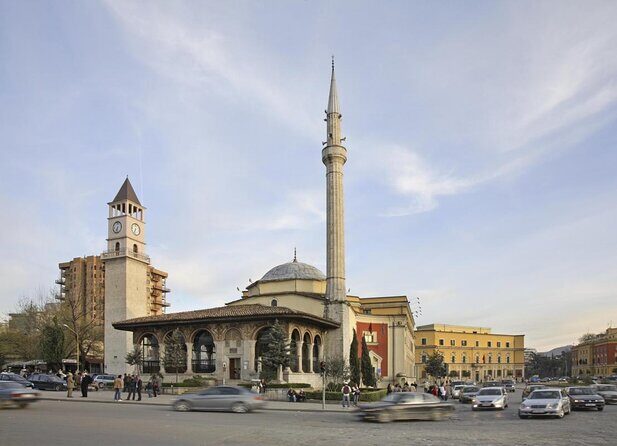
- Skanderbeg Square context in one stop: you’ll see the main civic and religious landmarks in the same frame
- The Clock Tower payoff: 90 steps and a 35-meter view, even with construction nearby
- Et’hem Bej Mosque details: restored floral patterns and vivid frescos, plus explanations of Islam in Albania
- Tanners’ Bridge history near Parliament: an 18th-century Ottoman stone footbridge linked to the Lana stream
- Blloku’s before-and-after story: from Enver Hoxha’s party zone to today’s cafes and boutiques
- A guide who handles questions well: small groups make it easier to ask follow-ups
Walking Tirana’s main story in 3–4 hours
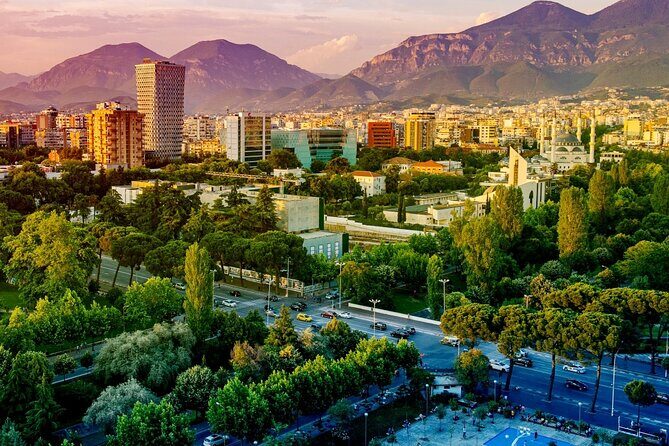
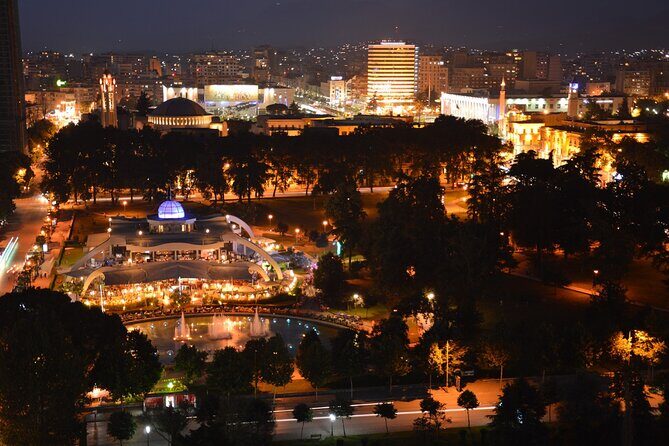
This is the kind of tour that helps you get your bearings fast. Tirana can feel like it’s reinventing itself at street level—new facades, new businesses, and ongoing construction sit beside older layers that still matter. The real value here is that you don’t just pass by landmarks; you get the context that makes Tirana’s shifts make sense.
The route covers a compact slice of the city center, with stops that map neatly onto different historical phases. You’ll start in the big political and cultural heart, then move outward through Ottoman-era architecture and older urban traces, and finish with the district that locals associate with nightlife.
Group size is limited to a maximum of 15. That’s not just a comfort perk; it helps the guide keep your timing tight and your questions answered without rushing everyone along.
Other walking tours of Tirana worth a look


Skanderbeg Square: where Tirana compresses the 20th century
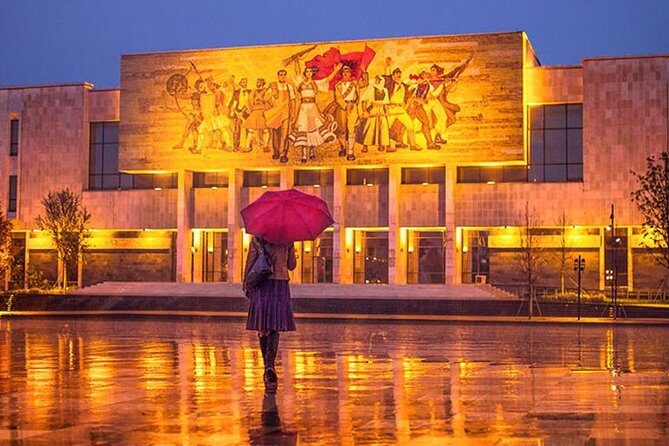
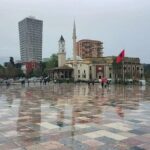
Skanderbeg Square is the centerpiece, named for the national medieval hero, and it’s the right place to start because so many key institutions sit around it. Expect the guide to frame the square as a lens on Albanian history—especially the 20th century’s constant political and social shifts.
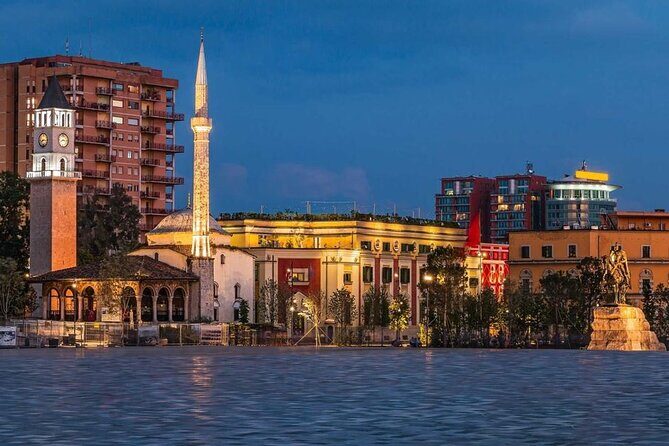
This is also where you’ll find several major buildings in one walkable perimeter: the National Historical Museum, the National Opera House, the Old Clock Tower, and Et’hem Bej Mosque. Even if you’ve seen photos, you’ll probably notice details differently once you understand how the city organized power, culture, and religious life over time.
Practical note: the square itself is open and exposed. If you’re touring in the heat, this is where shade is limited, so plan accordingly—water and sun protection go a long way.
The Clock Tower climb: 90 steps for a 35-meter view
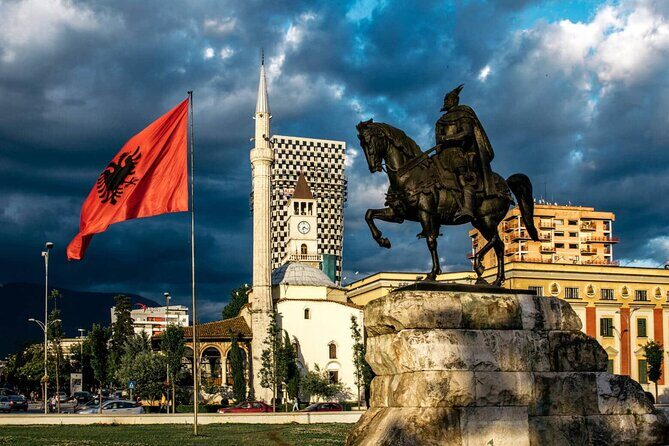
Next comes the Clock Tower, an Ottoman-era landmark built in 1840. It may look simple from below, but the details are what make it fun: it’s 35 meters tall and opened to tourists in 1996, which gives it a modern connection without erasing its older roots.
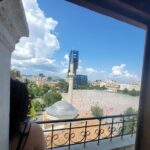
The ascent is short but meaningful: it’s about 90 steps to reach the top. That effort pays off with a panoramic view over the city center—useful even today, when you’ll also see high-riser construction nearby. From a touring perspective, that’s actually a good reminder: Tirana’s past and present occupy the same skyline.
Timing is tight here—about 20 minutes—so you won’t get a long wander from the top. Still, it’s a solid stop if you want one clear viewpoint to anchor everything else you see that day.
Et’hem Bej Mosque: restored frescos and a story of endurance
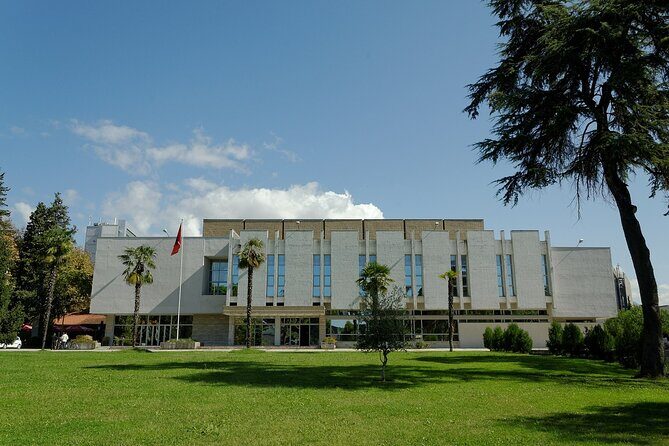
Et’hem Bej Mosque is one of Tirana’s most recognizable religious landmarks. Built in 1823, it’s described as the only religious monument that survived the Albanian Cultural Revolution era, which immediately raises the importance of what you’re looking at.
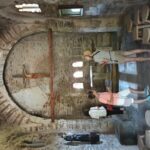
The tour focuses on what’s visible now: newly restored floral patterns and vivid frescos. This is where your guide’s explanations matter, because the visual details become easier to read once you understand how religious life and cultural policy tangled in modern Albanian history.
You’ll also get an insider-style look at the nuanced history of Islam in Albania. That kind of interpretation turns the mosque from a photo stop into a place that helps you understand the country, not just the architecture.
Rruga Murat Toptani and the walk toward Tirana Castle
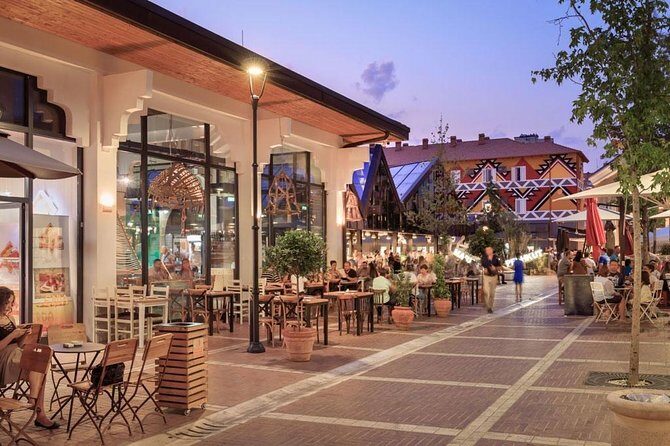
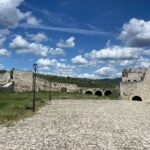
After the mosque, the route shifts toward the area connected with Tirana Castle via Rruga Murat Toptani. The pitch sounds simple—walk toward the castle—but the meaning is bigger: the area links to traces of older city walls dating back to Emperor Justinian’s period in the 4th to 6th centuries.
Here’s the trade-off: little remains of the castle walls you can clearly see. Wars and destruction have taken their toll. Yet that doesn’t make the stop pointless. You can still connect the idea of layers—how a strategic settlement repeated itself through centuries—to the streets and vantage points you’re walking past.
The other reason this segment works in real life is what surrounds it now. The area has become a hub for arts and artisans, with cafés, restaurants, and art galleries that make it easy to linger if you want. For photography, it’s also a good corridor because you can frame new Tirana against older terrain.
Other walking tours we've reviewed in Tirana


Tanners’ Bridge near Parliament: Ottoman stone and a lost river route
Ura e Tabakëve, known as The Tanners’ Bridge, is a stone footbridge from the Ottoman period. It sits near the Albanian Parliament, and the location helps you understand how everyday infrastructure served the working city, not only official buildings.
What I like about this stop is the job connection. “Tabakëve” links to the profession of tanners and butchers—people moving produce and livestock—so the bridge wasn’t a decorative detail. It crossed the Lana stream until the 1930s, when the river was diverted. After that, the bridge fell into disrepair.
Then came restoration in the 1990s. The work cleaned and restored original stones and even recreated an artificial pond on both sides, which stays in use by pedestrians. That means your photo doesn’t just capture an old structure; it shows how the city repurposed the space for today’s walkers.
This stop is short—about 10 minutes—so treat it like a quick history lesson with a scenic break, not a long museum visit.
National Gallery of Art area: social realism outside, REJA inside the scene
The Albanian National Gallery of Arts (GKA) was established in 1954, and the focus here is on social realism masterpieces and strong figurative work from Albania. The key detail for your expectations: it’s temporarily closed for expansion, so you’ll mostly experience the area from the outside.
Even without interior access, you can still read the space. The museum’s design is minimalist in approach, and you can see well hidden social realist statues of Communist leaders like Stalin and Lenin in the vicinity. That’s a striking way to connect art, politics, and public space—especially after you’ve already seen how Communism shaped districts like Blloku.
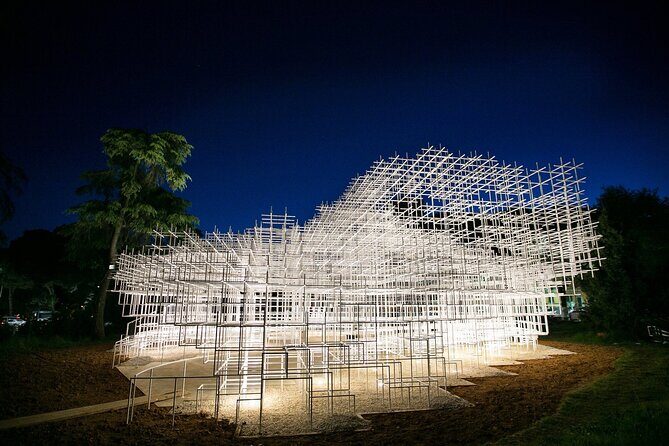
Across from the gallery stands REJA, also called The Cloud, designed by Sou Fujimoto. This public structure has become a gathering point for late night film screenings, performative arts festivals, and live concerts.
Admission to the National Gallery of Art isn’t included, so if you specifically want indoor viewing, you’ll need to plan an extra stop later (if it’s open when you visit).
Blloku: from party elite to today’s nightlife strip
Blloku is the district that most people associate with modern Tirana. On the surface, it’s a must-visit area for cafés, hip bars, trendy restaurants, luxury boutiques, and upscale residential units. The tour doesn’t treat that as the whole story.
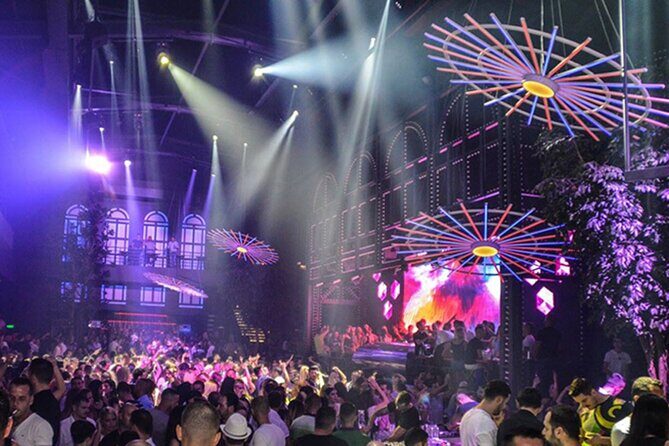
Instead, it gives you the backstory: during Communist rule, Blloku was a closed-off precinct for the party elite. The tour points to the modest, modern style villa of Enver Hoxha in the heart of the area, tying the neighborhood directly to power and repression.
It also connects Blloku to today’s institutions, since it’s home to the monumental Presidenca e Republikës, the office of the Albanian president. That contrast is the point. You can walk the same streets and see how the meaning changed once the political system changed.
This stop runs about 15 minutes, which is enough to orient you. If you like nightlife districts, you’ll probably want to come back later on your own for a longer wander.
Price and value: why $42.10 can feel fair here
At $42.10 per person, this tour is priced like a genuine guided city experience, not a cheap stroll. The value comes from what’s included: the tour covers the guide and city tour, and it includes tickets for key monuments—specifically the Clock Tower and Et’hem Bej Mosque, plus the National Historical Museum ticket tied to the square area.
A lot of “highlights of Tirana” tours skip the paid entries. Here, paying for those spots is rolled in, which reduces decision fatigue if you’re short on time. You also get a planned route of about 3 to 4 hours, which is useful when you’re trying to see the center efficiently without turning the day into a self-guided scavenger hunt.
The trade-off is what’s not included. Food and drinks are not included, and National Gallery of Art admission is not included. Tips and gratuities are also not included, so you’ll want some cash or a card plan in mind if you enjoyed the guide’s pace and explanations.
In short: you’re paying for guided interpretation plus several included entry points, and the walking route keeps it practical for first-time visitors.
What the walking pace is like (and how to prepare)
You should expect a steady walking day across central Tirana. Most travelers can participate, and the tour is designed for general sightseeing rather than strenuous hiking. Still, you’ll be on your feet through multiple stops, including the stairs to the Clock Tower.
If you’re visiting during warmer months, treat this as a morning-or-late-afternoon style outing. One guide-led run includes a drink break on a hot day, which is a good signal that comfort matters and the route isn’t meant to push you into discomfort.
Bring: water, sun protection, and comfortable shoes with grip. Also, plan for the fact that you may see construction around the Clock Tower area, which can affect views but doesn’t erase the experience—you’ll still get that top-level panoramic perspective.
Guide quality: why Gloria and Ilir matter to your day
A big part of why this tour tends to rate high is the guide’s delivery. Names that come up often include Gloria and Ilir, and the common thread is clear: they’re patient, they know Albanian history well, and they explain what you’re seeing in a way that sticks.
That matters because Tirana’s landmarks can look straightforward until someone explains the layers underneath. With the right guide, you’ll understand why Skanderbeg Square feels like a government-and-culture hub, why the mosque’s survival is historically loaded, and why Blloku’s present-day lifestyle sits on top of a very different past.
If the National Historical Museum is unexpectedly closed on a given day, you might still get a humane alternative rather than a total dead stop. In one case, a guide offered cake and tea nearby as a substitute, which shows you the tour can adapt without breaking the rhythm.
Who should book this Tirana walking tour
This is a great fit if:
- you want a first pass at Tirana’s central sights in just a few hours
- you prefer a guide who explains history as you walk, not a lecture at the end
- you like mixing different eras—Ottoman architecture, 19th-century landmarks, Communist-era references, and modern districts like Blloku
You might skip it if:
- you want a long museum-only day (this tour is timed for walking and multiple exterior stops)
- you dislike stairs (there’s a climb to the Clock Tower top)
- you need a completely indoors experience
Should you book it?
I’d book this tour when you want a smart way to start your Tirana trip. The route hits the places that shape how the city feels, and the guide interpretation is what turns “sights” into understanding. The $42.10 price feels reasonable because several key entries are included, and the walk stays focused within about 3 to 4 hours.
If you’re the type who likes to know why a building matters—whether it’s a mosque that survived a revolution, a clock tower with Ottoman roots, or Blloku’s shift from party zone to modern nightlife—this is one of the best ways to get oriented before you branch out on your own.
FAQ
What is the duration of the Tirana walking tour?
It lasts about 3 to 4 hours.
How much does the tour cost?
The price is $42.10 per person.
What language is the tour offered in?
The tour is offered in English.
Is this tour limited to small groups?
Yes. The maximum group size is 15 travelers.
Where do I meet the guide, and where does the tour end?
You meet at Tirana International Hotel, Sheshi Skënderbej 8, Tiranë 1001, Albania. The tour ends back at the same meeting point.
What attractions have included tickets?
The tour includes a National Historical Museum ticket, plus admission for the Clock Tower and Et’hem Bej Mosque.
Is food included?
No. Food and drinks are not included.
Is pickup and drop-off included?
No. Hotel pickup and drop-off are not included.
What is the cancellation policy?
Free cancellation is available if you cancel up to 24 hours in advance for a full refund. If you cancel less than 24 hours before the start time, the amount paid is not refunded.
What happens if the weather is poor?
This experience requires good weather. If it’s canceled due to poor weather, you’ll be offered a different date or a full refund.