REVIEW · TIRANA
Tirana Walking Tour around the Historic Centre
Book on Viator →Operated by Local Walking Tours of Tirana · Bookable on Viator
Tirana changes fast when you connect the dots on foot. This walking tour is a smart way to see historic Tirana in one compact loop, from Skanderbeg Square to the Enver Hoxha Pyramid. I like that you get practical context at each stop, not just photos, and I also like the clear value at this price because church and mosque visits are included along the way. One thing to keep in mind: it’s a lot of ground and viewpoints in 2 hours 30 minutes, so wear good shoes and expect a brisk pace.
What you’re really buying here is orientation. After this, you’ll know why the city center looks the way it does, how the Ottoman and communist eras left their marks, and where to go next on your own. The group stays small (up to 20), and the tour runs in English with a mobile ticket, which makes it easy to manage even if you’re juggling a few other plans.
In This Review
- Key reasons this walk works
- Starting point: getting oriented at Karuseli
- National History Museum: the “The Albanians” mural moment
- Skanderbeg Square (and the Monument): the center’s power symbol
- Opera and Ballet Theatre: Tirana’s arts landmark
- The Et’hem Bey Mosque: a real, lived-in interior
- Clock Tower: Ottoman-era engineering, early 1800s style
- Reja The Cloud: modern art where you’d least expect it
- Bunk’Art 2: memory you can’t ignore
- Rruga Murat Toptani: a pedestrian street with Ottoman-era roots
- Fortress of Justinian (Tirana Castle): Byzantine bones under the city
- Saint Paul Cathedral: a modern church with visible symbols
- Enver Hoxha Pyramid: from dictator museum to tech youth center
- Boulevard of the Martyrs: the state runs along this axis
- Blloku: from communist closed precinct to nightlife and shopping
- Rinia Park (Taiwan Park): a public space with communist roots
- Resurrection Cathedral: inside a major Orthodox church
- House of Leaves (Museum of Secret Surveillance): outside, but heavy
- Value for money: what $18.06 gets you
- Who should book this walk
- Should you book it?
- FAQ
- How long is the Tirana Walking Tour around the Historic Centre?
- What does the tour cost, and is it per person?
- Is the tour available in English?
- Do I need to print tickets?
- Is there an entry fee for the stops?
- What is included related to religious buildings?
- What’s the tour end point?
- FAQ
- Do I need private transportation for this tour?
- What happens if I cancel last-minute?
- How big is the group?
- Will I get views from the Pyramid?
- When should I book?
- Is the start location easy to find?
- Is House of Leaves visited inside?
Key reasons this walk works

- A tight 2.5-hour circuit through central Tirana, built for first-timers who want the big signals fast
- Church and mosque access included, so you’re not stuck looking from the sidewalk
- Iconic photo stops at major monuments like Skanderbeg Square and the Clock Tower
- Reja Cloud and modern art stops alongside old landmarks, so Tirana feels current—not only historic
- Pyramid top viewpoint for a sunset photo stop (this is the one “wow” moment you plan around)
- Communist-era memory sites like Bunk’Art 2 and the House of Leaves route, handled with care in the story
Starting point: getting oriented at Karuseli
You’ll start at Karuseli (the easy-to-find roundabout area in central Tirana). That’s a good choice for a walking tour because you begin in the thick of things, with plenty of nearby transport options if you’re not staying right in the center.
The tour runs about 2 hours 30 minutes, and it’s designed like a guided stroll with short stops—usually around 5 to 10 minutes each—plus a longer moment at the Pyramid. Because the schedule is packed, your best move is simple: keep your phone charged, plan to walk steadily, and treat each stop like a “chapter,” not a long museum visit.
Also, the format is straightforward: you’ll use a mobile ticket and go with an experienced certified guide in English. The group cap of 20 keeps it comfortable, so you can ask quick questions without the tour feeling like a line at a theme park.
Other walking tours of Tirana worth a look


National History Museum: the “The Albanians” mural moment
The first stop is the National History Museum (Muzeu Historik Kombetar). It opened on 28 October 1981, and the scale is big enough to feel official even before you read anything—27,000 square metres total, with 18,000 square metres devoted to exhibitions.
Even if you only have a short visit here, the highlight is the big mosaic above the entrance titled The Albanians. It shows figures from what the mural frames as ancient to modern Albanian history. For me, that’s the best way to start in Tirana: you’re reminded right away that history in this city is often presented through strong symbols, not neutral blank space.
A small practical consideration: since this is the first stop, you’ll want to settle in quickly—bring a little patience for reading and layout, but know you won’t have hours inside.
Skanderbeg Square (and the Monument): the center’s power symbol
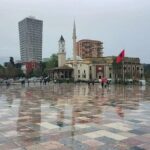
Skanderbeg Square is Tirana’s main plaza, around 40,000 square metres. It carries the name of the national hero Gjergj Kastrioti Skënderbeu, and the square’s dominant feature is the Skanderbeg Monument.
This stop matters because it anchors the whole walking route. It’s not only a place you pass through; it’s the center of civic identity. When you stand here, you can feel how the city’s public space is built to communicate power and continuity—hero imagery, open area for crowds, and major buildings nearby.
You also stop again at the Skanderbeg statue itself, so you’ll get at least one angle that works for photos, plus a better sense of position relative to the other nearby landmarks.
Opera and Ballet Theatre: Tirana’s arts landmark
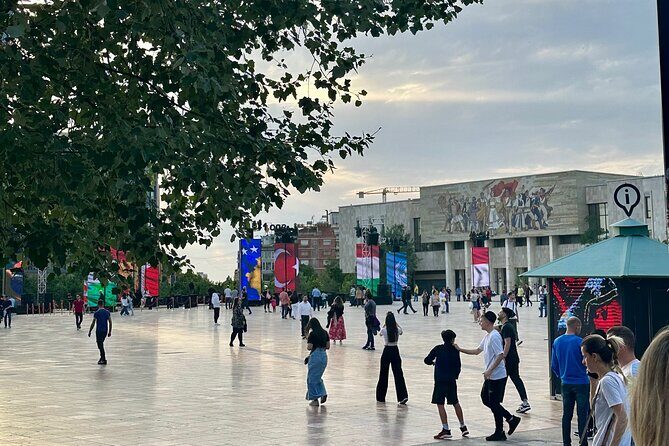
Next is the National Theatre of Opera and Ballet of Albania. It’s described as the largest theatre in the country and hosts music and dance performances year-round.
This is a short stop, but it gives you a useful snapshot: Tirana doesn’t only look backward. It has a strong cultural stage, and this building is part of that story. If you’re the kind of traveler who likes to time performances, you could use this stop to decide if there’s a show you want to catch during your stay.
The Et’hem Bey Mosque: a real, lived-in interior
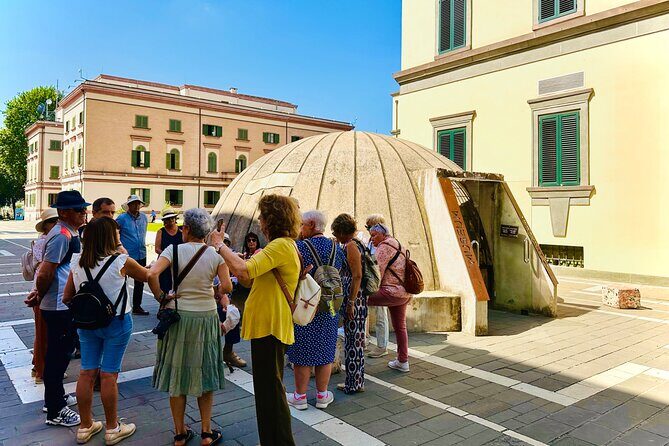
One of the best stops on this route is the Et’hem Bey Mosque (Xhamia Et’hem Bej). Under communist rule, it was closed, then it reopened as a house of worship in 1991. That history adds weight to a visit because you’re not just seeing architecture—you’re seeing a building returning to community life.
The mosque has frescoes outside and inside the portico, featuring trees, waterfalls, and bridges. When your guide brings you inside, you’re walking into a space described as very authentic and old. That’s exactly the kind of stop I value on a walking tour: it changes how you read the streets around it.
Practical tip: in religious buildings, modest dress and respectful behavior matter. If you’re unsure, keep shoulders and legs covered and follow your guide’s cues.
Other walking tours we've reviewed in Tirana


Clock Tower: Ottoman-era engineering, early 1800s style
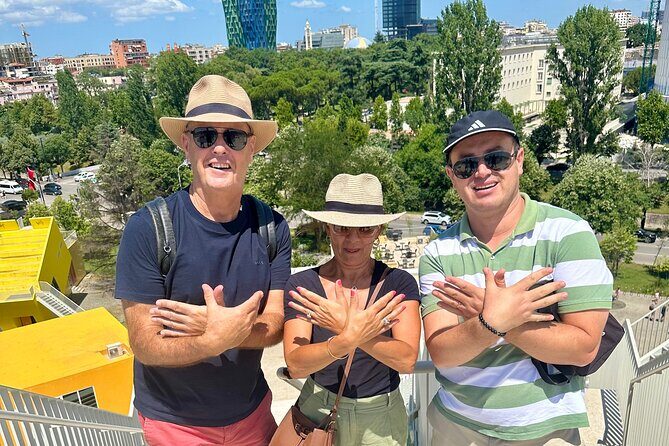
The Clock Tower of Tirana was built in 1822 by Et’hem bey Mollaj, a Bejtexhinj poet who also finished the Et’hem Bey Mosque next door. The watch mechanism was assembled by Ismail Tufina, the first watchmaster mentioned for the clock.
Even though the stop is brief, it’s a great place to connect details. You get a building that’s both practical and symbolic, and you can see how Ottoman-era patrons supported public life through civic structures.
If you like places with dates and names tied to them, this is one of the route’s satisfying moments.
Reja The Cloud: modern art where you’d least expect it
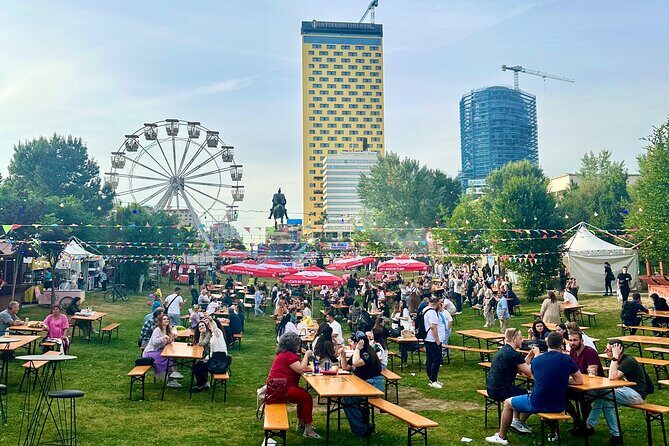
In front of the National Gallery of Arts, you’ll meet Reja, also called The Cloud. Since 2016, it’s served as a modern art space for cultural events in Tirana. The structure is three-dimensional and was designed by Japanese architect Sou Fujimoto.
This stop works because it stops the walking tour from becoming only monuments and state buildings. The Cloud is delicate in design, and it helps you understand that Tirana’s cultural identity also includes contemporary art spaces.
If you’re traveling with someone who thinks “walking tours are just old rocks,” this is a good counterargument.
Bunk’Art 2: memory you can’t ignore
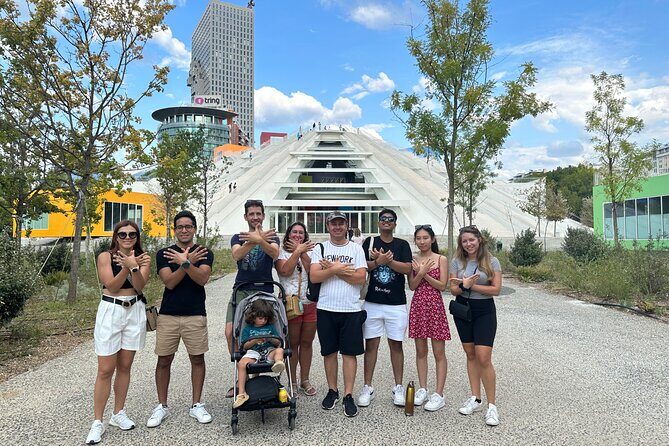
Then comes Bunk’Art 2, described as an excellent re-imagining of a Communist-era nuclear bunker. It functions as both a museum and an art space, built around the idea of celebrating the birth of a new era while remembering the darker past.
On this tour, you do an outside visit. Even so, the stop is a meaningful reminder: Tirana’s history includes a period when surveillance and fear were official tools. This is a contrast stop after the more open, daylight landmarks like squares and churches.
I like that the route doesn’t skip these places, because it prevents a one-sided version of the city.
Rruga Murat Toptani: a pedestrian street with Ottoman-era roots
You’ll then walk down Rruga Murat Toptani, a popular pedestrian street named for the Toptani family—described as the leading Albanian noble family during Ottoman rule.
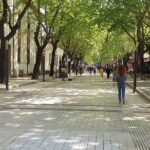
This is the kind of stop that’s less about one single monument and more about how the street feels. Pedestrian sections are where you can sense everyday rhythm, and in a tour packed with institutions, this gives your feet a breather.
Also, once you’re here, you’ll likely notice that this area supports the kind of walking-and-snacking vibe that makes a city feel easy.
Fortress of Justinian (Tirana Castle): Byzantine bones under the city
Next is the Fortress of Justinian, also known as Tirana Castle. Its history dates before 1300 and it’s described as a remnant from the Byzantine era.
The fortress matters in the story because it marks where major roads crossed, forming the heart of Tirana. That kind of geographic clue is gold on a walking tour: you start realizing that a lot of today’s streets and centers grew from older movement routes.
You’ll have about 10 minutes here, so treat it as a look-and-orientation moment. If you want to linger, this is the place to decide whether you’ll circle back later.
Saint Paul Cathedral: a modern church with visible symbols
Saint Paul Cathedral is a Roman Catholic church in Tirana, under the Roman Catholic Archdiocese of Tiranë-Durrës. It’s noted for stained glass on the left of the front door featuring Pope John Paul II and Mother Teresa, and there’s also a statue of Mother Teresa at the entrance.
The building is described as modern-looking and not like a typical traditional church. That’s not a drawback—it’s actually a helpful reminder that religious architecture can reflect the time period and the community’s needs, not only older styles.
If you want a quick takeaway: this stop shows how Albania’s religious life includes both global figures and local devotion, even in a building with a modern feel.
Enver Hoxha Pyramid: from dictator museum to tech youth center
The most dramatic stop on the route is the Enver Hoxha Pyramid. It opened as a museum in 1988, then became a conference center in 1991 after the collapse of Communism. During the 1999 Kosovo War, it was used as a NATO base.
In 2018, a new project was unveiled to turn the pyramid into a youth IT center for Creative Technologies under the name TUMO Center Tirana. The renovated structure, transformed by MVRDV, opened to the public in May 2023.
And here’s why this stop is practical for you as a visitor: the tour includes climbing up the top for a sunset photo stop. That means you’re not only learning the building’s political timeline—you’re also getting views over the city.
A consideration: because you climb for the view, wear shoes you can trust on steps and platforms, and don’t plan to do this if you’re dealing with mobility limits.
Boulevard of the Martyrs: the state runs along this axis
Next is Dëshmorët e Kombit Boulevard, the Boulevard of the Martyrs of the Nation. Along this thoroughfare you’ll see significant institutions, including the Presidential Palace, the Prime Minister’s Office, the Palace of Congress, the Rogner Hotel, and the University of Tirana.
This is where Tirana’s “power geography” becomes visible. When you walk or look along a major boulevard like this, you’re seeing how government, education, and prestige are placed side by side. For a first visit, it’s an efficient way to understand why the city feels organized around certain central lines.
Blloku: from communist closed precinct to nightlife and shopping
Then you shift to Blloku, one of Tirana’s most famous neighbourhoods. It’s described as leafy and residential, but also an upscale nightlife and shopping hotspot with hip bars and cafes and trendy global restaurants next to luxury boutiques.
The historical angle is what makes it interesting: during communist rule, it was a closed-off precinct for the party elite, and the villa of long-ruling dictator Enver Hoxha still stands.
This stop is a good reality check. Blloku is the kind of area where you can picture both past privilege and today’s consumer energy. If you want a night plan after the tour, this neighborhood is where you’ll likely end up.
Rinia Park (Taiwan Park): a public space with communist roots
You’ll then visit Rinia Park, also called Taiwan Park. It’s the central public park of Tirana, built in 1950 during the communist era. The park covers 2.98 hectares (about 7.4 acres).
Even if your time is short, parks are where a city’s daily life shows up between the big monuments. This one matters because it was planned for public use during a very different political system. It’s a good place to pause, reset your feet, and notice how locals use the same space for everyday needs.
Resurrection Cathedral: inside a major Orthodox church
The tour includes an inside visit to the Orthodox Autocephalous Church of Albania, also known as the Resurrection Cathedral. It’s described as one of the largest Eastern Orthodox churches in the Balkans.
This stop is valuable because it gives you architectural scale and spiritual atmosphere, not just an exterior viewpoint. For me, it’s a strong counterweight to the Pyramid stop: you see how the city has multiple layers of belief, each with a different visual language.
If the weather is hot or rainy, this kind of indoor visit can also feel like a relief without breaking your tour rhythm.
House of Leaves (Museum of Secret Surveillance): outside, but heavy
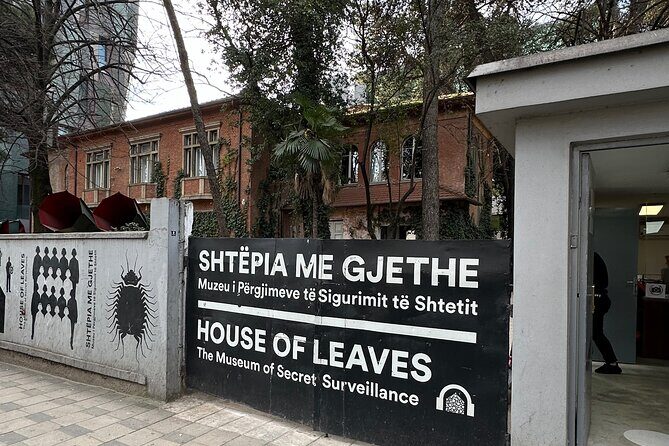
The route ends at the Museum of Secret Surveillance, also known as House of Leaves. It opened on 23 May 2017 in the building that served as the Sigurimi’s headquarters during the communist era.
The museum is dedicated to innocent people who were spied on, arrested, prosecuted, convicted, and executed during the communist regime. On this tour, you get an outside visit, and you’ll finish at this location because it’s central and near where you can continue your day.
If you’re the type who prefers a softer ending, this is the opposite. But it’s also one of the most important reminders on the route: Tirana’s modern identity is tied to what happened in this kind of infrastructure.
Value for money: what $18.06 gets you
At $18.06 per person for roughly 2.5 hours, the value is about coverage and access. You’re not just looking at a handful of postcard sights. The route includes entrance to churches and mosques, plus a guided sequence of monuments and cultural landmarks, and a standout viewpoint climb at the Pyramid.
The biggest value isn’t the individual ticket prices—it’s the structure. You get context so the sites connect, and you move between them efficiently without having to plan transport or figure out where to start.
Is it perfect? No. The schedule is packed, and the shorter visits mean you should treat some stops as orientation rather than a deep dive. Still, for a first or second day in Tirana, this is a strong “set your bearings” option.
Who should book this walk
I’d point you to this tour if you want:
- a first visit to Tirana and you’d rather get the main story on one morning or afternoon
- a mix of monuments, religious sites, and communist-era memory stops
- a guide-led route in English with a small group
- a planned sunset photo stop from the Pyramid top
It may be less ideal if you hate fast pacing or you want long museum time at any single location.
Should you book it?
If your goal is to understand Tirana quickly—and then go back later for deeper visits—you should book this walking tour. The route gives you a balanced picture: national symbolism at Skanderbeg Square, living religious spaces like the Et’hem Bey Mosque and Resurrection Cathedral, modern design at The Cloud, and the heavy context of communist-era sites like Bunk’Art 2 and House of Leaves.
Just pack one realistic expectation: you’ll see a lot, but not everything will be slow and detailed. If that sounds like your style, this is a good buy.
FAQ
How long is the Tirana Walking Tour around the Historic Centre?
It lasts about 2 hours 30 minutes.
What does the tour cost, and is it per person?
The price is $18.06 per person.
Is the tour available in English?
Yes, it is offered in English.
Do I need to print tickets?
No. You’ll use a mobile ticket.
Is there an entry fee for the stops?
The itinerary information shows admission ticket free for the listed stops.
What is included related to religious buildings?
Entrance to churches and mosques is included.
What’s the tour end point?
The tour ends at the House of Leaves Museum at Rruga Ibrahim Rugova 12, Tirana 1001.
FAQ
Do I need private transportation for this tour?
No private transportation is included.
What happens if I cancel last-minute?
Free cancellation is available. You can cancel up to 24 hours in advance for a full refund; changes less than 24 hours before the start time are not accepted for a refund.
How big is the group?
The tour has a maximum of 20 travelers.
Will I get views from the Pyramid?
Yes. The experience includes climbing up to the top of the Tirana Pyramid for a sunset view photo stop.
When should I book?
On average, it’s booked 5 days in advance.
Is the start location easy to find?
It begins at Karuseli8RH9+42R, Tiranë, Albania, which is in the central area and near public transportation.
Is House of Leaves visited inside?
You end at House of Leaves so you can enter the museum. The itinerary notes an outside visit during the stop.