REVIEW · TIRANA
Durrës: Walking tour with Roman Amphitheater
Book on Viator →Operated by My Tour in Albania · Bookable on Viator
That amphitheater has seen a lot. This walking tour around the Roman Amphitheatre in Durrës gives you the site through a local lens, with just enough context to make the stones feel like more than a backdrop. I like that the stop is short and focused (about 1 hour 30 minutes), so you don’t feel dragged from one ruin to another.
Two things I’d pick as the best parts: you get a guided visit plus the entrance ticket as part of the package, and the format keeps the group small (maximum 15). One possible drawback: the amphitheatre’s condition and signage can be a little rough, so if you expect a polished, perfectly labeled monument, you may feel let down.
In This Review
- Key things to know before you go
- Why the Durres Roman Amphitheatre is worth 90 minutes
- Meeting at Sheshi Liria: simple logistics in Durres
- How the walking tour works: guide-led, not rushed
- Entering the amphitheatre: what to look for when it’s not fully restored
- The “local eye” factor: how context makes the stones click
- Price and value: is $40.65 fair for a ticketed 90-minute stop?
- Who this suits best (and who might feel underwhelmed)
- Weather and timing: plan for the day, not the calendar fantasy
- Should you book this Roman Amphitheatre walking tour?
- FAQ
- How long is the Durrës Roman Amphitheater walking tour?
- Where does the tour start and end?
- What is the price per person?
- What’s included in the tour?
- Is there a mobile ticket?
- How many people are in the group?
- Is there a minimum number of participants?
- Is it weather-dependent?
Key things to know before you go
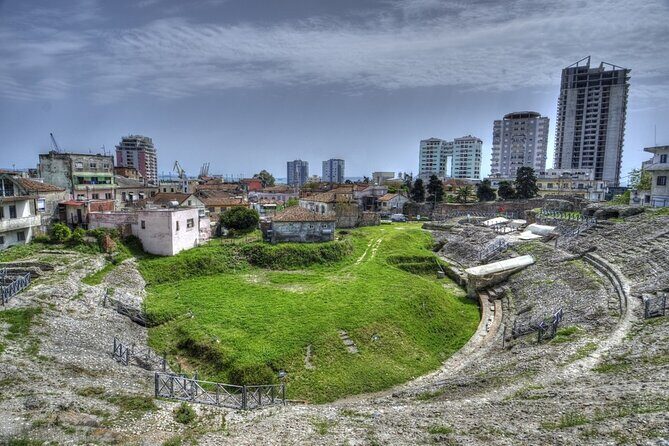
- Local-guided perspective on the Roman Amphitheatre in Durrës, not just a quick look
- Small group size (max 15) keeps the experience from turning into noise
- Entrance ticket included so you can focus on the visit, not ticket hassles
- Short duration (about 1 hour 30 minutes), ideal if you’re juggling a full day
- You’ll see a site where part of it is still underground, so the view can be less dramatic than big-city amphitheaters
Why the Durres Roman Amphitheatre is worth 90 minutes
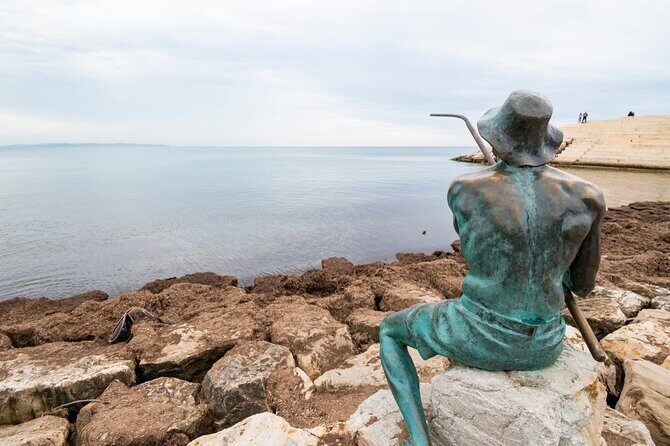
The Roman Amphitheatre in Durrës (Amfiteatri i Durresit) isn’t trying to be a spectacle. It’s more like a time capsule you can walk around, and that’s exactly why I think it’s a good match for a guided walking tour.
The kind of story you’ll hear is the big Roman-name stuff. You can learn it’s linked to Emperor Trajan, who commissioned building work in the 2nd century, and that it was designed to be one of the largest amphitheaters in the Balkans, with a capacity around 20,000 people. Then comes the reality check: its prominence faded around 350 AD, after a violent earthquake is associated with the end of its glory. That arc helps you understand why what you see today feels a bit fragmented.
Now, here’s the honest part. Some parts of the structure don’t read as “wow” in the way you might expect from amphitheaters in bigger, more continuously maintained tourist circuits. A good guide helps you look past scale and into details—how the shape would have worked, why certain sections aren’t as obvious, and what “missing” pieces might have looked like.
Other Durres tours we've reviewed near Tirana

Meeting at Sheshi Liria: simple logistics in Durres

Your tour starts and ends at Sheshi Liria, Durrës. That’s helpful because you’re not forced into a complicated “start here, end there” shuffle. If you’re planning your day, you can treat this as a neat block of time centered on that area.
It’s also listed as near public transportation. In practical terms, that means you’re less likely to feel stuck if you’re coming from elsewhere in town. And because this is a walking tour, showing up a few minutes early is smart—you’ll want time to find the group and settle before you begin.
The total duration is about 1 hour 30 minutes. That time window matters. It’s long enough for a real conversation about what you’re seeing, but short enough that you’re not trapped if you’re tired, hungry, or chasing another plan later in the day.
How the walking tour works: guide-led, not rushed
This is a guided walking tour with a local focus. You’ll be walking through the area and getting the kind of explanation that turns random ruins into a place with a purpose.
One reason I like this setup is the group size limit: maximum 15 people. Smaller groups usually mean fewer dead minutes and more chance to ask quick questions. You don’t have to guess what matters, because the guide points you toward the features worth noticing.
Most people can participate, so you’re not expected to do anything extreme. Still, it’s a walking tour, so you should come with normal city-walking shoes. If you’re the type who hates uneven ground or short stairs, you might want to take your time at the site.
The tour also uses a mobile ticket. That’s a modern convenience. Bring your phone with enough battery, and make sure you can access the ticket when you reach the entrance area.
Entering the amphitheatre: what to look for when it’s not fully restored
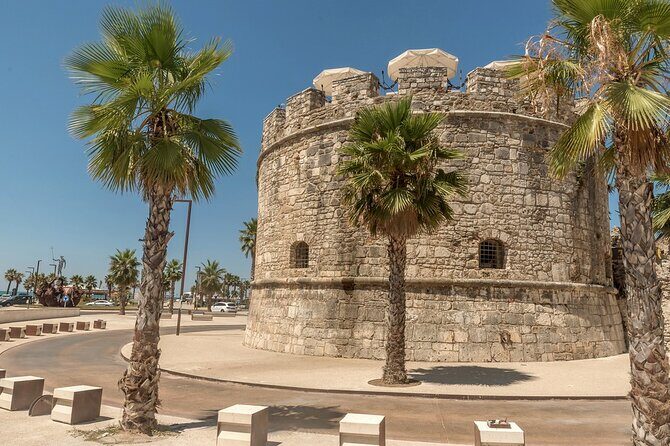
Here’s what you should expect once you’re at the amphitheatre itself: it’s accessible, but it’s not a museum set-piece. Some parts may feel rough around the edges, and signage can be missing or incomplete.
That affects how you experience it. If you’re the type who needs lots of explanatory plaques to follow along, you might wish there were more labels or inscriptions. Some people note that illustrative inscriptions aren’t always present. On your side, the guide becomes more important here, because they help you connect what you can see with what you might not be able to read.
Also, don’t expect every part of the arena to feel “above ground.” One of the more useful realities to know is that a big portion is still under the ground, so the setting can feel less imposing than it would if everything were fully exposed. In other words: your best approach is to look for shapes, levels, and what’s visible rather than judging the whole place only by what stands highest.
If you came hoping for an all-singing, all-dancing Roman monument, you might leave underwhelmed. If you came curious about how Roman entertainment architecture survives in a working city, you’ll probably enjoy this more.
The “local eye” factor: how context makes the stones click
A guided visit is often the difference between seeing a thing and understanding a thing. In this case, the “local eye” approach helps you place the amphitheatre in the Roman timeline and in the geography of Durres.
You’re not just shown the amphitheatre—you’re given the story of why it existed, who built it, and why it changed. Hearing about Trajan’s role and the later setback around 350 AD helps you imagine the scale and the idea behind it: a venue built for crowds, then reduced by time and earthquakes.
That context matters because the physical structure doesn’t carry all the information by itself. When inscriptions are missing, or when portions are underground, the guide’s job is to supply the missing bridge between your eyes and the historical picture. With a good guide, you’ll be able to “read” the site faster and feel like you’re getting more value from the visit.
One more small but real benefit: you get oriented. Amphitheaters can be confusing if you’re standing on the outside and trying to picture where people sat and how sound would travel. A local guide can give you quick mental models so you don’t waste time guessing.
Other walking tours we've reviewed in Tirana





Price and value: is $40.65 fair for a ticketed 90-minute stop?

At $40.65 per person, this isn’t the cheapest way to spend an hour and a half in Durrës. But the price comes with two concrete things you can’t ignore: a guide and the entrance ticket.
That combination is what makes the math work for a lot of people. If you’re the kind of visitor who enjoys ruins but also wants the story in plain language, paying for the guide is often worthwhile. If you’re only interested in a quick photo and you don’t care about explanation, you might feel you could do it on your own.
The small group size (maximum 15) also supports the value. It’s not a giant crowd tour where questions get lost. Still, keep your expectations aligned with what the site is today. Part of the trade-off here is that you’re visiting a Roman amphitheatre that isn’t fully “polished” for mass viewing, so the experience is more about understanding than about wow-factor surfaces.
In short: the price feels best if you want context and you don’t want to spend your time figuring out what you’re looking at.
Who this suits best (and who might feel underwhelmed)
I think this tour fits best for people who like Roman ruins but prefer a guided explanation. If you enjoy understanding why a place looks the way it does—and you like seeing how big ambitions (20,000 seats, for example) can shrink over centuries—this should click.
It’s also a good option if you want something compact. At about 1 hour 30 minutes, you can slot it into a day without wrecking your schedule.
On the other hand, if you’re chasing a major “grand amphitheater” vibe, you might not get it. Some impressions point out that the amphitheatre may feel not very imposing, and that a large portion is underground. If that’s exactly the kind of thing you need to enjoy a ruin, you may want to weigh whether you’d rather spend time elsewhere in Durres.
One more practical note: the experience requires a minimum of 2 persons. So if you’re traveling solo, you’ll need to check whether there are enough people joining the tour date you want—or whether they can accommodate you based on available bookings.
Weather and timing: plan for the day, not the calendar fantasy
This experience requires good weather. That’s not a fancy clause—it matters because outdoor walking tours live and die by conditions. If the weather is poor, you’ll be offered a different date or a full refund.
So when you pick your time, think like a local planner. Go when your day has flexibility. If you’re the type who locks everything down to the minute, you’ll want a backup idea for your other plans.
Because this tour is relatively short, it’s easier to absorb a schedule shift than it would be for a full-day excursion. Still, treat it as an outdoor activity with real weather dependence.
Should you book this Roman Amphitheatre walking tour?
Book it if you want a guided, ticketed walk through one of Durres’s best-known Roman remains, and you’re happy to trade raw “wow size” for context. If you like hearing how the amphitheatre connects to Trajan, and you enjoy the story arc from its 2nd-century construction to its later damage around 350 AD, a guide helps a lot.
Skip (or rethink) if you’re expecting a perfectly maintained, heavily labeled monument. Some features may be hard to read, and parts of the site are still underground, which can reduce the dramatic feel. In that case, you might still enjoy it, but your satisfaction will depend more on your interest in Roman architecture and less on your need for a polished presentation.
If you can handle a bit of real-world roughness—and you want a local voice guiding you—this is a solid use of 90 minutes in Durres.
FAQ
How long is the Durrës Roman Amphitheater walking tour?
It lasts about 1 hour 30 minutes (approx.).
Where does the tour start and end?
The meeting point and end point are both Sheshi Liria, Durrës, Albania.
What is the price per person?
The price is $40.65 per person.
What’s included in the tour?
The tour includes a guide and an entrance ticket for the Roman Amphitheater.
Is there a mobile ticket?
Yes. The tour uses a mobile ticket.
How many people are in the group?
The tour has a maximum of 15 travelers.
Is there a minimum number of participants?
Yes. A minimum of 2 persons is required for the tour to take place.
Is it weather-dependent?
Yes. The experience requires good weather. If it’s canceled due to poor weather, you’ll be offered a different date or a full refund.