REVIEW · TIRANA
The truest face of Communism
Book on Viator →Operated by Lost In Albania · Bookable on Viator
Communism in Tirana is written in concrete. This 4–5 hour tour strings together the city’s most important landmarks so you understand how Albania’s leaders shaped public space, daily life, and fear. You’ll start in the center and end underground at a bunker museum, all while learning the story behind some of Tirana’s most famous sights and strange relics of the past.
I especially like how the day mixes landmark architecture with human-scale details. Bunk’Art 1 gives you the physical feel of the regime’s paranoia, and Blloku shows the contrast between elite privilege and everyday Albania in a way that sticks.
One thing to consider: even with an air-conditioned vehicle included, this runs as a lot of walking. And lunch is not included, so plan for a simple meal on your own after the tour.
In This Review
- Key takeaways before you go
- Why this Tirana day tour works so well
- Price and Logistics: What your $90.11 gets you
- Skanderbeg Square: where Tirana’s center explains the past
- Enver Hoxha Pyramid: the communist symbol that kept surviving
- Postbllok Checkpoint Monument: the fear you can walk through
- Blloku: the dictator’s neighborhood turned Tirana’s social scene
- Bunk’Art 1: the underground museum built from nuclear-survival logic
- The guide experience: Leo, Dio, Aldo, Mimi, DC, and Eni make it personal
- What to pack and how to plan your day
- Who should book this tour (and who might not love it)
- Should you book it?
- FAQ
- How long is the tour?
- What’s included in the price?
- Where do I meet the guide?
- Is this a private tour?
- Are admissions included or free at the stops?
- Does the tour run in English?
- What is the cancellation policy?
- Is it accessible and are service animals allowed?
Key takeaways before you go
- Private, small-group feel so your guide can answer your questions without rushing you.
- Bunk’Art 1 is the emotional core: underground rooms built for nuclear survival, now turned into a museum maze.
- Blloku stop with food and raki helps the history land in a real, local moment (just don’t overdo the raki).
- Postbllok connects three places: Albania’s bunker mindset, Spaç labor camp memories, and a Berlin Wall section.
- Skanderbeg Square sets the stage with clockwork and Soviet fingerprints right in the same view.
Why this Tirana day tour works so well
If you only glance at Tirana, it can look like a normal Balkan capital. But this tour teaches you to read the city like a document. Squares, monuments, and neighborhoods become clues.
You’ll cover the arc of communist Albania without needing a textbook. Instead of staring at a single site, you move through a chain of locations that show how power worked: symbolic buildings in the center, walls and checkpoints for control, and hidden spaces meant for survival.
Also, this is a good first-shot at the city. The route naturally gives you orientation fast, so later you can wander independently and recognize what you’re looking at.
If you're still narrowing it down, here are other tours in Tirana we've reviewed.

Price and Logistics: What your $90.11 gets you
At $90.11 per person for about 4–5 hours, the value comes from the mix of included extras and ticketed time. You get hotel pickup (so you’re not trying to coordinate buses at the start), an air-conditioned vehicle included, and drinks: coffee and/or tea, plus alcoholic beverages.
On top of that, several stops are admission ticket free while the more time-consuming museum component includes entry. You’ll also get a longer food-and-drink break in Blloku (traditional food and rakija are included there).
Two practical notes matter:
- This is a tour with lots of foot time. One review specifically flagged that it ended up being essentially a walking day covering nearly five miles, even with the vehicle being part of the plan.
- Lunch is not included. You can handle that easily by eating after, but don’t assume it’s baked into the day.
The day starts at 9:00 am at Skanderbeg Square (Sheshi Skënderbej) and ends back at the same meeting point.
Skanderbeg Square: where Tirana’s center explains the past
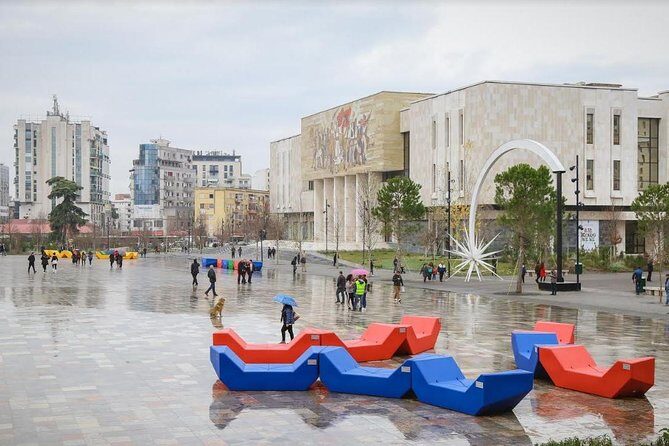
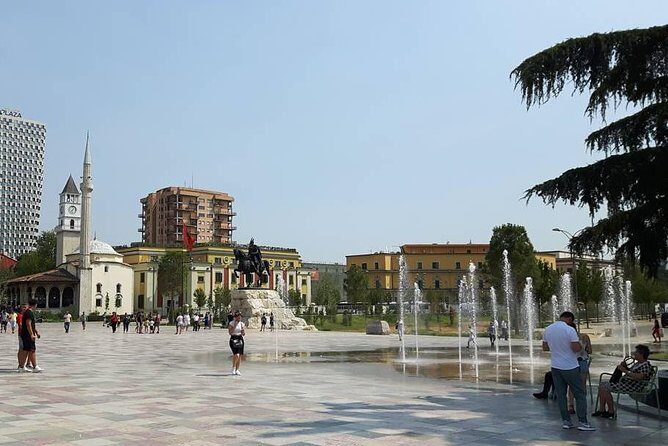
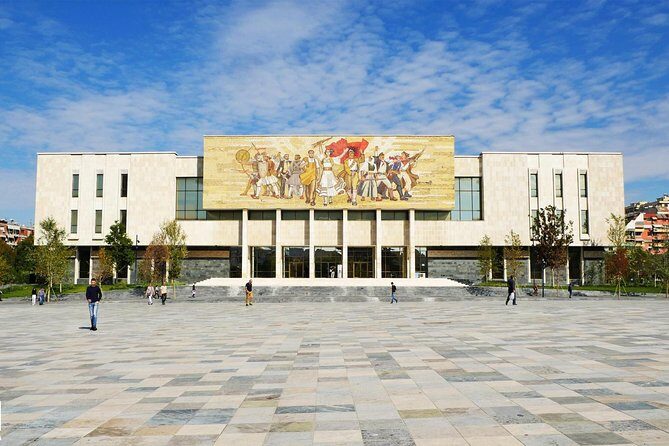
You begin at Skanderbeg Square, the traditional “start here” point in Tirana. It’s not just a big plaza for photos. The buildings around it show how layers of power sit side-by-side.
Here’s what you’ll look for:
- Et’hem Bey Mosque, one of the defining landmarks of the square
- Clock Tower of Tirana
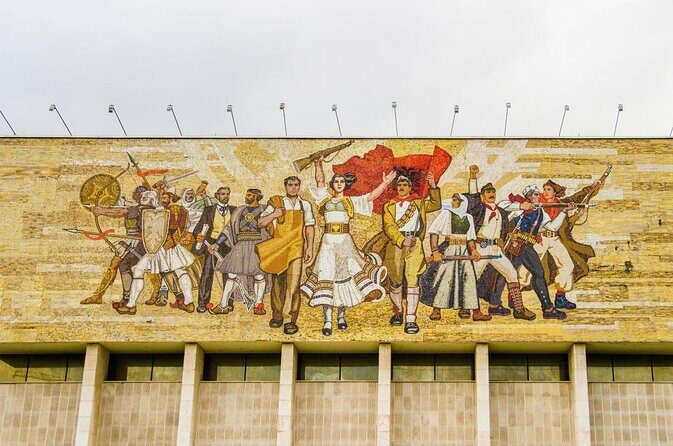
- National Theater of Opera and Ballet (with the detail that the first brick was put by Nikita Khrushchev, the former Soviet leader)
- The National Bank of Albania
- Tirana International Hotel and other older hotel facades that help define the area
This stop is about 30 minutes. I like it because it sets your visual baseline. You’ll know what counts as the center, and you’ll pick up the key names and shapes so later stops feel connected instead of random.
If you hate standing around, don’t worry. Your guide will usually keep you moving by pointing out how each building relates to the story of the era you’re about to hear.
Enver Hoxha Pyramid: the communist symbol that kept surviving
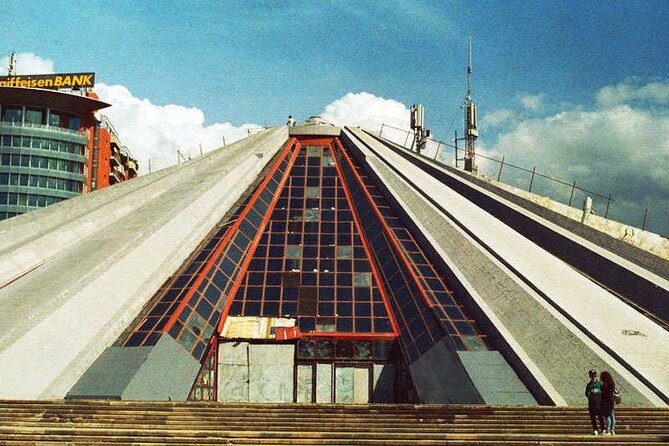
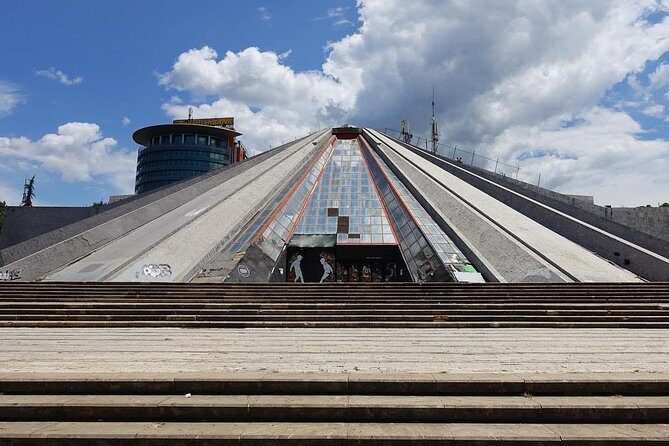
Next up is the Enver Hoxha Pyramid, one of Tirana’s most recognizable shapes. The tour frames it as a sign of the communist regime, and the building’s timeline is exactly why people keep talking about it.
What to focus on while you’re there:
- It was first built as a museum dedicated to Enver Hoxha.
- Later, a mausoleum component opened in 1988.
- The story says it was co-designed by Hoxha’s daughter.
- After the fall of Communism, it served different public uses, including a cultural center and a National Television office.
- It also survived a project meant to destroy it, so it remains a visible reminder in the city.
This stop is shorter, around 15 minutes, and admission is ticket free. The time feels about right. You’re not trying to finish a whole museum here. You’re learning the “what it was built to do” before you move on to the more direct control symbols.
A good tip: treat it as a before-and-after lesson. When you see the pyramid, then later see the bunker sites, you’ll understand how the regime used both spectacle and secrecy.
Postbllok Checkpoint Monument: the fear you can walk through
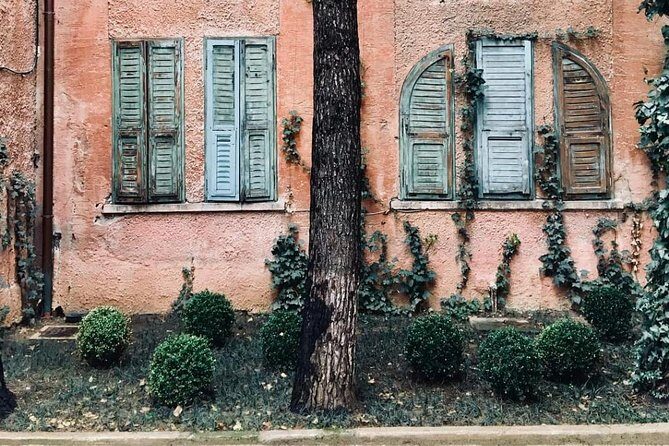
Then comes Postbllok, described as a memorial to communist isolation and control. This is one of the stops that tends to hit harder than you expect, because it’s built from multiple kinds of evidence.
You’ll see three major elements:
- A concrete defensive bunker idea, tied to the regime’s habit of building thousands of shelters
- Concrete supports from the mine linked to Spaç labor camp, where political prisoners suffered between 1968 and 1990
- A brightly painted section of the Berlin Wall from Postdamer Platz
This part is about 10 minutes, and admission is free. Don’t rush it. Even if you’re not a museum person, the design forces you to compare systems. The point isn’t to memorize dates. It’s to feel how fear gets engineered into public space.
Also, this stop is a smart bridge. After Postbllok, Blloku makes more sense because it sets up the contrast: control and isolation on one side, elite life on the other.

Blloku: the dictator’s neighborhood turned Tirana’s social scene
Now you shift from monuments to a neighborhood. Blloku used to be a living and leisure area for the political communist bureau. Even maps reportedly missed it, which tells you how guarded the zone was.
Today, Blloku has become a central hangout district. Think boutiques, colorful coffee shops, cocktail bars, pubs, and plenty of street art. The irony is the point: the city life is louder now, but the past didn’t vanish.
Two things to pay attention to:
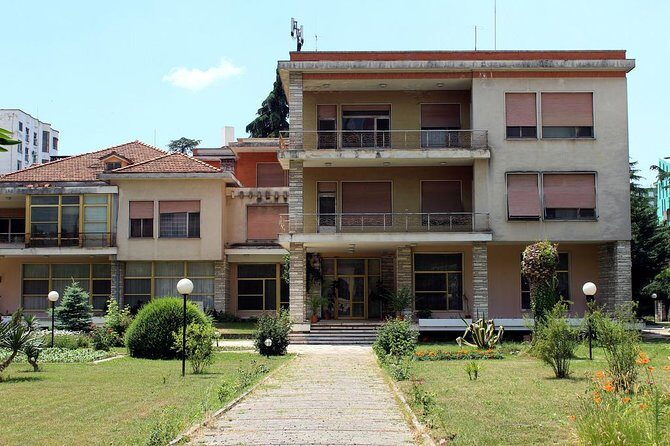
- You’ll pass the former villa of Enver Hoxha, which is left untouched and unused.
- You’ll get only outside viewing, since entry isn’t allowed.
This stop is the longer one in the middle of the day: about 50 minutes. And it’s not just sightseeing. You’ll have a short stop in a restaurant near the area where traditional food and rakija are included.
A practical caution: rakija is strong. The tour setup gives you a chance to taste it, but pace yourself. If you’re driving later or you’re sensitive to alcohol, treat it like a sampling, not a finish.
If you’ve heard people talk about the House of Leaves, this is the kind of stop where that story shows up in the overall Blloku narrative. Even if you only remember one detail from it, you’ll likely remember the feeling: the contrast between public normal life and private machinery of power.
Bunk’Art 1: the underground museum built from nuclear-survival logic
The day’s biggest “step inside history” moment is Bunk’Art 1. This museum is set in underground spaces that were designed for shelter—an attempt at survival logic that never got tested the way the regime expected.
Here’s what you’ll learn and what makes it impressive:
- The bunker was built in the 1970s and stayed secret for much of its existence.
- It was designed to survive nuclear attacks with double concrete walls.
- The space was planned for more than 100 people.
- Today, the museum spreads across roughly 3,000 m² of underground rooms, corridors, and container rooms over several floors.
- The route is labyrinth-like, and the building design is part of the experience.
You’ll spend about 1 hour here. Admission is included, and this is where most people feel the most “wow” effect. It’s not about special effects. It’s about the scale of planning and the cold logic of what the regime believed it needed.
Practical tip: dress for temperature changes. Underground rooms can feel cooler, and you’ll be walking around inside with limited space to stop and stretch.
If you want your Tirana day to feel more than a photo tour, this is the piece that usually does it.
The guide experience: Leo, Dio, Aldo, Mimi, DC, and Eni make it personal
This tour earns its top ratings because the guides actually steer the story. Names from the guide pool include Leo, Dio, Aldo, Mimi, DC, and Eni, and the pattern across feedback is consistent: clear English, careful pacing, and a focus on explaining what it felt like, not just what happened.
What I like about this approach for you:
- You get explanations that connect sites, so you don’t treat each stop like a separate Wikipedia page.
- Several guides bring in personal family stories, which makes the era feel lived, not distant.
- The tone stays helpful even when people have different interests. Some folks want architecture. Others want social history. A good guide can juggle both.
There is one small-group trade-off. One review flagged that it can be hard to keep everyone moving at the same pace. That’s normal with mixed interest levels, so if you know you get distracted, just remind yourself that the “best part” is usually the next stop.
What to pack and how to plan your day
Because this is partly a walking day, set yourself up for comfort. Bring shoes you can walk in for hours, and plan for city walking on uneven sidewalks.
Also:
- You don’t need to bring lunch. You just need a plan for it afterward.
- Drinks are included, including alcoholic beverages. If you want to enjoy the tasting without losing the rest of the day, go slow.
- If you’re sensitive to cold or drafts, bring a light layer for the underground museum.
If you’re in Tirana only briefly, this is still a workable use of time. The route is structured so you’re not spending energy figuring out transport between stops.
Who should book this tour (and who might not love it)
Book it if:
- You want a fast, structured look at Tirana’s communist era landmarks.
- You like walking tours with a clear narrative thread.
- You enjoy history that connects buildings to real human experiences.
- You’re curious enough to handle tough topics like prisons, forced labor memories, and surveillance architecture.
Consider skipping or choosing a lighter option if:
- You want a chill city stroll with minimal heavy content. This tour is built around communist symbolism and repression sites.
- Long walking is a problem for you. Even with a vehicle included, the experience can feel like a full walking day.
- You plan to drink a lot. Taste rakija, but don’t make it a night out during the tour.
Should you book it?
I’d book this if you want Tirana with context. The route makes sense: central monuments first, then the harsh reminders of control, then Blloku’s contradiction, and finally the bunker museum where the regime’s fears become physical. With hotel pickup, coffee/tea, and food plus rakija included in the key neighborhood stop, the day feels like more than just a set of entrances.
Just go in with realistic expectations. Wear good shoes, plan on walking, and save lunch for after. If you can do that, you’ll leave with a sharper understanding of Tirana than most people get from a quick sightseeing loop.
FAQ
How long is the tour?
The tour runs about 4 to 5 hours.
What’s included in the price?
You get hotel pickup, an air-conditioned vehicle, coffee and/or tea, alcoholic beverages (rakija), and the tour includes admission tickets for some stops. Lunch is not included.
Where do I meet the guide?
The tour starts at Skanderbeg Square (Sheshi Skënderbej, Tiranë) at 9:00 am and ends back at the meeting point.
Is this a private tour?
Yes. It’s a private tour/activity where only your group participates.
Are admissions included or free at the stops?
Some stops are free (like Skanderbeg Square, the Enver Hoxha Pyramid, and Postbllok), and other parts include admission ticket time (like Blloku food and Bunk’Art 1).
Does the tour run in English?
Yes, the tour is offered in English.
What is the cancellation policy?
You can cancel for free up to 24 hours in advance for a full refund. If you cancel less than 24 hours before the start time, the amount paid is not refunded. The experience also requires good weather and may be rescheduled or refunded if it can’t run.
Is it accessible and are service animals allowed?
Service animals are allowed. It’s near public transportation, and most people can participate.