REVIEW · TIRANA
Self – Guided Peaks of the Balkans tour in 7 days
Book on Viator →Operated by Choose Balkans · Bookable on Viator
Seven days, zero city noise.
This self-guided Peaks of the Balkans route strings together the Dinaric Alps across cross-border trekking and big mountain views in Albania, Montenegro, and Kosovo. You’ll hike hard, change valleys often, and sleep in places that feel far from standard tour life, yet you’re not totally on your own thanks to local partners and daily support from Choose Balkans.
I love that the trip runs on local guesthouses and high shepherd huts, so each night feels tied to the mountains. Choose Balkans support is real on the ground too, with Brikena Shametaj and Sirma helping coordinate the plan and staying reachable while you’re on the trail.
Do keep one thing in mind: this is not a casual walk. You’ll need strong fitness, you carry your belongings, and on some nights the beds are basically mattresses, not hotel comfort.
In This Review
- Key things that make this trek special
- Why the Peaks of the Balkans feels wild even when it is organized
- Price and what you actually get for $1,237.53
- What to pack (and why your backpack weight matters)
- Day 1 in Albania: Tamare, Lepushe, then Talijanka into Vuthaj
- Day 2 into Theth: Arapi peak area, a hidden water stop, old churches
- Day 3 to Valbona Pass: the mule trail feeling and adrenaline at the top
- A practical route note from real-world experience
- Day 4 to Cerem: canyon-like walking, near-snow terrain, and the Zla Kolate option
- Day 5 to Doberdol: mule tracks, berries, bears/lynx territory, and basic hut life
- Day 6 in Kosovo: hiking to Gjeravica and swimming in alpine lakes
- Day 7 in Gjakova: bazaar, clock tower, Hadum mosque, and back to Tirana
- Who should book this Peaks of the Balkans trek
- Should you book it?
- FAQ
- FAQ
- Where does the tour start in Albania?
- How many days is the Peaks of the Balkans tour?
- Which countries does the route include?
- What kind of accommodation is included?
- Is any transport included between hiking sections?
- Are breakfasts included?
- Are lunches and dinners included?
- Can I get a private room?
- Is there a refund if plans change?
- Will I have help getting from the final bus terminal to my hotel?
Key things that make this trek special
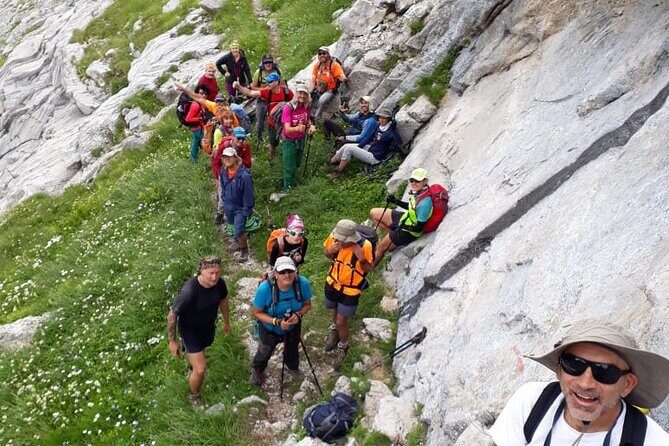
- Cross-border hiking rhythm: you cross between Albania and Montenegro (and move into Kosovo) multiple times during the week
- Mountain sleeping style: guesthouses and shepherd huts instead of big hotels
- Daily human support on a self-guided format: you get maps and check-ins from Brikena Shametaj and Sirma
- Big-day hikes with real commitment: several days run 7–8 hours, including pass and peak segments
- Wildlife and protected terrain: you pass through an Albania reserve connected to brown bears and a small lynx population
- End with a city reset: Gjakova’s bazaar and old Ottoman-era sites after summit time
Why the Peaks of the Balkans feels wild even when it is organized
This tour is a smart mix: you hike under your own steam, but the big pieces are handled—accommodations, key transport legs, and the border/pass logistics. That matters because the Peaks of the Balkans are remote by nature. If you’ve ever tried to stitch together guesthouse-to-guesthouse travel in mountain regions, you know how quickly it turns into guesswork.
I also like the way the week is built around movement: valleys, passes, and peaks come one after another, not in a checklist way but in a natural “keep going, then rest” flow. And since the operator limits groups to a maximum of 10 travelers, the experience stays small enough to feel personal without feeling like you’re traveling in a crowd.
One more detail that makes this work: you start early in Tirana. A 6:00 am start time pushes you into the mountains while the day is still fresh.
Other Theth and Albanian Alps tours we've reviewed in Tirana
Price and what you actually get for $1,237.53
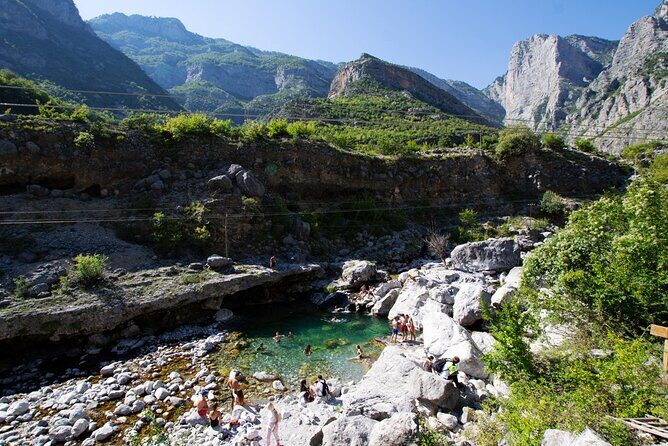
At $1,237.53 per person for about 7 days, this is not cheap—mostly because you’re paying for more than hiking. You’re paying for shared mountain accommodation, multiple local transport legs, and the cross-border logistics that are usually the hardest part of planning this region.
Included:
- Shared accommodation in traditional guesthouses or shepherd huts (rooms fit 2–5 travelers)
- Local transport legs on key days (from Tirana to Lepushe on day 1, and several later legs including 4×4 routing on day 6)
- Cross Border Pass, road taxes, and petrol
- Breakfast is listed as optional for 6 days
Not included:
- Lunches, dinners, drinks, and snacks (the tour estimates about €12–15 for one meal)
- Transfer from the final bus terminal to your hotel on day 7
- Any transfers not specifically named
- Entry tickets/tourist taxes/souvenirs/personal spending
Here’s how I think about the value: if you tried to replicate this yourself, you’d still have to solve the same transport and border headaches, and you might struggle to line up the right overnight villages at the right times. You’re paying to reduce that planning stress so you can focus on the trail.
What to pack (and why your backpack weight matters)
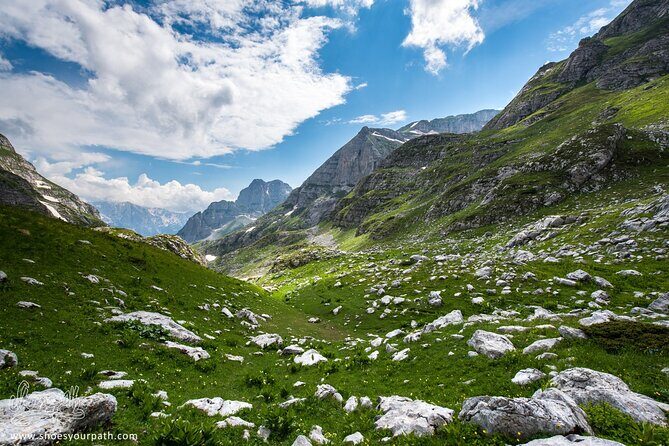
The tour is clear that you’ll be carrying your belongings during the trek, so pack light. There’s also luggage transportation mentioned as possible depending on availability, but it’s not guaranteed—and the fees listed are big (from a minimum of €385 per person for groups, or €770 for one person). Translation: only plan on luggage transport if you’re willing to pay for it.
You can request private rooms for an extra €40 per night per room, based on availability. That’s useful if you want a quieter recovery after long days, but it’s still a “mountain-appropriate” comfort level.
Finally, be realistic about sleeping conditions. One stop (Doberdol) is described as having basic beds—mattresses, not hotel standards. If you’re the type who needs firm comfort, bring that mindset.
Day 1 in Albania: Tamare, Lepushe, then Talijanka into Vuthaj
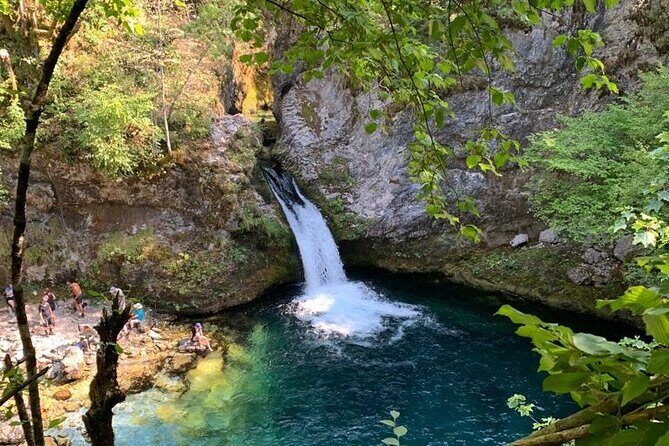
Day 1 eases you in with short, purposeful chunks before you hit the border drama of the later hike.
Tamare kicks off the adventure. You’ll start your time in the Albanian Alps, part of the Dinaric Alps system that reaches far beyond this region. Even though this stop is brief, it’s a good mental switch: you go from arriving mode to hiking mode.
Then Lepushe (Lëpushë) gives you a classic north Albanian village pause. It’s known in spring for the yellow flowers behind the village name, and it’s also associated with local bio-style food. The value here is more than scenery: you’re getting a taste of how people live in these mountain areas and how the local kitchen ties into regional produce.
The real pivot is Vuthaj, reached after hiking to the Talijanka peak. From that peak you cross the border from Albania into Montenegro. The description of the views is specific: dramatic grey, sharp peaks around you, plus Lake Plav appearing in the wider Montenegro view. Then you take a minivan for the last 40 minutes to Vuthaj.
In Vuthaj, you have an optional walk to the Ali Pasha springs (about 40 minutes from the guest house). This is a nice first “reward hike” after a harder border day, as long as your legs can handle it.
Day 2 into Theth: Arapi peak area, a hidden water stop, old churches
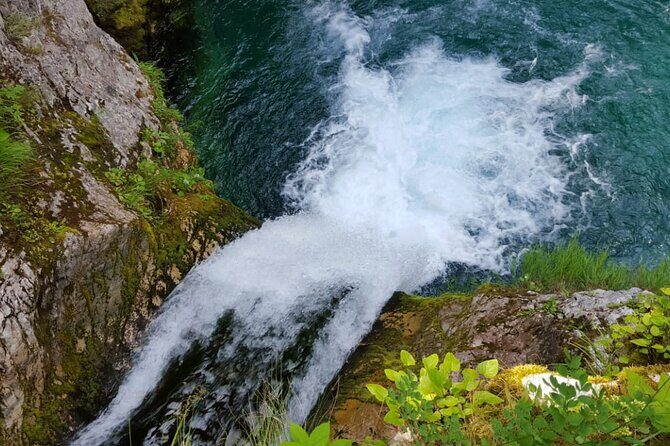
Day 2 is a bigger commitment—about 8 hours total—and it’s built around three themes: rugged terrain, local life, and older stone sites.
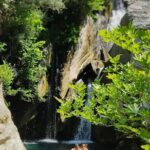
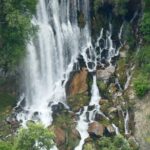
You start by heading toward Theth, including a border crossing back to Albania. Along the way, you visit a hidden water place that’s hard to find without knowing the exact location. This is the kind of stop that can make a self-guided trek feel less generic, because it adds a local “someone knows a path” moment.
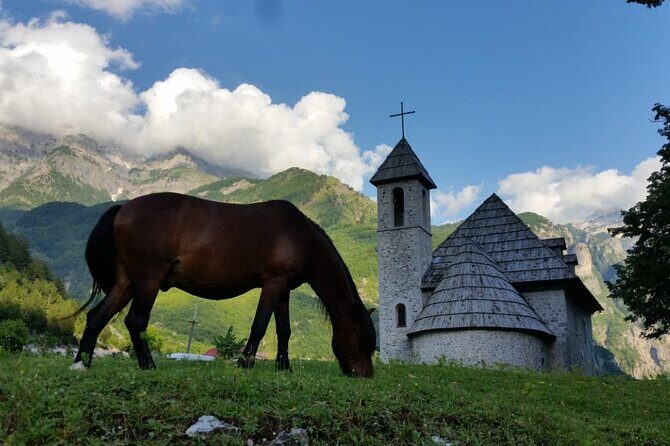
As you hike, you pass by high-peak territory including Arapi Peak (2217 m) near Jezerca Peak (2694 m). You’ll also see shepherd huts along the route. Those huts are important here because they don’t just look photogenic—you understand how the trail fits into livestock routes and daily mountain work.
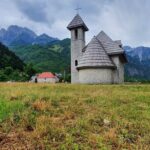
In Theth, you visit the Old Church and the Lock in Tower. These buildings are tied to long timelines of village life, and the tour’s framing emphasizes the stories behind them.
Overnight is in a guest house in Theth, giving you a real chance to reset before the pass day ahead.
Other multi-day Albania tours from Tirana

Day 3 to Valbona Pass: the mule trail feeling and adrenaline at the top
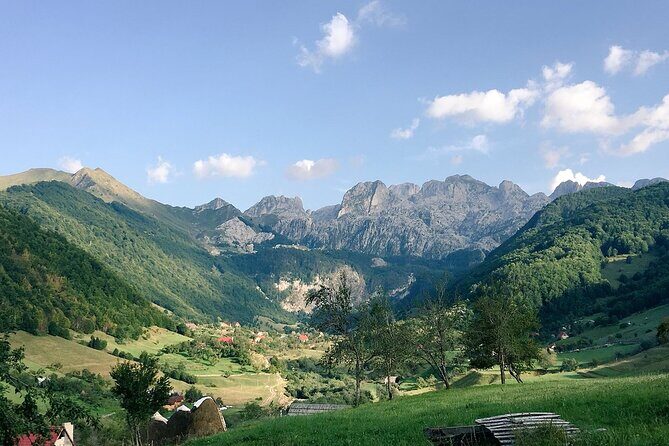
This is the day most people remember—not because it is the only dramatic day, but because it delivers the classic Balkans pass experience in full.
The trek from Theth to Valbona is about 6–8 hours and runs on a route that used to be an old mule trail. That detail matters. You can often feel when a trail was built for animals and goods, not just foot traffic. The path can be rougher, but it tends to “flow” in a way that feels practical for moving through remote terrain.
At one point you get to see Theth valley on one side and Valbona valley on the other, which gives you an immediate sense of scale. Then you reach Valbona Pass, where the tour description doesn’t mince words: it’s a serious adrenaline moment.
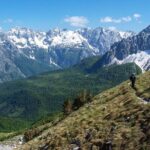
The views connect to the Bjeshket e Nemuna, also called the Accursed Mountains, a national park area in Kosovo near the borders with Albania and Montenegro. You’re walking through wild forest and mountain terrain, and you might spot shepherds with their flock.
Overnight is in a guesthouse in Valbona.
A practical route note from real-world experience
One helpful tip came up in feedback: on the leg connected to the next days, choosing a longer alternative route can be tougher than it looks. Specifically, an initial climb of about 800 meters was mentioned. My advice: if you’re tempted to rush, don’t. Build in buffer time so you don’t end up paying for speed with extra exhaustion.
Day 4 to Cerem: canyon-like walking, near-snow terrain, and the Zla Kolate option
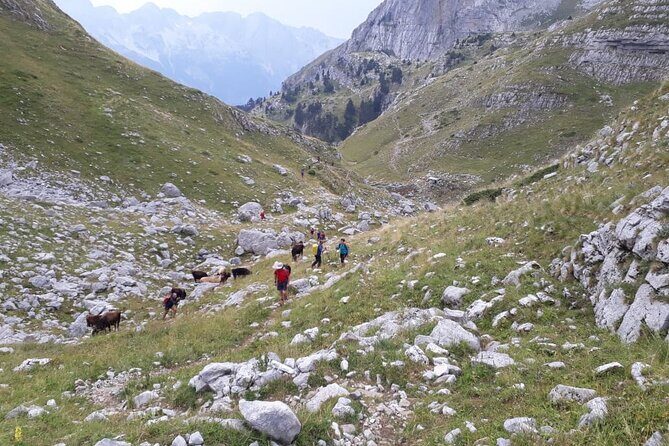
Day 4 is about big variety in a single day. The hike is around 8 hours, and before you start you take transport to the trailhead.
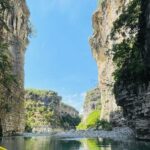
You move through forests and meadows. Then you arrive in a canyon-like area where the tour says snow can remain even in summer. That’s a great sign for conditions: cooler air, possible slippery patches, and a strong “season doesn’t fully control this place” feeling.
You can hike to the highest peak of Montenegro, Zla Kolate, which adds about 3 hours (about 10 hours total for the day if you do it). That’s a real commitment, so I’d only choose the summit option if you’re already feeling steady at that point in the week.
Along the way are some standout trail features described in plain, memorable terms: a stone surface that looks like the face of a miserable old man, and a cave where a cold wind comes out along the trail. If you like trails with personality—small oddities and weird natural features—this day delivers.
You end in Cerem at around 1300 m, staying in shepherd huts. Expect basic mountain lodging. This is the kind of night where you’ll likely fall asleep fast.
Day 5 to Doberdol: mule tracks, berries, bears/lynx territory, and basic hut life
Day 5 starts with a hike from Cerem toward Doberdol following a mule track. Total hike time is about 7 hours.
You cross the border into Montenegro for about two hours. Then the trail moves through pine forests and you can find berries like blueberries, blackberries, and raspberries depending on the season. It’s one of the more “tasty on the way” days, even if you’re not guaranteed fruit every time.
A key detail here is the National Reserve in Albania, described as the only one in the country connected to brown bears and the last population of about 40 lynxes in the Balkans. You may not see wildlife on the trail, but the fact the path runs through protected habitat gives the day extra meaning.
The hike’s highest point is about 2100 m, and you can stop for coffee or other drinks at some shepherd hut villages. That’s not just a comfort moment; it helps you manage energy for the later stretch.
Doberdol is about 1800 m, with an overnight in a shepherd hut. Food options are described as made from local ingredients, but sleeping is again basic—mattresses rather than hotel beds.
Day 6 in Kosovo: hiking to Gjeravica and swimming in alpine lakes
Day 6 is shorter on paper—about 4 hours for the summit portion—but it brings big rewards.
You hike to Gjeravica, the highest peak of Kosovo and the second highest peak of the Accursed Mountains (also known as the Albanian Alps in this broader region). From the top you get views of the Accursed Mountains and the Sharr Mountains.
Then comes one of the more unusual parts of the day: the chance to swim in three lakes fed by alpine and glacier waters. One is described as heart-shaped, which makes it easy to picture and hard to forget.
After the summit segment, you move to Erenik (Gropat e erenikut), with about 1 hour in transit/time. Then from Junik onward, you go by 4×4 to Gjakova, arriving for an overnight in a hotel. That jump from mountain recovery to town comfort is a smart design choice.
Day 7 in Gjakova: bazaar, clock tower, Hadum mosque, and back to Tirana
After several days of hiking, Day 7 is your reset. You get a short city tour of Gjakova, plus the final travel legs back to Albania.
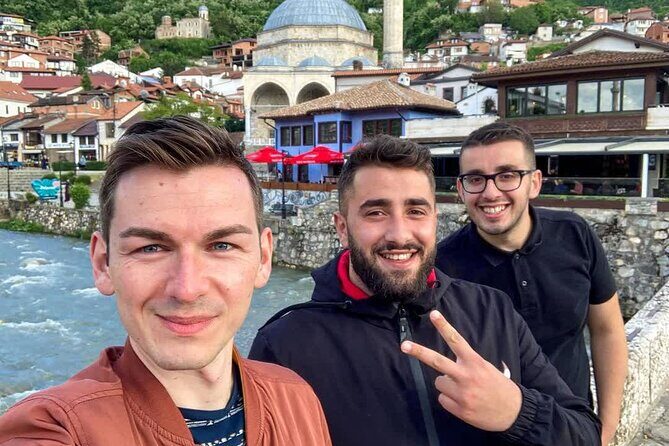
Gjakova’s bazaar is described as the oldest and largest bazaar of Kosovo. It was destroyed during the Balkan Wars, World War II, and the Kosovo War, then rebuilt to its older state. The value for you is simple: you get a place to eat and wander that still feels lived-in, not staged.
You’ll also see the clock tower and visit the Hadum mosque, built in the 16th century and noted for surviving conflicts. The tour description highlights Islamic architecture beginnings in the Balkans and the mosque’s arabesque decoration.
Then you transition out: transport includes going from Gjakova to Prizren, and Prizren to the Tirana bus terminal. Your end point is listed as East Terminal Lundër 1, Albania. One practical thing: the transfer from the bus terminal to your hotel on the last day is not included, so plan a taxi or bus step for yourself.
Who should book this Peaks of the Balkans trek
This fits you best if:
- you already have some hiking experience and you’re comfortable with long days
- you’re okay with basic mountain lodging at least part of the trip
- you enjoy crossing borders and walking through places that don’t feel built for tourists
- you want the freedom of self-guided hiking but still like someone staying reachable
It might not fit if you:
- want lots of comfort on every night (some beds are described as just mattresses)
- hate carrying your own gear for the duration
- aren’t confident with 7–8 hour hiking days
Also, this tour is capped at 10 travelers, so it stays smaller than big-group treks.
Should you book it?
I think this is a strong pick if you want a mountain week that feels real and slightly untamed, without giving up organization. The daily support from Choose Balkans (Brikena Shametaj and Sirma), the careful transport legs, and the focus on guesthouses and shepherd huts make it feel like a true trek rather than a bus-and-photo program.
If you do book, be honest with yourself about fitness and pack weight. The itinerary is demanding, and the best way to enjoy it is to arrive already trained for long hikes, then treat each day’s rest as part of the plan—not as wasted time.
FAQ
FAQ
Where does the tour start in Albania?
The tour start is in Tirana, Albania. The meeting point is listed as 8RJ3+WV5, Tiranë, Albania, and the start time is 6:00 am.
How many days is the Peaks of the Balkans tour?
The tour duration is approximately 7 days.
Which countries does the route include?
The trek runs across Albania, Montenegro, and Kosovo, with multiple border crossings.
What kind of accommodation is included?
You get shared accommodation in traditional guesthouses or shepherd’s huts. Room sizes accommodate 2–5 travelers.
Is any transport included between hiking sections?
Yes. Local transport is included on specific days and legs, including transfers from Tirana to Lepushe on day 1, transport connected to Vuthaj, transport connected to Gjakova, and transport connected to the Prizren to Tirana bus leg on day 7.
Are breakfasts included?
Breakfast is listed as optional (with breakfast noted for 6 days).
Are lunches and dinners included?
No. Lunches, dinners, drinks, and snacks are not included. The tour estimates one meal costs about €12–15.
Can I get a private room?
Private rooms are possible for an extra €40 per night per room, based on availability.
Is there a refund if plans change?
No. The experience is non-refundable and cannot be changed for any reason. If you cancel, the amount you paid will not be refunded.
Will I have help getting from the final bus terminal to my hotel?
Not included. On the last day you are dropped off at the Tirana bus terminal, and transferring from there to your hotel is not part of the package.