REVIEW · TIRANA
Montenegro, Kosovo & North Macedonia in 3 Days from Tirana
Book on Viator →Operated by Go as Local · Bookable on Viator
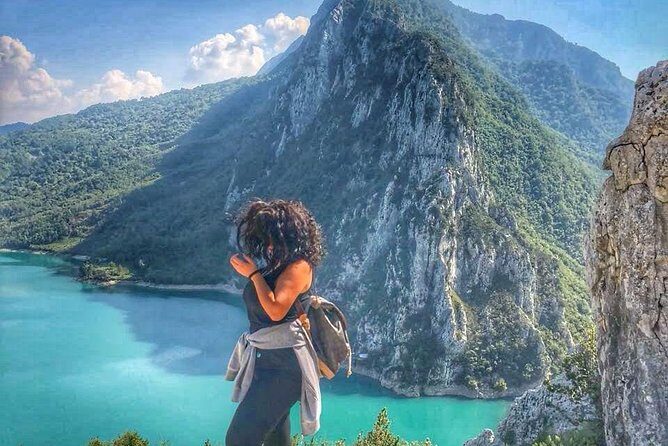
One early-morning drive can turn into three countries. This is a small-group 3-day whirlwind built around old towns, religious landmarks, and big viewpoints, starting with Montenegro’s Kotor and Budva, then crossing into Kosovo for Prizren and Pristina, and finishing in North Macedonia with Skopje and Ohrid. What makes it fun is the mix of coastal scenes and city stops, plus enough guided structure that you don’t waste time guessing what matters.
I like the tight, tour-guide-led pacing, especially when the people behind the wheel are pros like Engjell and Redi Boraj. The guiding style stands out in how it connects sites to how the region worked—history, economy, and daily culture—without turning into a lecture. I also like that the trip includes 2 overnights in solid 3-star hotels with breakfast, so you can focus on sightseeing instead of constant moving.
The main drawback to plan for is how busy the schedule feels. You start at 7:00 am, you’re in vehicles for long stretches, and since lunch and dinner aren’t included, you’ll need to manage meals on the fly.
In This Review
- Key highlights worth your attention
- A three-country sprint that still feels guided
- Tirana to Montenegro: Lezha, the Buna River, and Rozafa’s shadow
- Kotor Old Town: Sea Gate to St. Tryphon in one walkable story
- Budva’s walls and fortress views: coast time with quick free lunch
- Shkoder overnight: north Albania’s legends and lake-air feeling
- Prizren: League history, Stone Bridge views, and bazaar food
- Pristina: capital sights without the overload
- Skopje’s Kale Fortress and statue city energy
- Ohrid on Lake Ohrid: churches, Kaneo Bay, and Tsar Samuel’s fortress
- Price and time: is $776.65 good value for this route?
- Should you book this Montenegro–Kosovo–North Macedonia run?
- FAQ
- What time does the tour start?
- Is pickup included?
- How long is the tour?
- How many nights of hotel stay are included?
- What’s the group size?
- What languages is the tour offered in?
- Are entrance tickets included?
- Are meals included?
- What’s the cancellation window for a full refund?
- Where do we spend the overnights?
Key highlights worth your attention
- Kotor’s Sea Gate and Old Town structure: you walk from the bay up through the key defensive entry points, then get the major stops inside the old walls.
- Budva’s coast-first sightseeing: city walls, Roman ruins, and fortress views are packed into a short stretch with built-in lunch time.
- Prizren’s political past in a museum stop: the House of the Prizren League ties the story of independence and parliament-making to a real building.
- Skopje’s Memorial City vibe plus Kale Fortress: statues, bridges, and church–mosque contrasts in one day.
- Ohrid’s lake-town feel plus Tsar Samuel’s views: Kaneo Bay and the fortress give you that postcard angle, then you finish with the old-town religious balance.
A three-country sprint that still feels guided
This tour is basically a history-and-streets walking plan with transportation handled and a guide to make sense of what you’re seeing. With a maximum of 8 travelers, you’re not stuck in a giant herd, and the guide can keep the flow moving without losing people.
You’ll get an air-conditioned vehicle, plus pickup from your hotel (you provide the pickup address). The days are long in a good way—there’s a reason it works: most stops are clustered around walkable old-city zones, so you spend your energy on shoes-on-stones sightseeing, not constant transit within each city.
You also get a practical baseline for comfort: two overnights in good 3-star hotels with breakfast. That matters when your days run early and late, because you’re not trying to find a breakfast place at the last second with jet-lag or fatigue.
Other North Macedonia day trips from Tirana
Tirana to Montenegro: Lezha, the Buna River, and Rozafa’s shadow
Day 1 begins with a 7:00 am departure from Tirana, heading north through the flatter, trading-and-industrial stretch of Albania’s northwest. Passing through Lezha gives you a quick sense of the regional geography before the drive turns toward riverland and border territory.
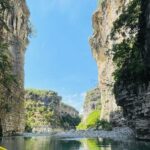
Then comes the Buna River. The tour notes it as Albania’s only sail-able river, which is a neat detail because it hints at how waterways shaped movement and trade here. After that, you continue toward the Montenegro side.
You also get a short stop near Rozafa’s Castle (at its feet). It’s quick, but it helps you understand why this area is tied to legends and identity, not just roads and views. Even a short break makes the long day feel less like a transfer and more like a route with meaning.
Kotor Old Town: Sea Gate to St. Tryphon in one walkable story
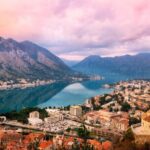
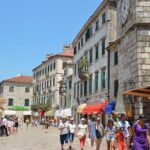
Kotor is a stop that’s hard to beat when you only have a few days. It sits in an unusual gulf, and the city’s layout reads like an open-book of time periods, with strong Venetian influence reflected in the architecture and fortification vibe.
You get a long block for this leg (about 4 hours), which is important. Too-short Kotor tours turn into photo sprints. Here, you can actually slow down, notice squares and side streets, and let the old walls do what old walls do.
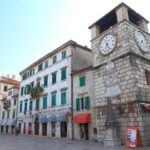
The big entrance moment is the Sea Gate, starting from the lower part of Kotor near the bay and marina. The Sea Gate is more than a pretty archway; it’s described here as a symbol of resistance and liberation from WWII in 1944. That gives you a reason to care as you pass through—your brain has context, not just a view.
From there, you step into the Old City highlights and then hit St. Tryphon Cathedral. The cathedral stop is brief (about 20 minutes), but it fits well because it anchors the architecture and faith story in a single “must-see” moment. And yes, this is one of those places where even a short stop can feel satisfying if you’ve already been walking through the old streets for a while.
Budva’s walls and fortress views: coast time with quick free lunch
After Kotor, the drive turns toward the southern part of Montenegro with Riviera-style scenery and tiny rocky beaches along the way. Even if you’re not a beach person, that coastal stretch helps reset your eyes after dense old-town stone.
In Budva, you start with the City Walls (about 1 hour). City walls are a smart inclusion on a tight schedule: they give you elevated views and a sense of how the city was protected, without needing museums to anchor the stop.
Then you head into the Old Part of town for the Budva fortress and coastal viewpoints, plus the Roman layer of the area. The tour also includes a look at the Budva Dancing Girl (about 20 minutes), which is one of those landmarks that feels playful and out-of-place—in a good way—right in the middle of ancient-and-medieval settings.
A key practical piece: you get free time for lunch here. Since meals are not included, this free window is your chance to eat like a local instead of grabbing a rushed snack. If you’re picky about food or you need a dietary-friendly meal, I’d use that free time to plan first and then eat.
Shkoder overnight: north Albania’s legends and lake-air feeling
At the end of Day 1, you loop back into Albania for Shkoder, where you’ll stay overnight. The tour describes Shkoder as the capital of the north and the biggest developed center in the region, and it’s also tied to Rozafa Castle legends.
Shkoder matters because it’s not just another stop you pass through. You get about 3 hours on the ground, and the overnight gives you the advantage of one evening to explore at your own pace. That’s useful for unwinding after long driving days and for finding a calm spot for dinner without worrying about catching a bus immediately.
The tour also points you toward the Lake Shkoder area and the general feel of humor from locals. I’d treat Shkoder as your “breathe-out” night: walk slowly, sit down, and let the story of the region settle before Day 2 speeds you into Kosovo.
Other Kosovo day trips from Tirana
Prizren: League history, Stone Bridge views, and bazaar food
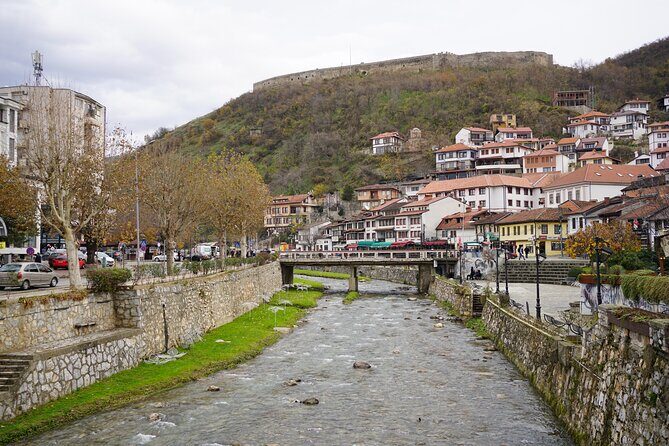
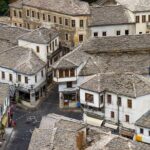
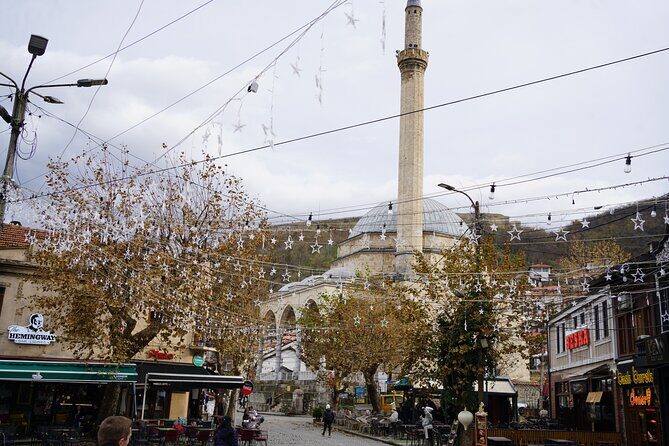
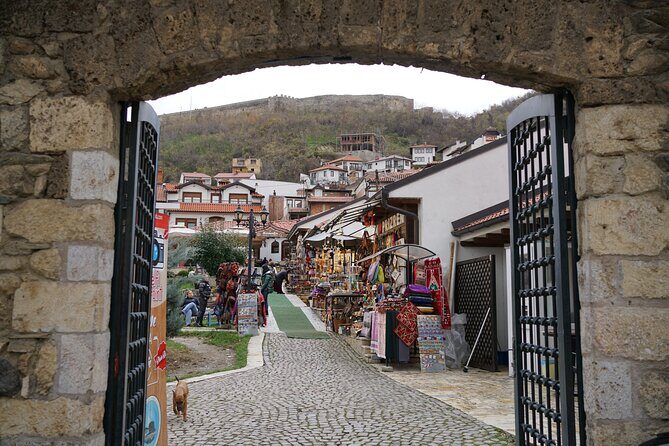
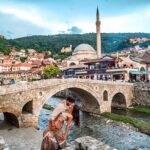
Day 2 starts with the drive to Prizren, labeled here as the Cultural Capital of Kosovo. You’re told it sits along both sides of the Bistrica River, under Prizren’s Castle, which helps you visualize why the city feels like it’s built in layers—riverfront down below, story up high.
The first key stop is the House of the Prizren League, where you visit the League museum and its ethnographic museum inside. This is one of those “history in a building” moments: instead of hearing about political shifts in the abstract, you’re seeing the house tied to action toward independence and parliament-making in the 19th century.
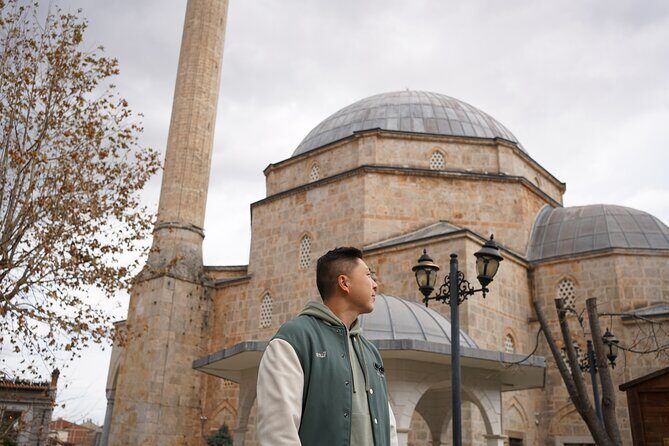
Then you move to Sinan Pasha Mosque and the Old City area around it. Nearby you’ll see the Stone Bridge of Love and then enter the Traditional Bazaar zone. This is where the tour becomes very human-scale: perfume shops, handcrafts, and the sense that the old streets still run on today’s small commerce.
There’s also a short lunch-friendly moment built around local cuisine. Since lunch and dinner aren’t included, this is where you can choose what fits your tastes—fast street eats if you’re hungry and moving, or something sit-down if you want to slow down.
Pristina: capital sights without the overload
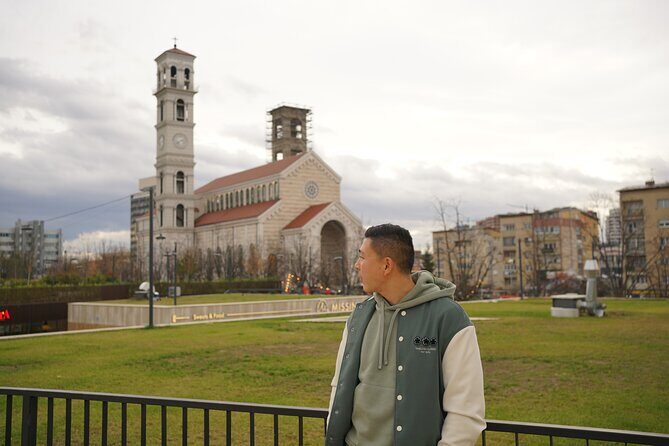
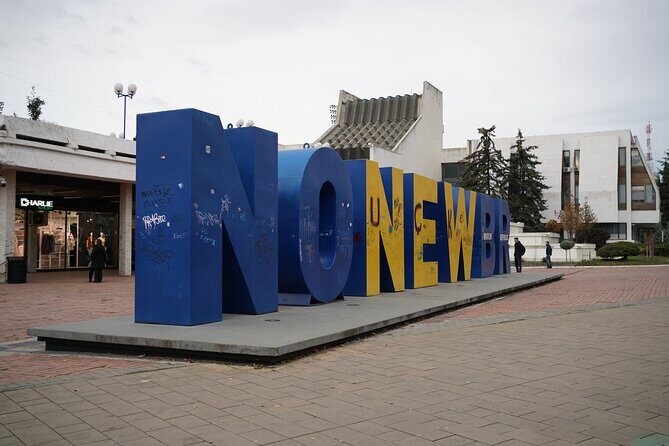
After Prizren, you head to Pristina, described as Kosovo’s capital and also the largest city. The tour mentions the city’s long habitation going back to the Vinča culture, which is a useful reminder that “modern capital” doesn’t mean “new city.”
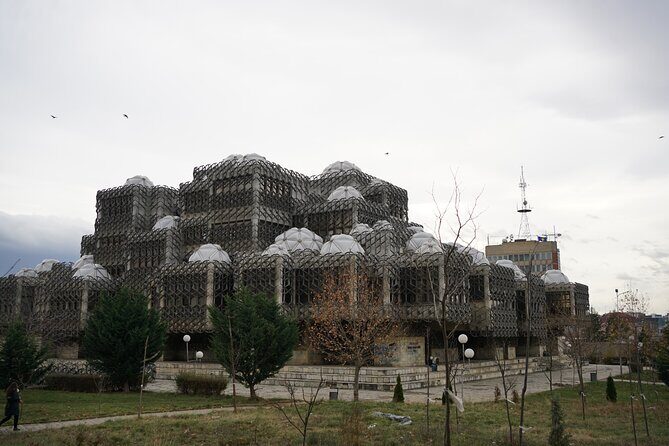
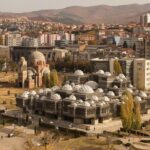
A highlight here is the stop at the National University Library of Kosovo, Pjeter Bogdani. The plan includes time for the library plus cathedral and then a look at old neighborhoods. This is a manageable way to experience a capital day: not too many scattered sites, and enough structure to avoid walking in circles.
You’ll also have the practical flow of the day set up so you can end with Skopje overnight. That matters because Day 3 is built around Skopje and Ohrid, so you don’t want to arrive at those days already wiped out.
Skopje’s Kale Fortress and statue city energy
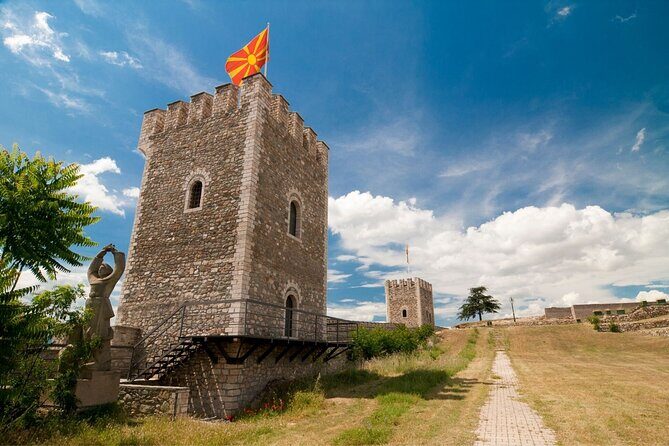
Day 3 begins in Skopje with Kale Fortress (also called Fortress Kale). Skopje is described here as the country’s biggest political, economic, and cultural center, with a history reaching back into early antiquity and medieval kingdoms.
The tour also emphasizes the river divide: the Vardar River and its bridges split the city into two “faces.” One side is described as more contemporary, shaped after the devastating earthquake of 1963. That’s a big clue for what you’ll feel walking around—some sections look like they’re telling a newer story even when you can still sense the older bones beneath.
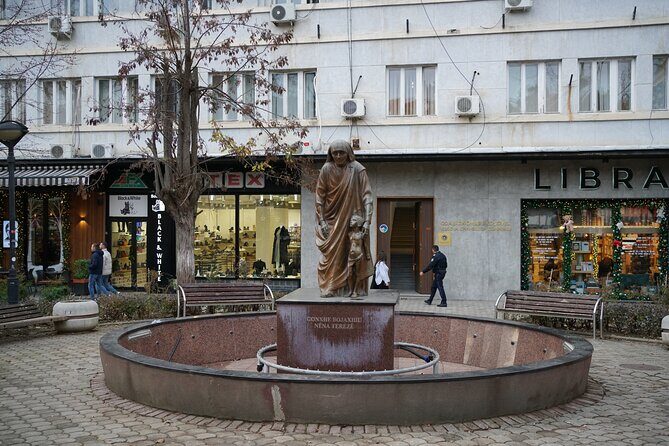
From the fortress and key city points, you move into the Memorial House of Mother Teresa area and the “statue city” vibe. The tour includes the bridges, main statues, and the main square as part of the walk. This section can be a lot visually, so a guide helps you decide what to look at first.
Then you visit Kapan Han and two religious landmarks: the Church of St. Klemend of Ohrid and the Mustafa Pasha Mosque. That church–mosque pairing is a subtle but powerful way to understand religious tolerance as a lived city feature, not just a slogan.
If you like walking with context, this is one of the best parts of the trip. You don’t just see the buildings; you get a reason the buildings sit side by side.
Ohrid on Lake Ohrid: churches, Kaneo Bay, and Tsar Samuel’s fortress
Ohrid is where the trip slows slightly in feel, even with still-packed timing. The plan is built around the old town and the major viewpoints.
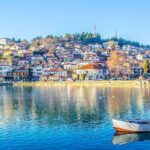
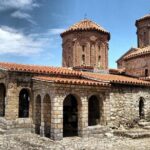
Ohrid is described here as one of Europe’s oldest human settlements and is tied to Lake Ohrid, noted as one of the oldest lakes in the world. The tour also calls it the Jerusalem of the Balkan, connecting it to the spread of Slavic Orthodoxy and the legendary number of churches—365 churches, one for each day of the year—plus mention of churches dating from the 11th century.
You then work through Ohrid’s two-part feel: the old town up top and the lower part where the tour frames a meeting of religions. Even if you don’t treat that as a history lesson, it gives you a reason to pay attention to how the town is arranged.
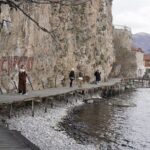
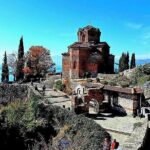
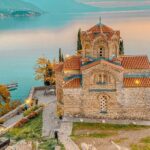
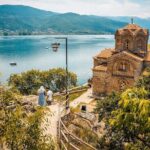
The key viewpoint stop is Kaneo Bay, described as one of the most photographed areas of Ohrid, with the church of St John often shown in postcard images. After that, you continue to Tsar Samuel’s Fortress (about 1 hour) as the finishing anchor for the day.
You get the fortress angle, the lake views, and then you’re done with the biggest “wow” stops. It’s a strong way to close a tight, multi-country loop.
Price and time: is $776.65 good value for this route?
At $776.65 per person for roughly 3 days, the value is in what’s handled for you.
Included basics that add real weight: air-conditioned transport, a tour guide service, 2 overnights in 3-star hotels with breakfast, and all fees and taxes with entry admissions covered for the listed sights. For a route that spans three countries and multiple major old-town areas, that package can cost more if you try to book it piece by piece.
The tradeoff is the time cost. A tour like this runs on concentration and comfort: early starts, long drives, and short blocks at each site. If you hate “tick-the-box” days, this may feel like too much. If you like structured sightseeing and you’re okay managing meals yourself, it can be very good value.
Meals aren’t included, and tips aren’t included either. That’s common, but it changes your budgeting: plan for lunch and dinner every day. The silver lining is that the day includes built-in free time in places like Budva, where you can choose where to eat without feeling trapped.
Should you book this Montenegro–Kosovo–North Macedonia run?
I’d book it if you want an efficient sampler of the Balkans with real guiding, not just transport shuttling. The small max group size, the early-start planning, and the mix of Kotor Old Town, Prizren’s political museum, Skopje’s fortress and memorial sights, and Ohrid’s lake-town views all fit together into a trip that feels complete even with short time.
I wouldn’t book it if you’re hoping for a slow travel pace, long free evenings, or a more flexible schedule. This is a drive-and-walk plan, and you’ll feel that on your legs and your calendar.
If you do go, come ready for walking and early mornings: sturdy shoes matter, and you’ll want cash or card ready for lunches and drinks. And if you care about the tone of the vehicle experience, it’s reassuring to know past experiences highlighted a guide like Engjell for keeping things smoke-free.
FAQ
What time does the tour start?
The start time is 7:00 am, and you’ll depart Tirana at that time. Pickup is offered, and you provide your hotel address for pickup.
Is pickup included?
Yes. Pickup is offered, and you’ll need to provide your hotel address for the pickup details.
How long is the tour?
The duration is listed as 3 days (approx.).
How many nights of hotel stay are included?
You get 2 overnights in good 3-star hotels, and breakfast is included for both mornings.
What’s the group size?
The tour has a maximum of 8 travelers.
What languages is the tour offered in?
The tour is offered in English.
Are entrance tickets included?
Entry admissions are listed as included, with multiple stops showing admission ticket included.
Are meals included?
Meals like lunch and dinner are not included. Breakfast is included for the 2 hotel mornings.
What’s the cancellation window for a full refund?
You can cancel up to 24 hours in advance for a full refund. If you cancel less than 24 hours before the start time, the amount paid won’t be refunded.
Where do we spend the overnights?
The plan includes an overnight in Shkodër and another overnight in Skopje.
If you want, tell me your travel month and your comfort level with early starts, and I’ll suggest what to prioritize and what to skip for the best fit.