REVIEW · TIRANA
Cultural Tour in Tirana including House of Leaves
Book on Viator →Operated by Almanart · Bookable on Viator
Tirana tells its story in layers. This 4-hour walk pairs Skanderbeg Square sights with House of Leaves, so you get both the postcard side of the city and the harder communist-era side. I especially like that it also includes art stops inside real homes and student spaces, not just major monuments. One thing to keep in mind: a couple sites can be closed on the day, but the tour is designed to keep you moving without cutting the full experience short.
For about $58.18 per person, you’re paying for a guided circuit that layers meaning onto each stop. It’s set for small groups (max 10), uses a mobile ticket, and runs through the day between 9:00 AM and 5:00 PM.
In This Review
- Key things to know before you go
- Starting at Skanderbeg Square: your Tirana “reset”
- Et’hem Bey Mosque and the Tirana Clock Tower: art, faith, and perspective
- House of Leaves: the communist surveillance story you can’t forget
- Sali Shijaku Villa: art in a 300-year-old home
- Pazari i Ri (New Bazaar): eat your way through Tirana’s present
- Tanners’ Bridge: a quick Ottoman-era reminder
- Namazgah Mosque and Saint Paul Cathedral: faith side by side
- Pyramid of Tirana and Postbllok: communist monuments with a real purpose
- FAB Gallery at Mother Teresa Square: young artists in the spotlight
- Price and logistics: what you’re really paying for
- Who this Tirana tour suits best
- Should you book this tour?
- FAQ
- How long is the Tirana cultural tour?
- What is the price per person?
- Is admission included for the main museums and landmarks?
- What’s the meeting point and where does the tour end?
- What kind of ticket do I receive?
- How big is the group?
- What’s the cancellation window for a full refund?
Key things to know before you go
- Small group size (max 10) helps you hear the story and ask questions.
- House of Leaves + Postbllok gives you the surveillance theme from two different angles.
- City views from the Tirana Clock Tower help you connect the sites to real geography.
- Art stops include Sali Shijaku’s home-villa and the FAB Gallery for student creativity.
- Real-life pacing: Pazari i Ri adds everyday Tirana to the monument-heavy parts.
Starting at Skanderbeg Square: your Tirana “reset”
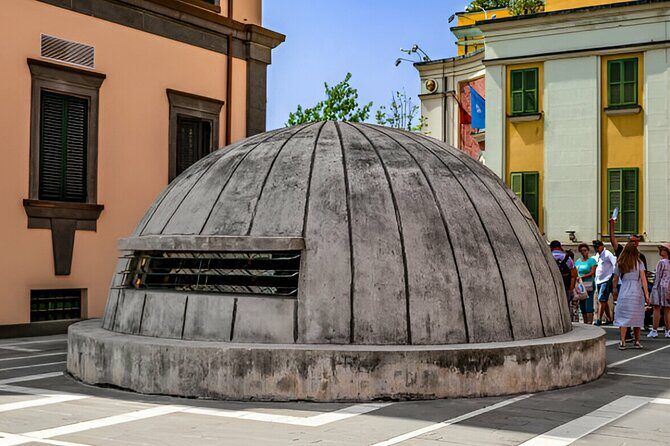
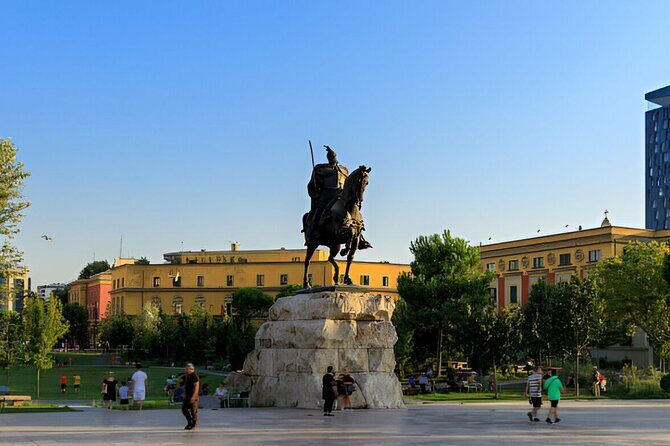
You begin at Sheshi Skënderbej, Tirana’s main square, named for Albanian national hero Gjergj Kastrioti, better known as Skanderbeg. The center has the Skanderbeg Statue, and the edges are lined with neo-Renaissance buildings that make the city feel formal in a way you don’t always expect here.
This first stop matters because it gives you bearings fast. You’ll also spot key landmarks like the Opera & Ballet Theater and the National Library, plus government buildings that help explain why Tirana looks the way it does today. Skanderbeg Square is free to enjoy, so even if you’re arriving a few minutes early, you’ll have plenty to take in.
Other historical tours in Tirana

Et’hem Bey Mosque and the Tirana Clock Tower: art, faith, and perspective
From the square, the tour shifts into moodier, more human-scale Tirana. You’ll visit the Et’hem Bey Mosque, known for intricate frescoes and for its role in Albania’s path to democracy. It’s one of those places where the details are the point, so give it time and let your guide’s explanation slow you down.
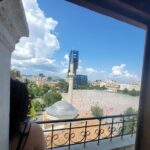
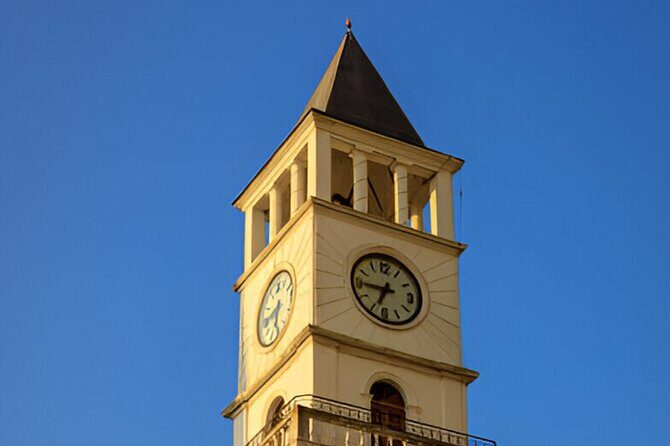
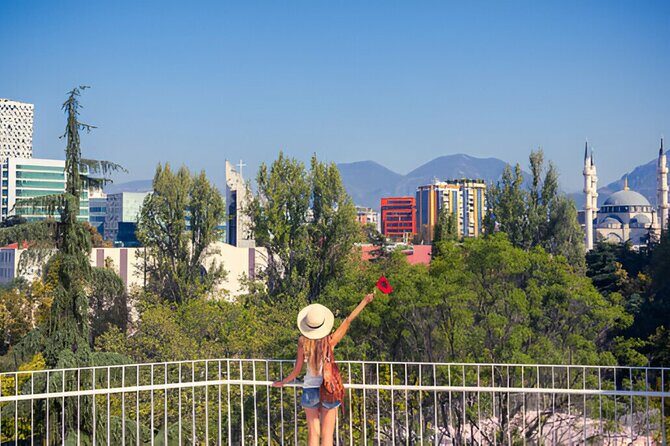
Then you head up toward the Tirana Clock Tower for panoramic city views. Even if you’ve seen photos of Tirana, a view from above helps you connect neighborhoods and streets to what you’re walking through on the ground. This is a good moment to pause with a photo, then reset your expectations: the rest of the tour mixes beauty with heavy political memory.
House of Leaves: the communist surveillance story you can’t forget
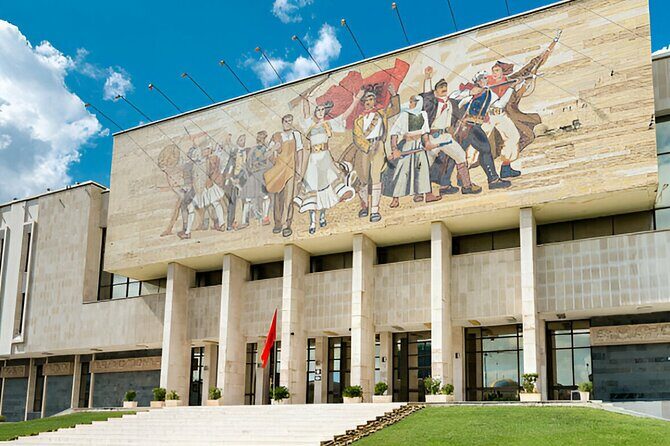
House of Leaves is the emotional center of this tour. The building used to be the headquarters for Albania’s secret police, and today it’s a museum built around how surveillance and victimization worked during the communist era.
This stop is timed at about 1 hour, and admission is included. You’ll come away with a clearer sense of how state power operated in everyday life—not just as an idea, but as something that touched real people. If you prefer museums that make you think, rather than just pose for selfies, this is the one you’ll remember long after you leave.
Practical note: you’ll want to go in mentally prepared. The theme is intense, and the pacing is steady rather than flashy.
Sali Shijaku Villa: art in a 300-year-old home
After the political weight, the tour lightens in the best way: by moving into a creative space tied to a real artist’s life. You’ll visit the House of Sali Shijaku, a traditional 300-year-old villa where Sali Shijaku works and lives. For art lovers, this is one of the strongest reasons to pick this specific tour, because it feels personal rather than staged.
Your time here is about 30 minutes, and admission is included. You’ll walk through an invaluable art gallery for the capital, including an early standout described as an allegorical painting featuring two roosters facing off, full of life and vivid color. If you’re the type who likes to learn how art is made and lived with, you’ll enjoy this stop.
Pazari i Ri (New Bazaar): eat your way through Tirana’s present
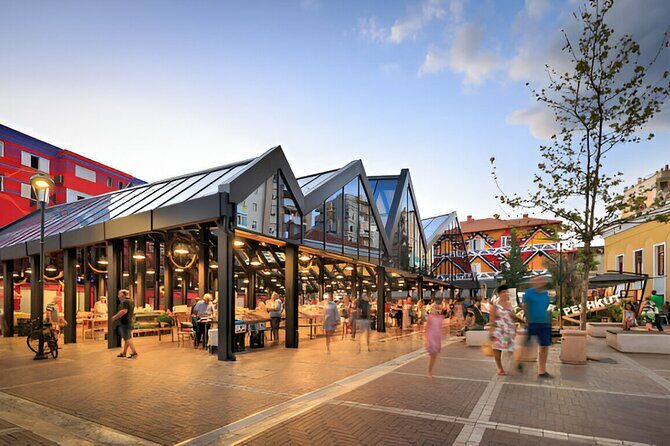
Next comes Pazari i Ri, also called the New Bazaar. This area reflects a city habit you’ll keep noticing in Albania: old structures and customs meeting modern updates. The square was refreshed while many traditional elements of the old town were preserved.
This is where the tour becomes fun in a practical way. The name comes from the local farmers’ marketplace at the center, where more than 300 farmers from surrounding areas come to sell fruit, vegetables, meat, seafood, and spices. The idea isn’t to turn you into a food critic—it’s to let you see what daily supply and bargaining look like here.
Your stop is about 30 minutes and admission is free, which makes it a nice low-pressure break from indoor museums.



Tanners’ Bridge: a quick Ottoman-era reminder
Then you get a short historical palate cleanser: Tanners’ Bridge. It’s a stone bridge built in the 1700s during Ottoman rule, though today it sits oddly among modern city streets.
This stop is brief (about 10 minutes) and admission is included. There’s not a lot of interpretation that requires a long stay, but it gives you a useful sense of time depth. It’s the kind of place that makes you look up at the city and notice how long trade, travel, and industry have shaped Tirana.
Namazgah Mosque and Saint Paul Cathedral: faith side by side
The tour also includes religious landmarks that show how different communities share the same city. You’ll see the Great Mosque of Tirana, also known as the Namazgah Mosque, which is currently being built. When it’s completed, it’s described as the largest mosque in the Balkans.
From there, the itinerary moves to Saint Paul Cathedral. Even though the structure is relatively new, it’s instantly recognizable thanks to its unique architectural style. It’s become a reference point for the Catholic population of Tirana, and visitors are part of the story here too, as people come in to observe and reflect.
Your time for these stops is around 15 minutes total at each listed point, with admission included where specified in the tour plan. If you like seeing how faith expresses itself in architecture, this section connects well to the political side without turning the tour into one single mood.
Pyramid of Tirana and Postbllok: communist monuments with a real purpose
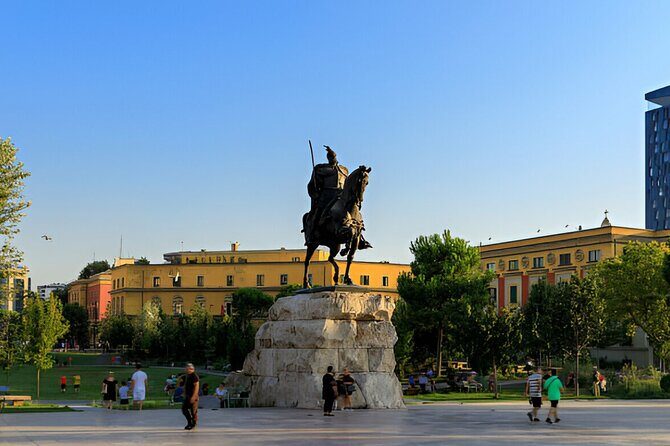
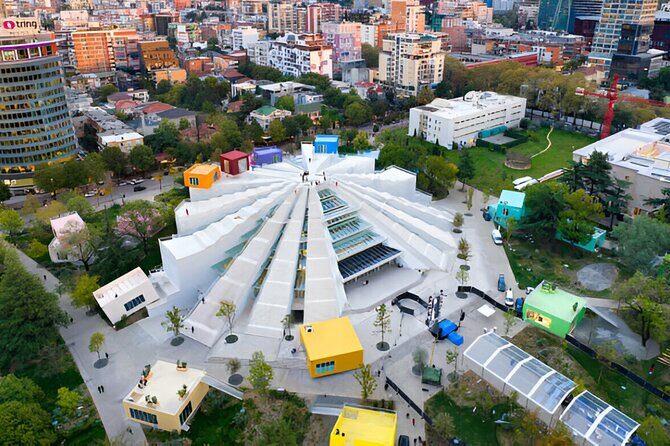
This is where Tirana stops being gentle. Along the riverfront, you’ll reach the Pyramid of Tirana, a striking communist-era relic. It was built as a museum dedicated to dictator Enver Hoxha just before the fall of communism. Over the years, it served different roles, including a time as a NATO base during the Kosovo War.
Right now, work is being done to convert it into a youth cultural center. That means the building might look different during your visit, because it’s in transition. Plan to focus less on perfect photos and more on the meaning of the place: it’s a physical reminder of how regimes reuse structures and symbols.
Then you move to Postbllok, the Checkpoint Monument. This memorial includes three pieces, including concrete girders taken from Spaç Prison, where Lubonja was imprisoned for a time. The girders are lined up in a row the way they would have been in the prison halls.
Your time here is about 20 minutes, with admission included. It’s not just a monument you look at; it’s designed to make you feel the space and the discipline that surrounded prisoners.
FAB Gallery at Mother Teresa Square: young artists in the spotlight
Later in the tour, you shift from heavy memory to creativity in motion. The FAB Gallery is part of the University of Arts in Tirana, located at Mother Teresa Square. It mostly exhibits and promotes students of the Arts Academy and young artists who need support.
Your stop is about 30 minutes, with admission included. The format is friendly and changeable: almost every week there’s a different event, often painting or photo exhibitions, and sometimes short movies. Entry is mostly free, and the walls are filled with colorful abstract graffiti, which makes the space feel like it’s alive rather than locked behind glass.
If you’re in Tirana long enough to want one more angle beyond monuments, this gallery is a smart way to end on something current.
Price and logistics: what you’re really paying for
At $58.18 per person for about 4 hours, you’re not just buying entry fees. You’re paying for a guided sequence that connects themes: national identity at Skanderbeg Square, art in multiple forms, and then the communist-era machinery of surveillance and control.
It’s also good value because several admissions are included on the tour. House of Leaves and House of Sali Shijaku are covered, along with sites like Saint Paul Cathedral, the Pyramid of Tirana, Postbllok, and the FAB Gallery. Meanwhile Skanderbeg Square and Pazari i Ri are free, so you’re not double-paying just to see the basics.
You’ll want comfortable walking shoes. The route moves across central Tirana and includes multiple stops with short time windows. The tour uses a mobile ticket, meets at Skanderbeg Square (Sheshi Skënderbej), and ends back at the meeting point.
Group size is capped at 10, which makes the explanations feel easier to follow, especially in museums where you need to hear the story, not just stand in front of it.
Who this Tirana tour suits best
This tour is a strong match if you want Tirana to make sense as a city, not just as a checklist. The mix of civic symbols, mosque and cathedral, and communist monuments works well for people who like context and competing perspectives.
You’ll also enjoy it if you care about art beyond the usual big-ticket museum style. Sali Shijaku’s home-villa brings art to life, and the FAB Gallery is a straightforward way to see what young artists are building right now.
One consideration: the communist-era stops (especially House of Leaves and Postbllok) are emotionally heavy. If you’re trying to keep the trip light, you might prefer a more purely scenic or craft-focused route.
Should you book this tour?
I’d book it if you like your sightseeing with explanation and your Tirana with layers—architecture, faith, everyday market life, and a clear view of how surveillance shaped Albanian life during the communist era.
Skip it if you only want relaxed, feel-good sightseeing, or if you’re strongly avoiding heavy political museum content. Also note the tour isn’t recommended for people over 95 years old, so if that applies to you or your group, choose something more flexible.
If you’re on a tight schedule, this route is efficient: you see a lot of meaning in one half-day, and you end back at the center where it’s easy to continue exploring on your own.
FAQ
How long is the Tirana cultural tour?
It lasts about 4 hours.
What is the price per person?
The price is $58.18 per person.
Is admission included for the main museums and landmarks?
Admission is included for several stops, including House of Leaves, House of Sali Shijaku, Tanners’ Bridge, Saint Paul Cathedral, Pyramid of Tirana, Postbllok, and FAB Gallery. Skanderbeg Square and Pazari i Ri are free.
What’s the meeting point and where does the tour end?
The tour starts at Skanderbeg Square (Sheshi Skënderbej, Tiranë, Albania) and ends back at the meeting point.
What kind of ticket do I receive?
You get a mobile ticket.
How big is the group?
The tour has a maximum of 10 travelers.
What’s the cancellation window for a full refund?
You can cancel up to 24 hours in advance for a full refund.
If you’d like, tell me your travel dates and what you already plan to see in Tirana, and I’ll suggest how to place this tour in your day.