REVIEW · TIRANA
Communist History Tour Tirana & Street Food
Book on Viator →Operated by Good Albania · Bookable on Viator
Communism in Tirana hits hard.
This 8-hour Communist History Tour turns big, heavy sites into a guided story you can follow, starting inside Bunk’Art 1 and ending with a relaxed coffee-and-raki stop. I especially like the small group size (up to 8) and how the day mixes history with real-life Tirana food breaks. The main thing to watch is the first stop: it’s not ideal if you feel claustrophobic.
You also get practical comfort without spending your whole day figuring transit—pickup at any hotel, then a drive in an air-conditioned minivan. Guides bring the context in plain language, and I’ve seen examples like Andi, praised for being super clear and even speaking Spanish well. If you want slow, museum-style time at every site, the schedule may feel tight, since each stop is short.
Bottom line: you’re buying a focused day that hits the big communist-era locations plus lunch and local tastes, without the stress of planning it yourself.
In This Review
- Key things I’d circle before you go
- A Small-Group Day Around Tirana’s Communist Landmarks
- Bunk’Art 1: The Former Nuclear Bunker That Sets the Tone
- Pazari i Ri Street Food: Qofte, Yogurt Sauce, Chips, and Beer
- Skanderbeg Square and the Surrounding Landmarks
- Walking Through Blloku and the Post Blloku Memorial
- Enver Hoxha Pyramid: When an Era Leaves Scars
- Mother Teresa Square (Pass By) and the Rhythm of the Day
- National Gallery of Art: Socialist Realism as Propaganda
- Komiteti Kafe Museum: Raki Tasting and a Final Communism-Era Nod
- Price and Logistics: What $126 Buys You in Real Terms
- Who This Communist History Tour Is Best For
- Should You Book This Tour?
- FAQ
- What time does the Communist History Tour in Tirana start?
- Is pickup available, and where do you get picked up?
- How long is the tour?
- What food and drinks are included?
- Are admission tickets included?
- Is drop-off included after the tour?
Key things I’d circle before you go
- Bunk’Art 1 first: a former nuclear bunker made for Enver Hoxha-era survival planning, with photos and documents
- Street food at Pazari i Ri: qofte (meatballs) with yogurt sauce, chips, and local beer
- Blloku area walk: Enver Hoxha’s home zone plus the Post Blloku memorial for political prisoners
- Enver Hoxha Pyramid: the former Hoxha museum, now crumbling with graffiti
- National Gallery of Art (if available): socialist realist artwork framed as propaganda tools
- Komiteti Kafe Museum finish: raki tasting plus communist-era candies and a final coffee pause
A Small-Group Day Around Tirana’s Communist Landmarks
This tour is built for people who want the story of Albania’s communist period without getting lost in facts. You’ll move through central Tirana by minivan, but you’ll also walk enough to actually feel the city: squares, monuments, and the neighborhoods tied to the regime.
The group is capped at 8 travelers, which matters more than it sounds. With fewer people, it’s easier to ask questions and get explanations that fit your pace. You also won’t be stuck at the back of a big bus group when the guide is pointing out details like what a building looked like in its regime-era role.
Another practical win: pickup is offered from any hotel in Tirana, and you travel by air-conditioned minivan. That’s a big deal in a long day with multiple stops, especially when weather or heat can turn “quick walks” into a chore.
Other food & drink experiences in Tirana



Bunk’Art 1: The Former Nuclear Bunker That Sets the Tone
The day starts at Bunk’Art 1, and it’s a strong choice because it reframes everything you’ll see later. You begin in an ex–nuclear bunker—built to house Communist leader Enver Hoxha in case of attack—and the museum uses photographs, items, and documents to map out the last ~100 years of Albanian history through the dictatorship’s lens.
Why this stop is so effective: it’s not just “what happened,” it’s also “how power prepared.” Seeing the bunker as a physical space helps you understand why the era felt so controlled. The guided interpretation is key here; otherwise, you might only catch the surface of exhibits.
Plan for the drawback upfront. This first stop is inside a bunker, so if you have claustrophobia, you should seriously reconsider. The itinerary itself flags this as a concern, and you’ll be happier if you feel comfortable in enclosed spaces.
Good news: museum time is about 1 hour, which usually gives enough time to understand the major story beats without rushing you out.
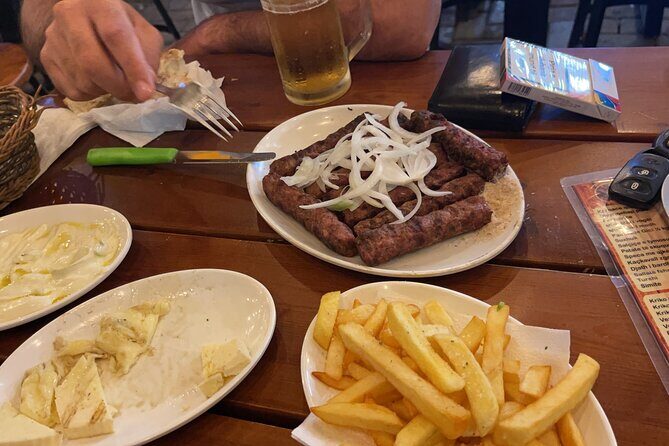
Pazari i Ri Street Food: Qofte, Yogurt Sauce, Chips, and Beer
After the bunker, the tour shifts tone fast—in a good way. You head to Pazari i Ri, where you’ll try typical street food with a guided break from heavy history.
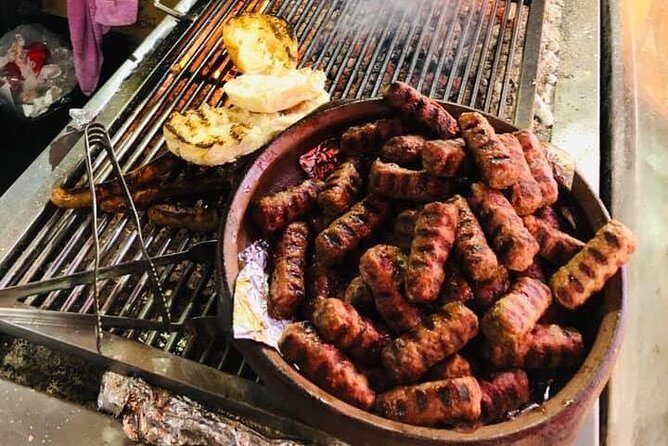
This is where the day starts feeling like Tirana, not just a checklist of sites. You’ll taste qofte (meatballs) served with yogurt sauce, potato chips, and local beer. If you’re used to tours that only do quick snacks, you’ll like that this is positioned as a real pause in the day, with enough time to eat without feeling rushed.
A smart note for planning: since raki tasting later is part of the tour, bring your “adult beverages strategy” with you. The tour has a minimum drinking age of 18, so if anyone in your group is younger, plan around that and focus on the food and non-alcoholic drinks.
Also, this stop runs about 50 minutes, which is enough to eat comfortably and get back outside while your energy is still good.
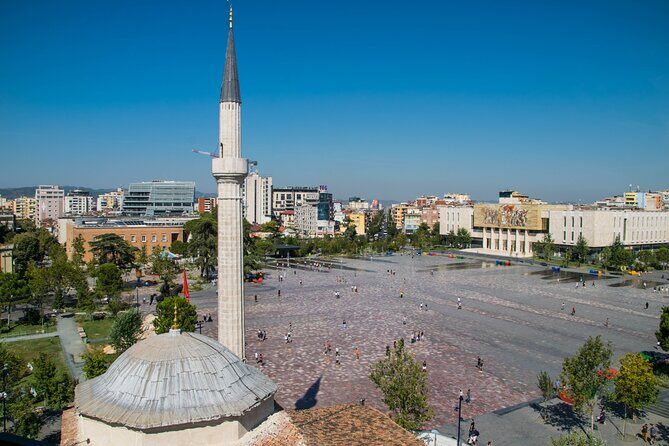
Skanderbeg Square and the Surrounding Landmarks
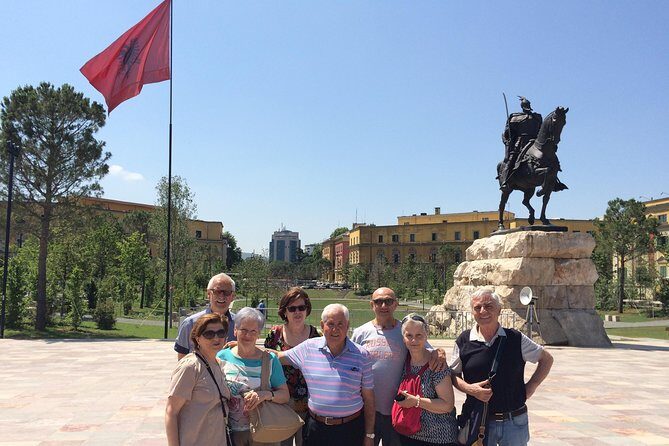
From Pazari i Ri, you walk toward Skanderbeg Square and learn how the surrounding landmarks relate to Tirana’s evolving identity.
This part is shorter (about 30 minutes), but it’s well placed. Once you’ve heard about authoritarian control inside a bunker and eaten street food in the market area, the square walk gives you a different kind of context: public space, symbolic buildings, and the way the city centers itself.
Expect the guide to point out key structures around the square, including Et’hem Bey Mosque and the Clock Tower. Even if you’ve only seen photos before, standing there helps you understand why the square is such a natural meeting point—and how “regime-era” politics can use architecture and landmarks to shape public perception.
If you’re sensitive to walking time, note that this is a walking segment, though it’s brief. Comfortable shoes make a big difference for a full-day tour that mixes indoor and outdoor stops.
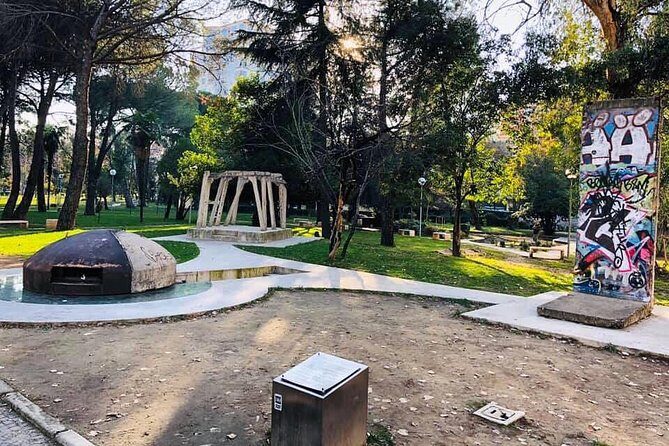
Walking Through Blloku and the Post Blloku Memorial
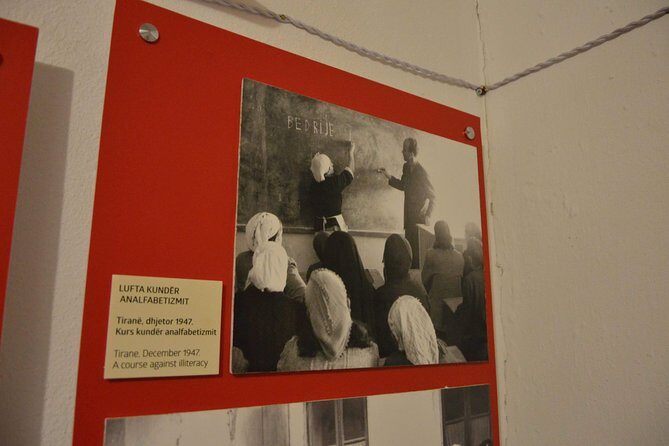
Now comes one of the most interesting contrasts of the day: the Blloku area. This is the neighborhood connected to the leadership—specifically the home of Enver Hoxha and other senior members of his regime—and it includes the Post Blloku memorial, honoring former political prisoners.
What makes this walk valuable is how it reframes “where people lived.” You’re not just looking at monuments; you’re learning which zones used to be forbidden and why. It’s one thing to read about repression. It’s another thing to stand in a place that was structured to separate the powerful from everyone else.
This stop isn’t about spectacle. It’s about understanding the human cost behind the rules—through the memorial setting and the guide’s explanation of what the area represented when it was restricted.
Time-wise, the itinerary gives you enough to move through the area and reach the memorial without dragging the rest of the day down.
A few more Tirana tours and experiences worth a look



Enver Hoxha Pyramid: When an Era Leaves Scars
Next is the Enver Hoxha Pyramid, the former Enver Hoxha Museum. From a distance, it’s an unmistakable statement building. Up close, you see how time has treated it: the once white marble walls are now crumbling, and the surfaces are full of graffiti.
That matters because it changes the feeling from “museum of the past” to “the present carrying damage.” The guide’s job here is important; this isn’t a place where you can simply read your way through everything. You need interpretation to understand what the structure meant during the communist period, and what it signals now that it’s fallen out of official use.
The scheduled time is about 30 minutes, so it’s best viewed as a focused stop: enough to understand the story and take a few photos, not enough for a long, slow hangout.
If the weather is poor, your photos might suffer and your comfort might drop, so keep an eye on conditions that day. The tour notes it requires good weather, and it makes sense—some of the best context here is tied to seeing the building and its surroundings clearly.
Mother Teresa Square (Pass By) and the Rhythm of the Day
You’ll also pass by Mother Teresa Square in the southern part of the main boulevard. This isn’t presented as a long stop, but it’s a useful reminder that Tirana doesn’t live only in the communist era.
This kind of “pass by” segment is common in city tours, and it works if you treat it as a breather. It helps connect the dots geographically while you’re still moving from one major site to the next.
National Gallery of Art: Socialist Realism as Propaganda
If it’s available for your visit timing, the itinerary includes the National Gallery of Art for around 30 minutes. Here, you’ll see socialist realist art—and more importantly, you’ll get guided help in understanding how “realistic” styles were used to create propaganda.
This stop is for the kind of traveler who likes seeing how art can be used as a political tool. If you enjoy posters, murals, and state messaging, you’ll probably latch onto this quickly. If you’re mostly there for architecture and street-level sites, you may still appreciate it, but it can feel more like a museum explanation than a visual walk.
The time is short, so you won’t be forced to sit through hours of galleries. The guide’s framing helps you connect the art to the era you’ve been learning about all day.
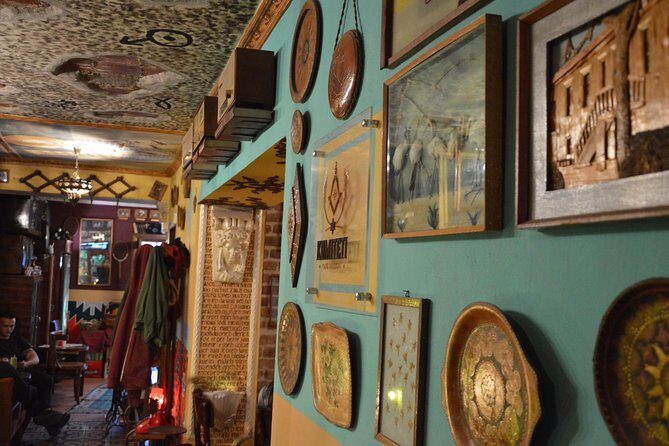
Komiteti Kafe Museum: Raki Tasting and a Final Communism-Era Nod
The day closes at Komiteti Bar (Komiteti Kafe Museum) with a coffee break that also includes cultural tastes tied to the communist era. You’ll have about 45 minutes, which is long enough to relax, use the restroom, and reset your brain.
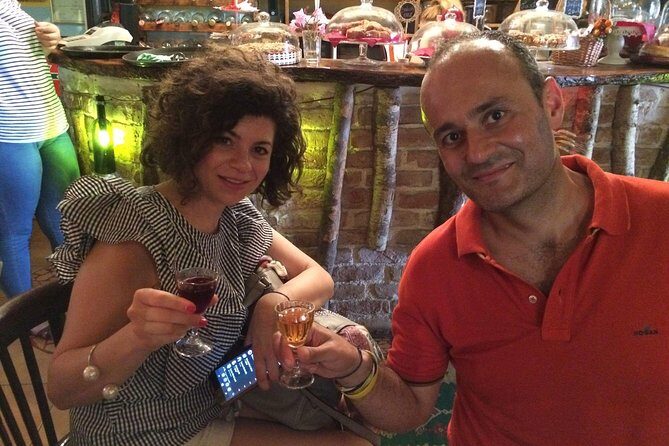
This is where raki tasting enters the picture, plus communist candy and maybe coffee. The idea is simple: after confronting the heavy parts of the day, you get an off-ramp into everyday flavors and local atmosphere.
One more planning note: since there’s a minimum drinking age of 18, make sure you’re aware of that if you’re traveling with younger friends or family. Even if you can’t or don’t drink alcohol, the tour still makes this a food-and-break moment rather than a forced drinking stop.
Price and Logistics: What $126 Buys You in Real Terms
At $126.16 per person for roughly 8 hours, the price makes sense if you look at what’s included:
- Hotel pickup (any hotel in Tirana)
- Air-conditioned minivan transport
- Lunch
- Raki tasting
- Museum/entry tickets at key stops (including Bunk’Art 1, and the National Gallery if it’s part of your visit)
- A guide to connect all the sights into one clear narrative
Many “history” tours in Europe end up being pricey because you’re paying for transport and guide time—but you still have to buy tickets and hunt down food. Here, the package approach keeps the day smooth. You’re also not stuck in a huge crowd: up to 8 people is a big value factor because it improves the quality of the explanations.
The tour also tends to book earlier (on average about 85 days in advance). If you travel in a busy season, book ahead so you can lock in your preferred date.
Who This Communist History Tour Is Best For
I’d point you to this tour if you want a guided way to understand Albania’s communist period through a mix of sites and tastes. It’s especially good for:
- First-time visitors to Tirana who don’t want to piece together logistics
- People who like their history explained by a local guide, in plain terms
- Travelers who enjoy seeing how political systems affect everyday life, not just big events
- Food lovers who want more than a snack stop, including qofte with yogurt sauce and chips
If you’re mainly after beaches, nightlife, or art that’s independent of politics, this won’t be your top match. The focus is intentionally political and historical, and the emotional weight is real.
And if you’re claustrophobic, take the warning seriously. The bunker stop happens early, so there’s no time to “ease into” the day first.
Should You Book This Tour?
If your goal is to get oriented fast in Tirana and understand the communist era through the city’s most recognizable landmarks—Bunk’Art 1, the Blloku area, the Enver Hoxha Pyramid, and the National Gallery of Art—this is a smart booking. The combination of air-conditioned transport, short museum blocks, and included lunch and street food keeps the day moving without leaving you hungry or on your own.
I’d skip it (or at least rethink) only if enclosed spaces would be a real problem for you, or if you hate history topics that deal directly with political repression. Otherwise, this is strong value for a tightly run day with a guide-led narrative and real Tirana food stops.
FAQ
What time does the Communist History Tour in Tirana start?
The tour starts at 9:30 am.
Is pickup available, and where do you get picked up?
Yes. Pickup is offered at any hotel in Tirana. You’ll need to specify your hotel name when booking.
How long is the tour?
The duration is about 8 hours.
What food and drinks are included?
Lunch is included, and you’ll also have street food (including qofte with yogurt sauce and chips) plus raki tasting at the end of the tour. Drinking is limited to ages 18 and up.
Are admission tickets included?
Yes. Admission tickets are included for key stops such as Bunk’Art 1, and the National Gallery of Art is included if available for the visit.
Is drop-off included after the tour?
Drop-off is listed as not included.
If you want, tell me your travel dates and whether anyone in your group is claustrophobic or not a fan of alcohol, and I’ll help you map a safe day plan around this tour.