Tirana changes fast when you walk with locals. In a short window, you’ll see how Skanderbeg Square looks today and how the communist era still shows up on the street.
I love the Skanderbeg Square opening, where the Et’hem Bey Mosque, the Clock Tower, and the National Theater details all help you get your bearings. I also love the stop at the House of Leaves Museum, where the story turns from monuments to real-life espionage and fear.
One possible drawback: the whole loop is 1–2 hours, so if you want slow museum time and long conversations at every stop, you’ll likely feel a bit rushed.
In This Review
- Key takeaways before you go
- Why Tirana works so well on foot (and in a small group)
- Skanderbeg Square: Mosques, the Clock Tower, and Soviet fingerprints
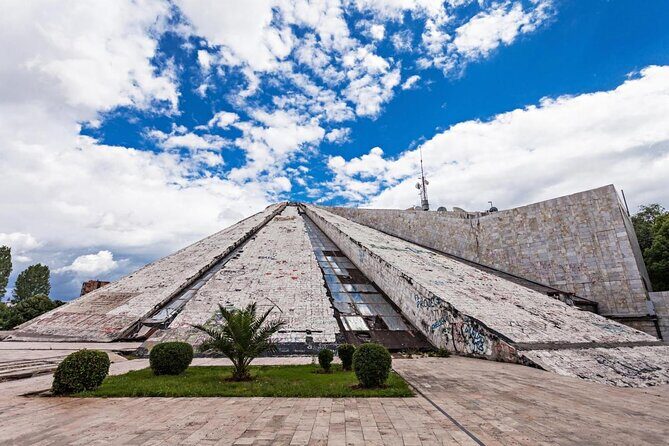
- Enver Hoxha Pyramid: A communist-era icon that still looks unfinished
- House of Leaves Museum: espionage history with consequences
- Blloku: from restricted villas to coffee shops and cocktail bars
- Polytechnic University of Tirana: seeing modern life inside the city core
- Price and what you actually get for $17.36
- The guide makes or breaks it: Eri, Leo, and Mimmi style
- Should you book Tirana by Locals?
- FAQ
- How long is the Tirana walking tour?
- Where does the tour start and end?
- What is included in the price?
- What group size should I expect?
- Do I need a paper ticket?
- What happens if the weather is bad or I need to cancel?
Key takeaways before you go
- A tight, walkable loop through the biggest Tirana anchors without wasting time
- Included entry at Skanderbeg Square landmarks and the Enver Hoxha Pyramid
- Small group size (max 15), which makes questions and photo stops feel natural
- Big past-to-present contrast, from an espionage-era site to Blloku’s coffee-and-bar scene
- Guides with real personality, including locals named Eri, Leo, and Mimmi
Why Tirana works so well on foot (and in a small group)
This tour is built for people who want to understand Tirana quickly, but not in a rushy way. You’ll move on foot through central sights, with a group capped at 15 travelers. That matters. Smaller groups tend to keep the pace human, and it’s easier to ask follow-up questions when a guide is actually talking to you, not reading facts off a board.
The route also makes sense geographically. You start at Skanderbeg Square, then you work your way toward the Enver Hoxha Pyramid and into the neighborhoods and institutions that show what Albania tried to become after communism. Then you end back at the same meeting point, which keeps logistics simple.
You should know the tour timing is about 1–2 hours, so plan to treat it as your foundation walk. After this, you’ll be able to point to places and explain what you’re seeing. And since good weather is required, bring a light layer and be ready for some outdoor walking.
If you're still narrowing it down, here are other tours in Tirana we've reviewed.

Skanderbeg Square: Mosques, the Clock Tower, and Soviet fingerprints
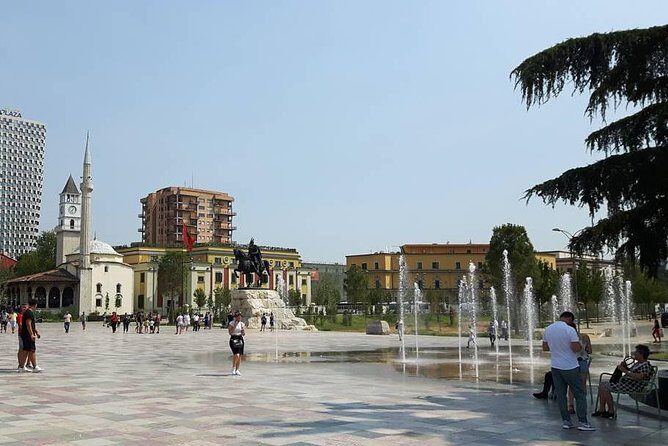
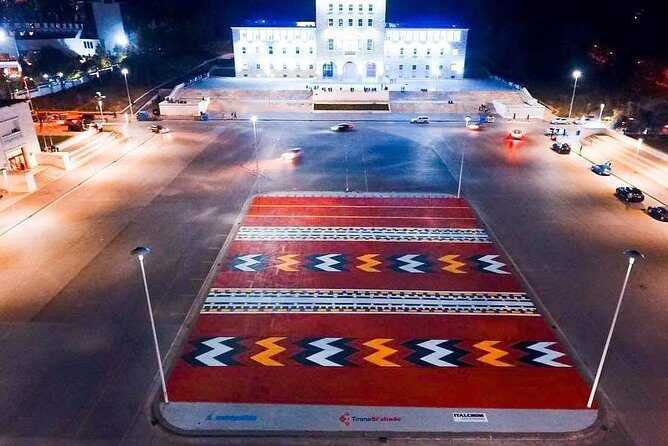
Skanderbeg Square is the kind of place that’s hard to describe until you’re standing in it. It’s not just a big open space. It’s a crossroads of power, faith, and public life, all in one compact area.
You’ll begin with landmarks that look like they belong to different eras. The Et’hem Bey Mosque is one. The Clock Tower is another. Then there’s the National Theater of Opera and Ballet, a building tied to political history in a very specific way: the first brick was put in place by Nikita Khrushchev, the former President of the Soviet Union. That detail is the sort of thing you’d never guess just by looking at the building, and a local guide is what makes it click.
You’ll also see the National Bank of Albania before the group heads onward. The bank is a good reminder that this square isn’t only about looking back. It’s a working civic core where modern Albania conducts business, shows off ceremonies, and gathers people for everyday life.
Practical tip: take a moment at the very start to look around before you start listening. If you get your bearings first, the stories land better. And since admission is included for this part, you can focus on the big-picture meaning without extra ticket stress.
Enver Hoxha Pyramid: A communist-era icon that still looks unfinished
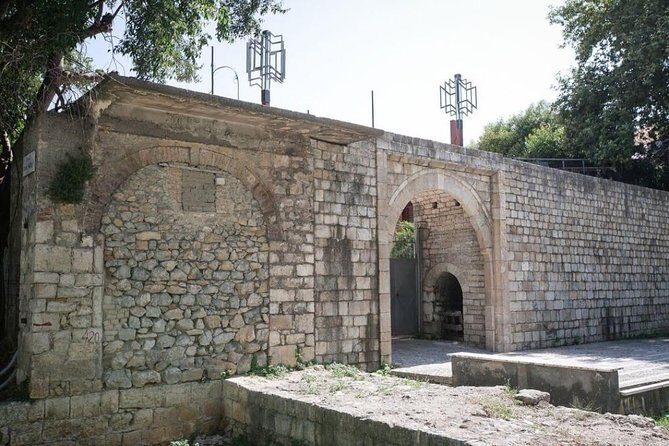
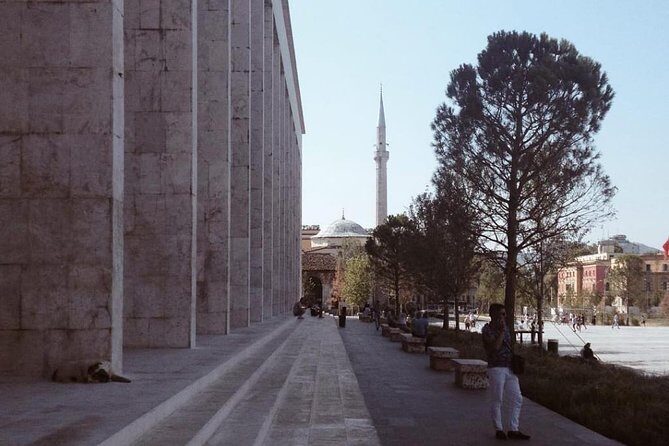
Next up is the Enver Hoxha Pyramid, and it’s exactly the kind of site that sparks questions. It was meant to be gone or changed, and yet it resisted efforts to be destroyed by previous governments. Today it remains un-restored, which makes it feel more honest than a fully polished monument.
This stop works for you even if you’re not a politics person. The pyramid becomes a physical way to talk about contradiction. Albania’s twentieth-century story wasn’t a clean line from one system to another. It was messy, pressured, and layered. The pyramid shows that the past doesn’t always disappear when new governments arrive.
You’ll have time to stand back, look at it from different angles, and let the guide explain why it still hangs around in the city’s memory. Expect the tone to be more thoughtful than celebratory here. You’re looking at architecture tied to a regime that shaped daily life in serious ways.
Photography tip: don’t just shoot straight-on. Try a few wider frames that include nearby streets and sightlines. The pyramid reads differently once you see how it sits inside modern Tirana’s street grid.
House of Leaves Museum: espionage history with consequences
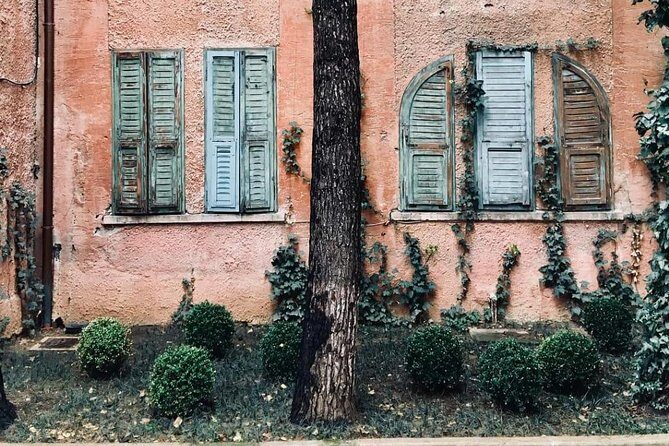
Then the tour shifts. The House of Leaves Museum is where Tirana’s history becomes personal and heavy.
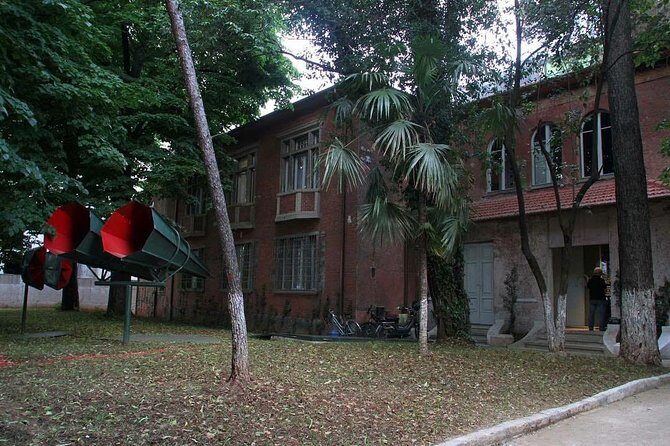
This wasn’t originally a museum with a gentle teaching vibe. It used to be the National Intelligence Agency, an espionage house. That matters because the space is meant to communicate what state surveillance feels like, not just what a government decided on paper.
The guide’s job here is crucial. The museum is designed to narrate one of Albania’s darkest periods of history to both young people and foreign visitors. In other words, it’s not built only for locals who already know the shorthand. It’s built to explain how fear and control can be institutional.
You’ll want to treat this stop with respect. If you’re sensitive to stories about oppression, mentally prep for that. The upside is that you come away with context. After this, when you see other political-era buildings around Tirana, you’ll understand why they feel the way they do.
Also, because the tour covers a lot of ground overall, this is a moment to slow down inside your own head. Don’t rush. Ask your guide to connect the museum story to what you’ll see next in everyday Tirana life.
Blloku: from restricted villas to coffee shops and cocktail bars
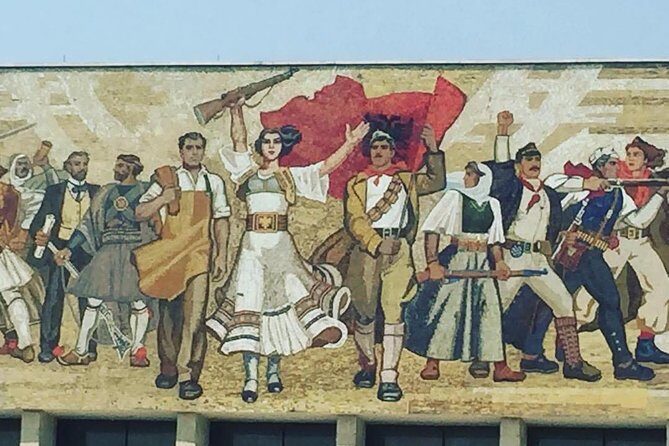
After the seriousness of the House of Leaves, Blloku feels like a jolt—without being completely random. It’s the neighborhood that used to be restricted during Enver Hoxha’s rule. His villa was here, and the area was reserved for government officials, with the general public unable to enter.
Now it’s a very different place: coffee shops, boutiques, cocktail bars, and pubs take over the streets. You’ll take a stroll in one of Tirana’s most lively central districts, and the contrast gives you a clean visual way to understand change.
What I like about this section is that it doesn’t pretend the old days were good or that the new days are automatically better. Instead, it shows how power changes hands—and how the city’s social energy reclaims space. It’s also a practical transition. After walking and absorbing history, Blloku is where you can imagine yourself doing what locals do: grabbing a drink, browsing, people-watching, and just hanging out.
If you’re hoping to end with something fun, this is the right place on the route. Just remember: the neighborhood didn’t start as nightlife. It became nightlife because people could finally use the space like normal city residents.

Polytechnic University of Tirana: seeing modern life inside the city core
The final anchor is the Polytechnic University of Tirana. This stop gives you a different angle on national life—less about government buildings, more about education and youth.
The Polytechnic University is described as the oldest and the second largest in Albania, after the University of Tirana. It was founded in 1951 and now has approximately 10,000 students. Students come not only from Albania, but also from Kosovo, Macedonia, and Montenegro, which makes the campus feel like a regional crossroads.
You won’t spend a huge chunk of time here, but that’s part of the value. The tour isn’t trying to become a campus tour. It’s using the university as a human scale: even after intense political history, young people are still studying, building plans, and moving through the city every day.
This is where your guide can help you see the difference between a city that looks historical and a city that actually lives. Tirana isn’t a museum. It’s a working capital, and institutions like this keep it moving.
Price and what you actually get for $17.36
At $17.36 per person, this is priced like a budget-friendly city orientation walk—especially because it includes a professional guide and admission for certain stops.
Here’s the value breakdown based on what’s included:
- Admission ticket included for the Skanderbeg Square landmark portion
- Admission ticket included for the Enver Hoxha Pyramid portion
- Blloku and the Polytechnic University area are free for this tour
So you’re paying mostly for (1) guided storytelling and (2) access where entry fees apply. You’re not paying for a fancy vehicle or a long day. You’re paying for clarity.
One note: alcohol, lunch, and personal expenses are not included. That’s normal. But it also means you can decide your own pace afterward. If you want a coffee stop in Blloku, you can do it because the tour has already set the context.
You might also like that the tickets are mobile. If you’re the type who hates printing or scrambling, this is easier.
Timing tip: the tour is commonly booked about 70 days in advance on average. If you’re traveling in a busy season or on a specific date, it’s smart to reserve earlier rather than assuming last-minute availability.
The guide makes or breaks it: Eri, Leo, and Mimmi style
This is a walking tour, so the guide’s tone matters. The best part of this experience is how personal the stories feel—like the city is being explained by someone who actually cares.
I’ve seen guides on this route with very different strengths, and that variety can be great. For example, Eri is noted for being patient with photos and videos, which is useful when you want to capture details without feeling rushed. Leo is described as kind, bright, and professional, and that combination tends to keep the whole group engaged. And Mimmi is described as more than just a guide—almost like a friend showing you the Tirana he lives in, where every place has a story you would not get on your own.
What you should look for as you join the group:
- When the guide explains why a building or neighborhood matters, not just what it is
- When you feel comfortable asking questions
- When the pace allows you to actually look around, not only listen
If you get that kind of guide energy, the tour becomes more than a checklist. It turns into a way of understanding Tirana’s layers.
Should you book Tirana by Locals?
Book it if you’re:
- In Tirana for the first time and want a smart orientation in 1–2 hours
- Interested in how Albania’s political past connects to what you see today
- The kind of traveler who enjoys guided context more than wandering alone
- Traveling with someone who likes both landmarks and neighborhoods
Consider skipping or pairing it with extra time if you:
- Want long museum time at a single stop
- Prefer only scenic, light sightseeing and would rather avoid heavy topics tied to espionage and communism
- Have limited interest in the specific sites covered by this route
My honest take: this is strong value for the price because it buys you both access and interpretation. It’s not trying to replace a full-day museum plan. It’s trying to give you the Tirana that makes sense.
FAQ
How long is the Tirana walking tour?
The tour lasts about 1 to 2 hours.
Where does the tour start and end?
It starts at Skanderbeg Square (Sheshi Skënderbej, Tiranë, Albania) and ends back at the same meeting point.
What is included in the price?
A professional guide is included. Admission tickets are included for the Skanderbeg Square landmark portion and for the Enver Hoxha Pyramid. Blloku and the Polytechnic University stop are free.
What group size should I expect?
The tour has a maximum of 15 travelers.
Do I need a paper ticket?
No. The tour uses a mobile ticket.
What happens if the weather is bad or I need to cancel?
The experience requires good weather. If it’s canceled due to poor weather, you’ll be offered a different date or a full refund. You can also cancel for free up to 24 hours in advance for a full refund.