REVIEW · TIRANA
Semi-Private Tour of The Balkans from Tirana to Dubrovnik / Split
Book on Viator →Operated by Choose Balkans · Bookable on Viator
Old streets, big stories, short lines. This 8-day semi-private route strings together real local food stops in Tirana and small-group sightseeing that stays manageable as you cross Albania, Kosovo, Montenegro, Bosnia & Herzegovina, and Croatia. I like that the day is built around hands-on moments, from byrek breakfast to Albanian coffee culture, not just quick photo stops.
Two things I especially like: first, the itinerary keeps food simple and findable—byrek in Tirana’s Tregu Çam area, qofte at Pazari i Ri, plus dessert and raki along the way. Second, you get truly different “wow” sights back-to-back: Stari Most in Mostar, the fortress views in Prizren, and Sarajevo’s Ottoman-to-Austro-Hungarian blend with war-era scars you can still see.
One consideration: the schedule is packed and the driving legs between countries are long. You’ll also do walking on uneven terrain in Sarajevo, and lunches/dinners are not included, so you’ll want a plan (and a little budget) each day.
In This Review
- Key Highlights You’ll Feel Fast
- Price and Logistics: What You’re Really Paying For
- Starting in Tirana: Food, Coffee, Bunk’Art 2
- Kruja: Resistance-Era Streets and a Castle With Escape Paths
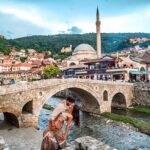
- Prizren: Fortress Views, River Bridges, and Sinan Pasha Mosque
- Gjakova and Decan: A Bazaar That Came Back, Frescoes That Still Matter
- Rahovec Valley (Winemaking Country) and a Slow-Food Albanian Detour
- Shkodra and Rozafa: Venetian-Style Streets and a Castle Over the Water System
- Budva to Kotor: Adriatic Views Before the UNESCO Old Town Maze
- Mostar and Stari Most: The Icon You Can’t Forget
- Sarajevo: Uneven Walking, War Marks, and WWI History at Latin Bridge
- End in Croatia: Dubrovnik or Split, Then Hotel Drop-Off
- Who This Tour Fits Best (and Who Should Pass)
- Should You Book This Tirana to Dubrovnik/Split Route?
- FAQ
- How long is the tour?
- What is the group size?
- Is hotel pickup in Tirana included?
- Does the price include accommodation and breakfast?
- Are lunch and dinner included?
- Where does the tour end?
Key Highlights You’ll Feel Fast
- Food-forward Tirana orientation with Byrek breakfast, Albanian coffee, and bazaar meals
- Kruja like a living fortress town, from the Medieval Old Bazaar to the Castle viewpoints
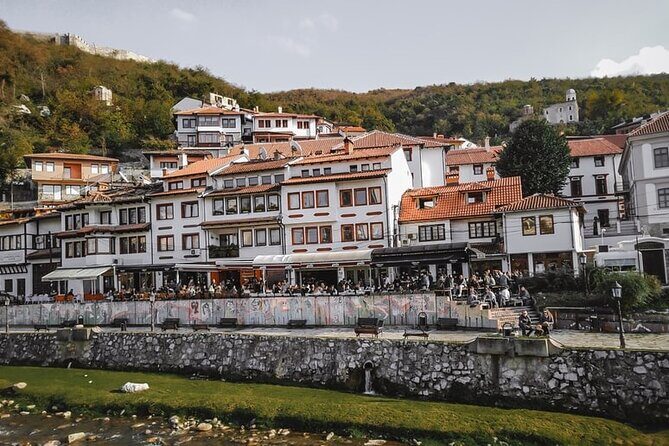
- Prizren’s bridges and mosque interior time, plus the fortress panorama over the river town
- UNESCO stops that aren’t just plaques, including Decan Monastery frescoes and Kotor’s old-town maze
- Mostar’s Stari Most area on cobbles, then Blagaj’s cliffside tekija by the Buna spring
- Sarajevo’s layered streets, where Ottoman, Austria-Hungary, and WWI history sit side-by-side
Price and Logistics: What You’re Really Paying For
At $2,754.29 per person for about 8 days, this isn’t a bargain-basement Balkan trip. You’re paying for a lot of practical heavy lifting: private transport, hotel pick-up in Tirana, border-crossing routing, a professional tour leader, and entry tickets for the sites marked as included.
The value sweet spot here is the mix of:
- Small group size (max 10), which usually means fewer bottlenecks
- Multiple countries in a short time, which costs time and planning on your own
- 3-star hotels with breakfast (7 breakfasts), so you’re not figuring out mornings as you move
If you love the idea of a planned route but still want local moments (bazaars, monastery visits, coffee stops), the price can make sense. If you prefer slower travel with lots of free time and fully independent meals, this might feel scheduled.
Other private tours in Tirana
Starting in Tirana: Food, Coffee, Bunk’Art 2
Tirana is a smart first move because it sets the tone: the tour doesn’t treat the city like a simple backdrop. You start with a local companion and a food-focused orientation that helps you learn the rhythm quickly—markets, alleys, and the kinds of places locals actually use.
Expect a sequence that feels like “how people live here”:
- Tregu Çam for byrek breakfast and the Çam community bazaar shopping area
- A second Tirana loop through neighborhoods where you can try dessert and see street produce life
- Stops at Pazari i Ri, including grilled qofte and vegetarian options like bread with Albanian gjizë (cottage cheese), plus a taste of Albanian raki
Then comes Bunk’Art 2, the converted nuclear bunker originally tied to Enver Hoxha’s communist leadership shelter. The bunker was hidden to the public until 2014, and now it functions as a museum about the communist army and everyday life under the regime. Even if you’re not a history superfan, this helps you understand why you see the Albania of today and the Albania of the past in the same streets.
Practical tip: this is a day of short walks and lots of stops. Wear comfortable shoes and don’t overpack—your day starts early and keeps moving.
Kruja: Resistance-Era Streets and a Castle With Escape Paths
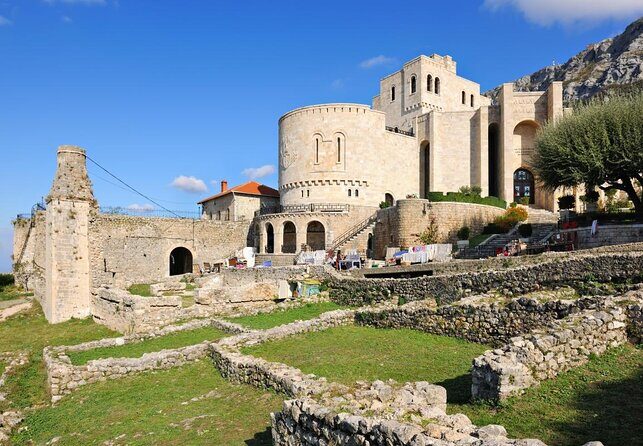
Kruja is where the tour slows down just enough to feel medieval. You drive up into the mountainous terrain and arrive at the kind of place where the scenery explains the stories—high ground, rocky slopes, and old fortifications built to last.
You’ll spend time in:
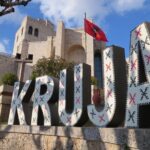
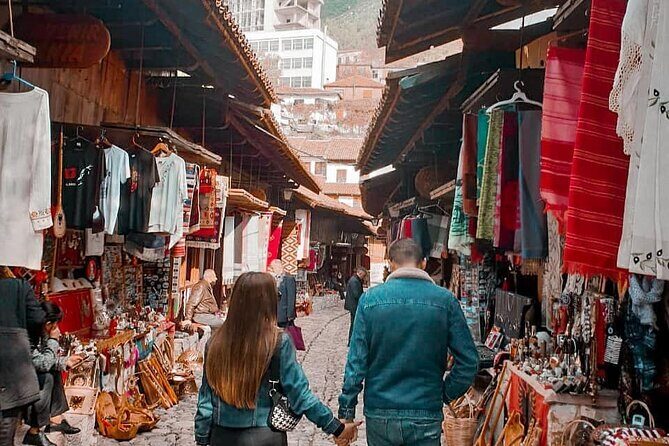
- Kruja Bazaar, in the Medieval Old Bazaar area with wooden houses and narrow streets that are described as among the biggest and oldest in the Balkans
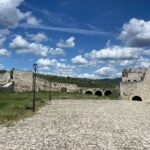
- Kruja Castle, placed high on a hill where attacks were harder, and where the guide points out hidden paths locals reportedly used during danger
Shopping here is one of the most useful parts of the day. If you want souvenirs, this is the place where the bazaar layout and the craft stalls make sense. If you’d rather skip shopping, just focus on the castle viewpoints and the sense of “old town at altitude.”
Prizren: Fortress Views, River Bridges, and Sinan Pasha Mosque
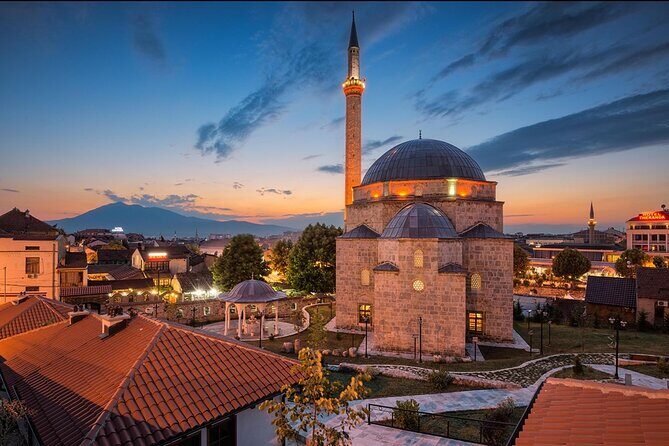
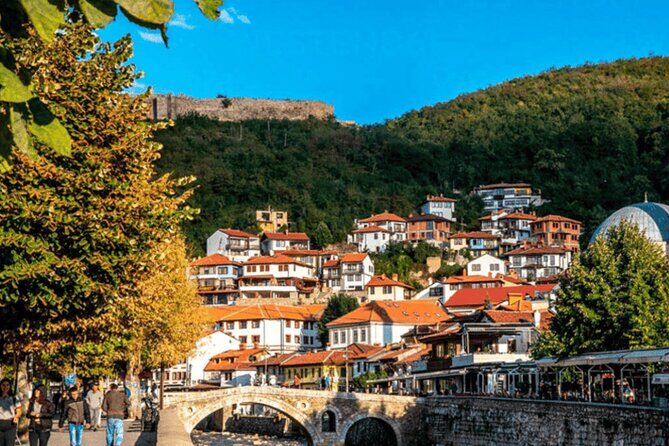
Crossing into Kosovo means the architecture and city vibe shift quickly, and Prizren handles that transition well. It’s known as a cultural center, and the river running through the old town gives you a natural way to “get your bearings” while you wander.
You’ll see key highlights like:
- Sinan Pasha Mosque, with its arabesque color and pattern (time inside is included)
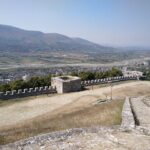
- Kalaja Fortress for the hilltop panorama
- Plenty of wandering time for the old-town streets and the bridge-and-river layout
One bonus you can plan around: if your dates overlap with August, Dokufest is mentioned as a major short film event held in the medieval city. If not, you can still enjoy the layered feel of Prizren—markets, bridges, and religious tolerance reflected in the mix of buildings.
Also pay attention to craft culture. Prizren is described as proud of filigree work in precious metals, so if you like jewelry and small artisan goods, you’ll understand why people linger here.
Gjakova and Decan: A Bazaar That Came Back, Frescoes That Still Matter
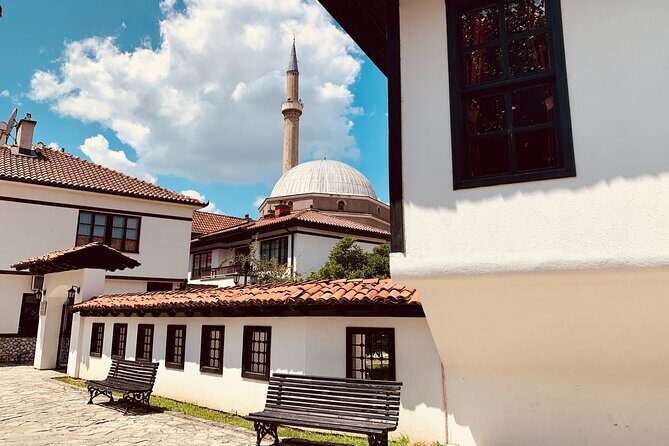
Day-to-day, Kosovo’s strongest “culture punch” comes through two stops: Gjakova’s rebuilt bazaar and Decan Monastery.
In Gjakova, the bazaar is described as the oldest and largest in Kosovo. It was destroyed in multiple wars, then rebuilt back to its earlier form. That makes it more than a shopping stop—it’s a visible reminder of what communities rebuild after conflict. You also have time to eat or browse for handmade crafts.
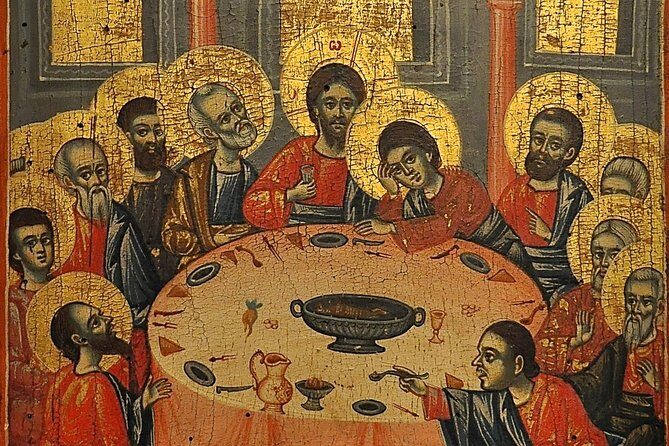
Then Decan Monastery brings a different kind of impact. It stands out for its white appearance, and more importantly, monks still inhabit it and make fresh organic food (including cheeses). The monastery is part of UNESCO since 2004, highlighted for frescoes showing 14th-century life and the Palaeologan Renaissance shift in Byzantine painting.
If you’re visiting places of worship in general, this one can land extra hard because it’s not just an exterior stop—it’s tied to living routine.
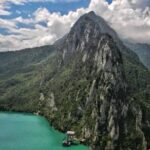
Rahovec Valley (Winemaking Country) and a Slow-Food Albanian Detour
You get a sense of Kosovo’s land beyond the cities with a drive to Rahovec Valley, framed as a viticulture center. The tour notes that grapes have been cultivated since Illyrian times—around 2000 years ago—so vineyards on soft hills at roughly 350–520 meters sit in a long timeline.
You’ll also hear about a wine festival held annually every September. Even if you’re not there in September, the scenery and the idea of “food culture with roots” is what this stop adds to the trip.
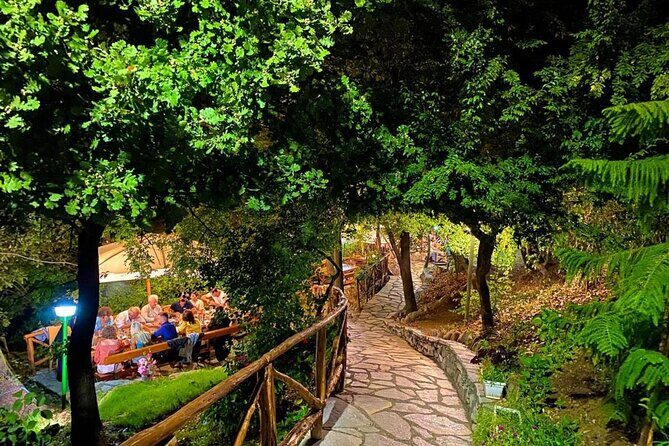
Then the route jumps back into Albania for a farm day: Mrizi i Zanave (Restorant Agroturizëm). This is one of the more practical, grounding experiences in the whole itinerary. You get a farm tour and a story about how the family business created jobs for more than 400 people in the surrounding area. The farm collects, processes, and preserves regional organic products, including using old communist buildings adapted as storage.
What I like about this kind of stop is it breaks the pattern of “city sightseeing, city sightseeing.” You get time to see how local food supply works—and you also get free time for a traditional lunch or buying fresh produce.
Shkodra and Rozafa: Venetian-Style Streets and a Castle Over the Water System
In Shkodra (Shkodër), you’re placed in the north-west of Albania, and the tour emphasizes how the city’s geography and trading position shaped its architecture. Venetian influence shows up in the style, and it’s even noted that Venetian masks are handmade there—so if you’re the kind of person who likes cultural artifacts with production details, this city gives you some clues to follow.
You visit Rozafa Castle, which is described as offering tremendous scenery where the lake and three rivers melt together toward the Adriatic Sea. That’s a good example of why this itinerary feels more varied than a typical “one country, one capital” trip.
This day is also flexible enough to let you enjoy the walking and city vibe without rushing every minute—especially if you come ready to just watch daily life.
Budva to Kotor: Adriatic Views Before the UNESCO Old Town Maze
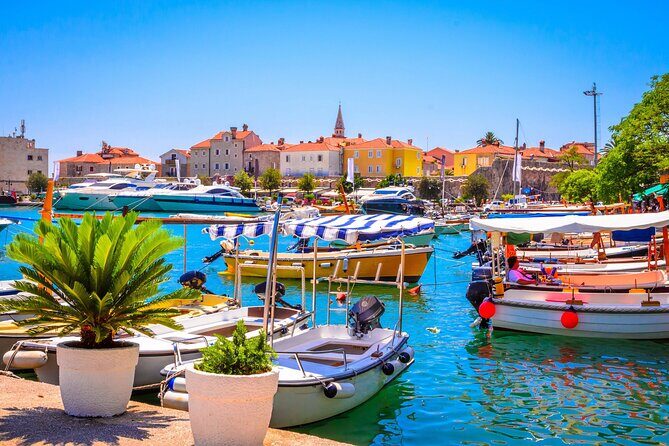
Montenegro is where the route starts to feel scenic and coastal. You begin with a viewpoint near Sveti Stefan, once described as a fishing town on an island, but now an exclusive residential resort. The island itself can’t be visited anymore, yet the coastline view still works as a “slow down and look” break.
Then you arrive in Budva, split between Old and New Budva. Old Budva is the part you’ll care about for history and walking: the medieval streets and churches such as St. Ivan and the smaller St. Mary church. New Budva has modern buildings and bars/restaurants, but the tour focuses on the old center.
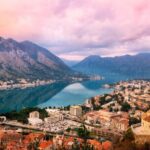
Kotor is a key UNESCO stop and it changes your pacing. The old town is described as a maze of narrow, cobblestone streets designed to confuse intruders—so walking here feels like following a built-in strategy. You’ll visit Saint Luke’s church, which is important to locals because it represents unity.
Tip: Kotor rewards patience. Bring water, expect tight turns, and don’t plan to “speedrun” photos. The best views often show up after you turn a corner.
Mostar and Stari Most: The Icon You Can’t Forget
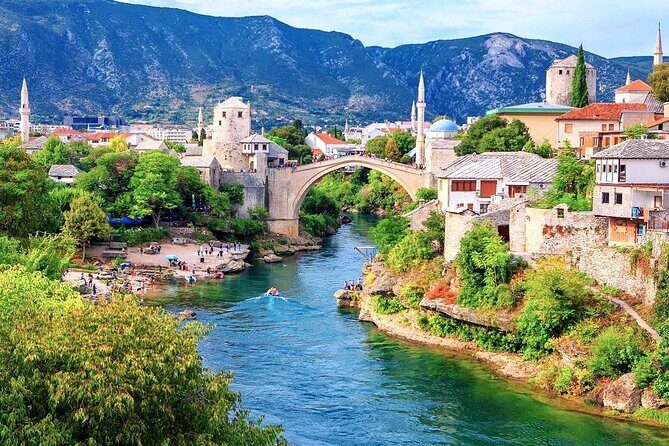
Crossing into Bosnia & Herzegovina, the tour heads to Mostar and the famous Old Bridge (Stari Most). This UNESCO-listed bridge is built in typical Islamic architectural style in the 16th century, and it’s the kind of site where a 30-minute stop still feels meaningful because the bridge sits as the whole town’s visual anchor.
After that, you wander through the Old Bazaar area, with colorful streets and lively atmosphere. You’ll also see stones with the message Don’t Forget, pointing to reminders of the city’s history. The tour notes you can spot old mosques and Turkish bazaars among the cobbled alleys—so you get a sense of continuity, not just a monument.
Then comes Blagaj tekija, outside Mostar on the foot of a cliff. The description centers on the blue waters in front of the monastery and the river spring of river Buna. It’s a good contrast day: urban UNESCO energy in Mostar, then water-and-cliff calm at Blagaj.
Sarajevo: Uneven Walking, War Marks, and WWI History at Latin Bridge
Sarajevo is where the tour becomes more serious, and it’s not a quick “look and move on” stop. You’ll walk on uneven terrain and visit ruins where you can still see reminders of the Yugoslav War, including bullet holes and cannon marks.
You’ll get a guided look at Ottoman and Austria-Hungarian parts of the city. The tour frames it as a place where markets, bazaars, mosques, churches, and synagogues show how different cultures shaped the city at different times. And yes, the city is often described with the nickname European Jerusalem—the itinerary uses that idea to explain the mix.
You’ll also visit Latin Bridge, where WWI is tied to the story. The tour explains the name because it connected the right bank of the Miljacka with the Catholic quarter, called Latinluk in Ottoman times. It’s short in time but strong in context—history you can point to.
Finally, you get free time for Sarajevo food, with the tour noting local meat dishes and desserts. Since lunch and dinner aren’t included, this free time is important: you’ll want to plan a meal around whatever you’re craving—especially after a walking-heavy day.
End in Croatia: Dubrovnik or Split, Then Hotel Drop-Off
On the final day, you cross into Croatia and your driver shuttles you to your hotel in Dubrovnik or Split. That means you finish with a clean handoff to explore on your own after the structured portion ends.
If you’re continuing immediately into sightseeing, I’d use this last day to choose a light plan. You’ve already walked UNESCO towns, climbed viewpoints, and crossed borders—so your best “value” move is to pick one area to enjoy slowly rather than trying to win the whole city in one afternoon.
Who This Tour Fits Best (and Who Should Pass)
This tour fits best if you want:
- A small-group Balkans route with real planning behind it
- City-to-monastery-to-coast variety in just 8 days
- A guide who brings context—especially with the tour leaders Besa and Sirma, both praised for friendly support and storytelling that makes the places click
It may be less ideal if you:
- Hate long drives and border days
- Prefer fully independent meals and no timed stops
- Want lots of downtime each day (this itinerary is structured and active)
Should You Book This Tirana to Dubrovnik/Split Route?
I’d book it if you want a well-paced sampler of the Balkans that still includes hands-on culture: bazaars for shopping and food, UNESCO stops that you actually visit, and a final handoff into Croatia. The semi-private size (max 10) is a key detail here—it helps you feel like you’re traveling with a small crew, not trapped in a crowd.
I’d hesitate if your ideal trip is slow, meal-by-meal flexible, and mostly outdoors with minimal logistics. In that case, the price and schedule can feel like you’re paying for structure rather than freedom.
If you can handle a busy week and you like learning through places like Kruja’s old streets, Mostar’s bridge, and Sarajevo’s layered past, this is a strong pick.
FAQ
How long is the tour?
It runs for 8 days (approximately).
What is the group size?
The tour has a maximum of 10 travelers.
Is hotel pickup in Tirana included?
Yes, hotel pick-up in Tirana is included.
Does the price include accommodation and breakfast?
Yes. It includes BB (accommodation and breakfast) for all overnights in 3-star hotels and breakfast for 7 mornings.
Are lunch and dinner included?
No. Lunches, dinners, drinks, and snacks are not included.
Where does the tour end?
It ends with drop-off in either Dubrovnik or Split (you’ll be shuttled to your hotel after reaching the Croatian border).