REVIEW · TIRANA
Highlights of Albania
Book on Viator →Operated by Albania Express Travel · Bookable on Viator
Albania feels big in eight days. This private tour links Tirana, Skanderbeg country, the Albanian Riviera, and three UNESCO World Heritage stops with air-conditioned driving and a real human guide.
I love two things right away: breakfast-included hotels, and the fact that your transport is air-conditioned comfort between far-flung regions.
One thing to consider: the days are packed. If you want hours of free time on beaches or slow museum wandering, this itinerary moves like a well-run train.
In This Review
- Key highlights at a glance
- First Stop: Tirana’s power squares and the Cold War leftovers
- Krujë and Lezhë: Skanderbeg’s story told through stone and symbols
- Shkodër: Rozafa Castle views and the mask-making workshop
- Durrës to Berat: amphitheaters, castles, and the city of a thousand windows
- Ardenica and Apollonia: monasteries and ancient trade power
- Vlora: independence memories plus a monastery pause
- Ali Pasha’s triangle and the Adriatic-to-Ionian coastline
- Butrint, the Blue Eye, and Gjirokastër: UNESCO at full emotional volume
- Coming back to Tirana: a pie stop and a free afternoon
- Price and value: what you’re really paying for
- Who this tour suits best
- Should you book this Albania tour?
- FAQ
- Where does the tour start, and what time?
- Is pickup included?
- How long is the tour, and how many nights are included?
- Are breakfasts included?
- Which UNESCO sites are included?
- Are entrance fees included?
- Is this a private tour?
Key highlights at a glance
- Three UNESCO World Heritage sites: Butrint, Berat, and Gjirokastër are all on the route
- A private guide named Adam (often with Albania Express Travel): clear explanations, lots of questions answered, and flexible small stops
- Comfort-first transport: air-conditioned vehicle between cities and viewpoints
- Paid entries covered at major stops: Ardenica Monastery, Apollonia, Ali Pasha Castle, Butrint, and the Blue Eye
- Handcrafted culture in Shkodër: the Viennese mask factory tradition is built around real craftwork
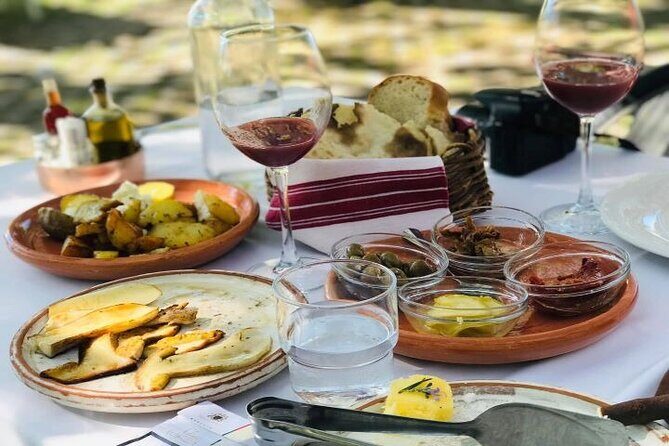
- Real food detour: a stop to try Albania’s fast-food-style pies, locally called pie
First Stop: Tirana’s power squares and the Cold War leftovers
Tirana is a strong opener. You start at Skanderbeg Square, described as the largest square in Europe, then work your way through Ottoman-era layers and modern Albanian identity in a compact circuit. Expect to see the Et’hem Bej mosque, the Skanderbeg monument, the Opera House, and the Clock Tower, all within walking range.
From there, the tour shifts gears into 20th-century Albania. The Pyramid monument and Bunk Art museum help explain how the country’s communist era still leaves physical marks in the city. Then you’ll see other major anchors like the Government building and Mother Teresa Square—so you get your bearings fast, even if Tirana is your first Albanian city.
If you're still narrowing it down, here are other tours in Tirana we've reviewed.

Krujë and Lezhë: Skanderbeg’s story told through stone and symbols
Day 2 leans into Albania’s most famous resistance hero: Gjergj Kastrioti Skanderbeg. In Krujë, you’ll climb up to a medieval town positioned around a castle world. The castle complex connects you to centuries of Ottoman-era conflict, with the Skanderbeg museum tucked inside castle walls that date back to the 5th and 6th centuries A.D. If you like history with good physical context (not just dates), this is where it clicks.
You also get the old bazaar area near the castle entrance. The shopping here isn’t just generic souvenirs. It’s focused on traditional crafts—embroidered pieces, carpeting, silver and copper work, alabaster, filigree, traditional clothing, and even antiques if you want to browse longer than planned.
Then the route continues to Lezhë (Lissus) on the way toward Shkodër. The key stop is the memorial tomb of Skanderbeg, built over the ruins of the Saint Nicholas cathedral. Inside, you’ll find exposed shields—25 of them, representing victories of Skanderbeg’s army against the Turks. It’s a striking way to visualize a historical campaign without needing a textbook in your hand.
Shkodër: Rozafa Castle views and the mask-making workshop
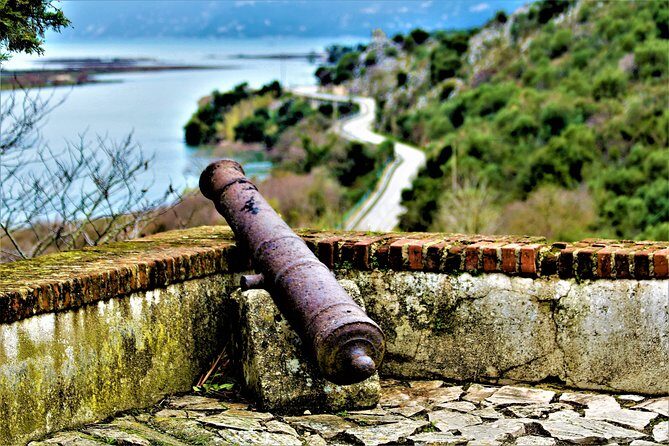
Shkodër brings a different pace. You’ll visit Rozafa Castle, high above the city, where the view is the main event. This is the kind of stop that makes the region’s defensive past feel real—Illyrian power and later pressures are written into where people built strongholds.
After the castle, there’s a lighter, more hands-on cultural moment: the newly renovated pedestrian area with Italian and Austrian architecture links, followed by a visit to the Viennese mask factory near the city. The masks are made by hand and finished with details like bright colors, fancy feathers, gold leaf, and crystals. If you care about how craft traditions survive, this is the most practical kind of cultural stop—watching processes, not just taking photos.
Durrës to Berat: amphitheaters, castles, and the city of a thousand windows
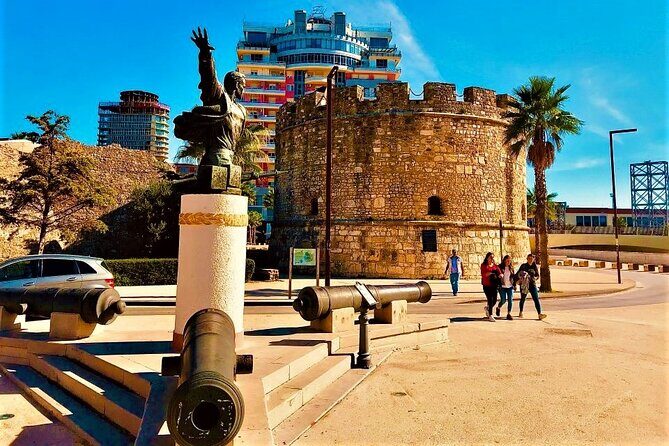
Durrës is the kind of place where you look around and realize Albania has layered civilizations stacked over each other. The tour highlights its long timeline—almost 3,000 years of history—with a major anchor at the Roman amphitheater of Emperor Hadrian. The amphitheater is described as having 15,000 seats and being the second biggest in the Balkans. Nearby, you’ll see smaller Roman and Byzantine remains like bath-houses and a Byzantine forum with marble columns.
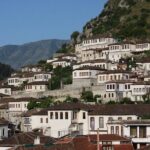
Then you pivot south to Berat, the UNESCO site known as the city of a thousand windows. Berat Castle is your first big visual here. You’ll see museums, churches, and a mosque, and you’ll also learn that some residents still live inside the castle area. It’s not just ruins behind a fence—it’s a working town built into historic walls.
Inside the castle, the tour focuses on the Cathedral of St Maria, including an icon museum element. You’ll hear about iconographer Onufri and his son Nikolla, with over 100 icons on display. In the old town sections like Gorica bridge and the neighborhoods of Mangalem and Gorica, the day becomes more about walking and understanding how the city is arranged on steep terrain.
Ardenica and Apollonia: monasteries and ancient trade power
After Berat, the tour heads into monastery and ancient-city territory. First comes Ardenica Monastery, and it’s worth paying attention to the details the guide shares. The site is connected to older religious ground, including a pagan temple dedicated to Artemis before the monastery existed. It was built in the Byzantine period and recorded with a well-known story: Skanderbeg’s wedding to his wife Donika, hosted in April 1451 at the chapel of St. Trinity, the monastery’s first church.
You’ll spend time at St Mary’s Church, described as the most impressive building on site. The interior frescoes are a big part of the visit, and the stonework connects back to the antique city of Apollonia—so you get a sense of how material and culture moved through time.
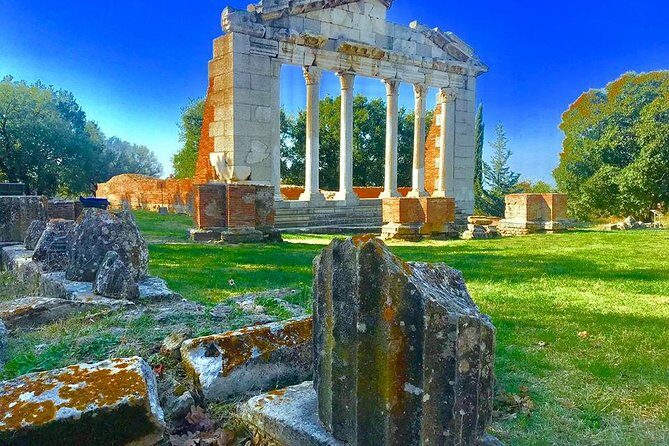
Then the route turns to Apollonia Archaeological Park. This is an ancient Illyrian city shaped by Greek colonizers and described as an important economic and trade center, especially flourishing around the 4th century A.D. The day has a strong “classical ruins + Mediterranean setting” feel, with monuments and archaeology spread through an area that helps you imagine how people once moved through the city.
Vlora: independence memories plus a monastery pause
In Vlorë, the focus becomes modern national identity. The tour includes the Museum of Independence, tied to Albania’s independence from the Ottomans in 1912. If Tirana is where you see state symbols, Vlora is where the story turns into a national milestone you can anchor to a specific place.
You’ll also visit Zvernec Monastery. Even if you’re not a dedicated monastery person, this stop gives you a calmer rhythm before the pace picks up again along the coast.
Ali Pasha’s triangle and the Adriatic-to-Ionian coastline
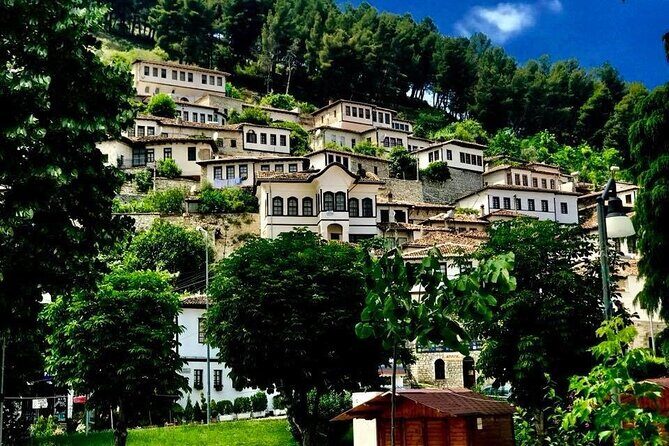
The Albanian Riviera section is where the tour starts feeling like vacation, not just touring. First stop: Ali Pasha Castle, described as the crown jewel of the Riviera. It sits on a hill of an island connected to shore by a narrow man-made strip. The shape is unusual—triangular—with three bastions at the corners. It was built in 1814 at the request of Ali Pasha Tepelena, and the church of St. Nicolas sits across from it.
From there, the tour keeps it coastal with a stop in Borsh, where you’ll find traditional villages tucked into isolated bays and beaches with turquoise water. The tour description emphasizes the meeting point of the Adriatic and Ionian seas in this region, and it helps you understand why people come here for coast time even in shoulder season.
Then you move to Sarandë, described as an unofficial capital of the Albanian Riviera. Expect a mix of beach time and history. A highlight is Pasqyra Beach, presented as a bay that stays uncrowded even in peak summer. You’ll also visit Lekursi Castle above the town, dating to the mid-1500s.
The tour also includes a human-story component related to World War II. The guide points out that Albania is described as a safe haven for a Jewish community during the Holocaust. It’s presented as part of the cultural context of the south, not as a vague lecture.
Butrint, the Blue Eye, and Gjirokastër: UNESCO at full emotional volume
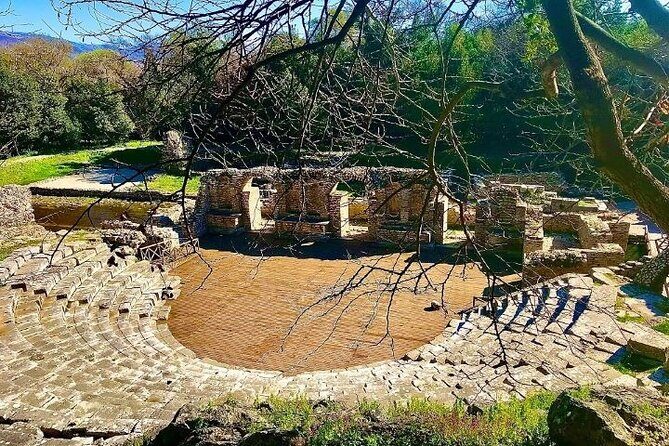
Day 6 is one of the strongest combinations on the route. First: Butrint National Park, the first Albanian UNESCO site added in 1992. The ruins have prehistoric roots and also connect with Greek and Roman colonies. The tour points out specific finds and famous monuments, including highlights like the theater and notable statues such as Apollo and the goddess of Butrint, plus marble heads of Zeus and portraits of figures like Agrippina and Livia. It’s the rare UNESCO site where you feel the breadth of time quickly because the site covers so much ground.
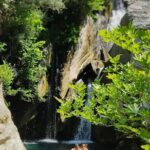
Then you head to the Blue Eye. This is a natural spring phenomenon with a turquoise river view that people describe as stunning. You’ll see it from a small metal balcony built for closer viewing. Swimming is said to be prohibited via signs, though the description adds that you may still see people jump anyway—so I’d keep your expectations flexible and follow what’s safe and allowed on the day you go.
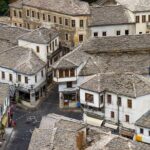
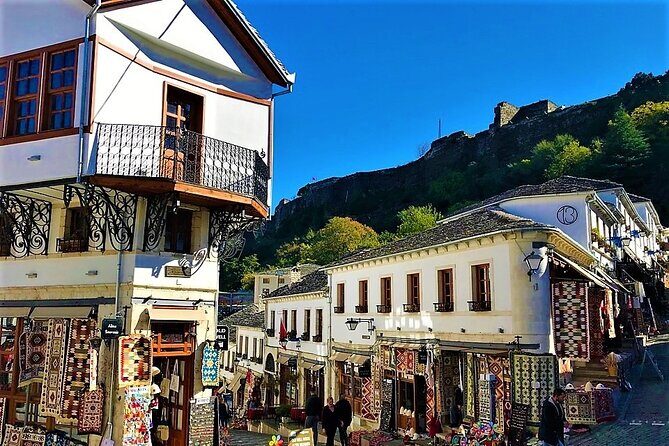
Next comes Gjirokastër, the other UNESCO World Heritage city. It’s built on steep slopes, with stone-roofed houses stacked above each other. You’ll hear about the city’s literary connection to Ismail Kadare, and the political footprint of Enver Hoxha, including visits tied to both figures. You’ll also visit the Castle of Gjirokastër and spend time walking among the limestone and shale paved roads. The tour frames Gjirokastër as a place for panoramas and for eating well, not just taking photos.
Coming back to Tirana: a pie stop and a free afternoon
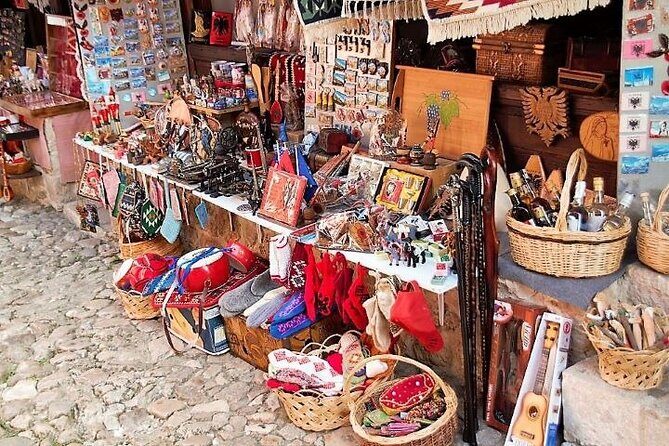
By the final days, you’re back in Tirana with two priorities: light food detour and breathing room. One of the stops is a local fast-food style place for pie, sometimes described as Albania’s take on the fast-food idea. The price is listed clearly for the stop: 50 lek for one piece (about 35 cents). It’s a fun way to taste what’s everyday here, not just what’s curated for tourists.
Then you get a free afternoon in Tirana. That’s your chance to revisit a favorite square, do any last shopping, or simply sit down somewhere and watch city life change across the day.
Your tour ends with the drive to Rinas Airport for departure.
Price and value: what you’re really paying for
At $2,195.63 per person for about 8 days, this is a premium-style package. The value is strongest in the parts that cost time and stress if you DIY: private guiding, air-conditioned transport, and 7 nights of accommodations with breakfast included. You’re also getting paid-entry support for key stops like Butrint, the Blue Eye, Ardenica, Apollonia, and Ali Pasha Castle, which cuts down the admin load.
What’s not included is equally important. Lunches and dinners are on you. Also, the listing says all fees and taxes aren’t fully included, so you should budget for some extra expenses even if many museum and monument stops are free.
If you like having a plan that’s efficient and built around UNESCO sites and major cultural anchors, this price makes sense. If you’re the type who wants to roam independently and you’re comfortable managing your own transport and lodging, you may find cheaper options—but you’d be buying back your time.
Who this tour suits best
This works best for:
- People who want private, on-the-ground explanations instead of just point-and-shoot sightseeing
- Travelers who hate logistics and prefer air-conditioned transfers between long-distance stops
- First-timers who want Tirana plus castles, coasts, and UNESCO without building a trip from scratch
- Culture-minded visitors who enjoy seeing how history shows up in everyday spaces like bazaars, old quarters, and living castle towns
It may be less ideal if you want lots of free beach time, or if you strongly dislike an itinerary that moves between multiple regions each day.
Should you book this Albania tour?
I’d book it if you want a clean, efficient circuit with three UNESCO sites, strong historical storytelling, and real variety—from Skanderbeg monuments to Riviera forts to the Blue Eye. The repeated mention of guide Adam (with frequent praise for clear answers and thoughtful effort) also tells me this isn’t a rushed, robotic tour.
I’d pause if your ideal Albania trip is mostly slow and coastal with minimal driving. In this plan, the coast is a highlight, but it’s still part of a bigger sweep.
If you want, tell me your travel month and your pace (relaxed vs. active). I can suggest what to prioritize so the trip fits your style.
FAQ
Where does the tour start, and what time?
The tour starts at Rinas Airport in Tirana, Albania, with a start time of 8:30 am.
Is pickup included?
Yes. The tour lists pickup offered, and the plan specifically notes meeting the guide at the airport.
How long is the tour, and how many nights are included?
It runs for 8 days (approx.) and includes 7 nights of accommodation.
Are breakfasts included?
Yes. Breakfast is included with the accommodations for 7 nights (listed as optional).
Which UNESCO sites are included?
The itinerary includes Butrint, Berat, and Gjirokastër as UNESCO World Heritage stops.
Are entrance fees included?
Some key admissions are listed as included (for example Ardenica Monastery, Apollonia Archaeological Park, Ali Pasha Castle, Butrint National Park, and the Blue Eye). Other admission tickets are marked free. The tour also states that not all fees and taxes are included.
Is this a private tour?
Yes. It is described as a private tour/activity, meaning only your group participates.